
Blog

2026 Toyota RAV4 vs Corolla Cross: Which Toyota SUV Fits Bristol Drivers?

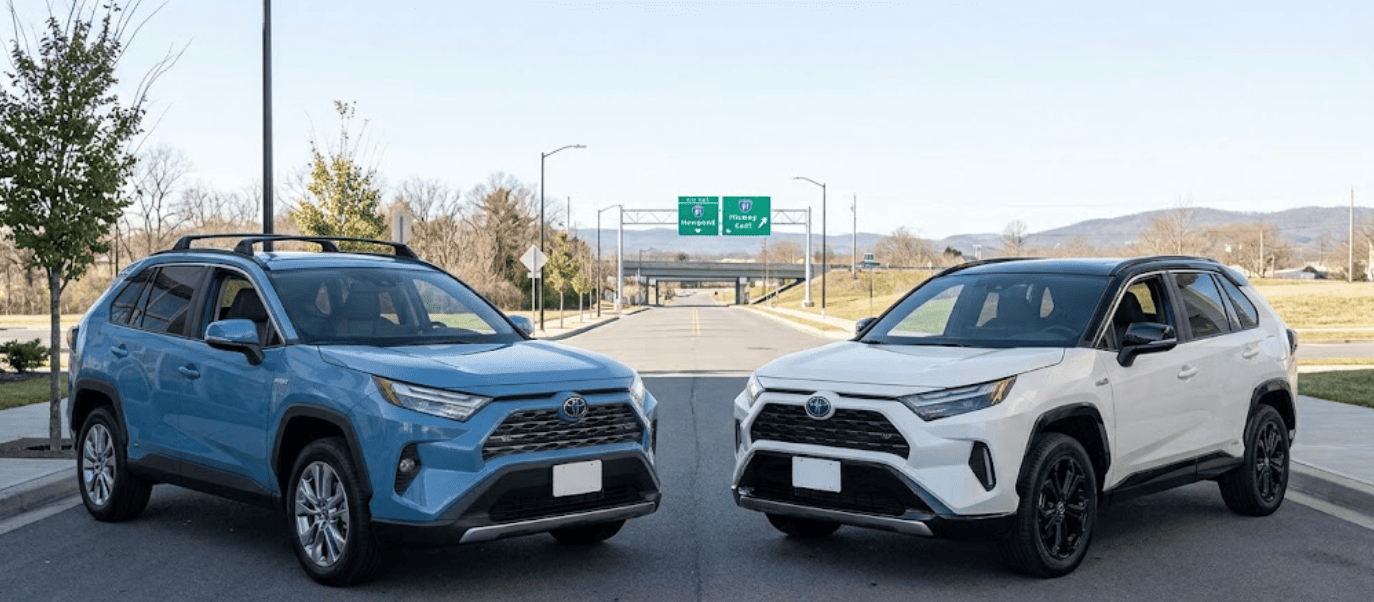
RAV4_XLE_vs_XSE

Choose the 2026 Toyota RAV4 if you want more space, stronger road-trip flexibility, and a hybrid-focused compact SUV with available HEV or PHEV powertrains depending on grade. Choose the 2026 Toyota Corolla Cross if you want a smaller Toyota crossover with easier parking, efficient weekday driving, and gas or hybrid options. Toyota of Bristol helps local shoppers compare both SUVs by size, powertrain, cargo needs, daily route, and family routine. For a Bristol commuter, Corolla Cross may feel easier around town; for a Johnson City family of four, RAV4 usually gives more long-term flexibility.

The right answer depends on how much space you need and how you drive most days. RAV4 is the better fit when rear-seat comfort, cargo room, weekend gear, pets, and longer trips matter. Corolla Cross is the better fit when a smaller footprint, strong efficiency, easier parking, and simple Toyota SUV utility are higher priorities.

This comparison keeps the focus narrow: RAV4 versus Corolla Cross for Bristol and Tri-Cities shoppers deciding between two Toyota SUVs. We will compare size, efficiency, commuting fit, family use, local roads, and long-term ownership fit without turning this into a broad RAV4 review or a Corolla Cross trim guide.

Definition: A RAV4 vs Corolla Cross comparison is a Toyota SUV decision between a compact SUV and a smaller crossover. It helps drivers compare size, efficiency, cargo room, powertrain choices, parking ease, and family practicality for daily use in Bristol and nearby Tri-Cities communities.

RAV4 vs Corolla Cross at a Glance

Key Takeaway: RAV4 is the better Toyota SUV for space, family flexibility, and longer trips, while Corolla Cross is the better fit for easy parking, smaller-SUV value, and efficient daily use.

Size, Cargo Room, Efficiency, and Price Considerations

The biggest difference between the 2026 RAV4 and Corolla Cross is size and role. RAV4 sits higher in the Toyota SUV lineup as a compact SUV with more road-trip and family flexibility. Corolla Cross is smaller and easier to handle in tight daily spaces, which makes it attractive for commuters, first-time Toyota buyers, students, young professionals, and drivers who do not need as much cargo room.

For 2026, RAV4 is available with HEV or PHEV powertrains depending on grade, while Corolla Cross offers gas-powered models with FWD or AWD and Hybrid AWD grades. Corolla Cross gas models have an EPA-estimated 32 combined MPG rating, and Corolla Cross Hybrid has an EPA-estimated 42 combined MPG rating. Toyota also lists Corolla Cross with up to 24 cu. ft. of cargo space, which is useful for urban commutes and weekend errands.

For a Bristol daily commuter who wants Toyota SUV utility without moving too far up in size, we recommend starting with Corolla Cross. For a Johnson City family of four that regularly carries strollers, sports bags, groceries, and weekend luggage, we recommend starting with RAV4 because the larger footprint better supports family growth.

  • Choose RAV4 if cargo space, rear-seat comfort, and longer trips matter most.
  • Choose Corolla Cross if easy parking, smaller size, and efficient commuting matter most.
  • Choose RAV4 if you want HEV or PHEV powertrain choices depending on grade.
  • Choose Corolla Cross if you want gas or hybrid choices in a smaller Toyota crossover.
  • Compare exact vehicles because drivetrain, features, and availability can vary.
Comparison Point2026 Toyota RAV42026 Toyota Corolla CrossBest For
Vehicle roleCompact SUV with more family and travel flexibilitySmaller crossover with city-friendly sizingRAV4 for growing needs; Corolla Cross for right-sized utility
Powertrain approachHEV or PHEV depending on gradeGas models or Hybrid AWD gradesRAV4 for hybrid-focused SUV shoppers; Corolla Cross for gas or hybrid choice
Efficiency contextHybrid-focused 2026 lineupGas 32 combined MPG, Hybrid 42 combined MPGCorolla Cross Hybrid for smaller-SUV efficiency
Cargo approachBetter suited for larger family cargo needsUp to 24 cu. ft. of cargo spaceRAV4 for gear-heavy families; Corolla Cross for lighter cargo routines
Parking and maneuveringStill practical, but largerEasier fit for tight parking and daily errandsCorolla Cross for apartment parking and short trips
Ideal Use CaseFamily SUV, road trips, pets, and weekend gearCommuting, errands, first Toyota SUV, and efficient daily drivingChoose by space needs first

Based on Toyota official website.

Powertrain Choices: RAV4 HEV or PHEV vs Corolla Cross Gas or Hybrid

Powertrain choice is one of the cleanest ways to separate these two SUVs. RAV4 is now a hybrid-focused model with HEV and PHEV choices depending on grade. That makes it a strong fit for shoppers who want Toyota SUV space and electrified power without starting with a gas-only RAV4 decision.

Corolla Cross gives shoppers a different kind of flexibility. Gas models are available with FWD or AWD, while Hybrid AWD grades are available for drivers who want stronger efficiency and added traction confidence in a smaller package. For an Abingdon seasonal-weather driver who sees rain, hills, and changing road surfaces, we recommend comparing exact AWD availability on the specific RAV4 or Corolla Cross under consideration.

Our team can help shoppers compare RAV4 HEV, RAV4 Plug-in Hybrid, Corolla Cross gas, and Corolla Cross Hybrid without assuming one answer fits every driver. A smaller, efficient Corolla Cross Hybrid can make plenty of sense for commuting. A RAV4 can make more sense when the driver wants extra space and more long-trip flexibility.

Interior Comfort, Technology, and Daily Practicality

Interior comfort depends on what the cabin needs to do. Corolla Cross is easy to live with for solo drivers, couples, students, and small households. It gives Toyota SUV utility without feeling oversized. RAV4 adds more family-friendly flexibility, especially for drivers who load sports bags, pet supplies, work gear, groceries, and travel luggage.

Both models can offer modern Toyota technology and Toyota Safety Sense features, but exact availability should be checked by model, grade, and vehicle. We recommend comparing the actual window sticker, driver-assistance features, screen layout, seating materials, cargo area, and available AWD before deciding.

For a Kingsport young professional who wants a smaller Toyota SUV for work, errands, and apartment parking, Corolla Cross is the cleaner starting point. For a Blountville pet owner who carries dog gear, groceries, and weekend items, RAV4 is usually the better fit because extra cargo flexibility matters every week.

Which SUV Is Better for Commuting?

Key Takeaway: Corolla Cross is usually the easier commuter SUV for tight parking and shorter weekday driving, while RAV4 is better for commuters who also want more space, stronger trip flexibility, and a larger SUV feel.

RAV4 vs Corolla Cross Commuter Comparison Table

Commuting should not be judged by MPG alone. A good commuter SUV also needs comfortable seating, easy visibility, simple controls, manageable size, driver-assistance confidence, and enough cargo room for daily errands. We recommend deciding based on the commute you actually drive.

Commuter Need2026 Toyota RAV42026 Toyota Corolla CrossBest For
Daily parkingPractical, but largerEasier in tight lots and apartmentsCorolla Cross for compact spaces
Highway confidenceStronger larger-SUV feel for longer drivesConfident, smaller, and efficientRAV4 for longer highway stretches
Efficiency focusHybrid-focused lineupGas or Hybrid, with Hybrid at 42 combined MPGCorolla Cross Hybrid for small-SUV efficiency
Errands after workMore room for bulkier itemsEasy to park and load for everyday errandsCorolla Cross for light errands, RAV4 for bigger cargo
Weekend crossover useBetter for family trips and gearBetter for light weekend plansRAV4 for multi-purpose households
Ideal Use CaseI-81 commuter who also needs family spaceUrban or suburban commuter who values easy sizingChoose by commute plus weekend needs

Based on Toyota official website.

The commuter verdict is straightforward: we recommend Corolla Cross for drivers who prioritize easy parking, smaller size, efficient daily trips, and simple weekday utility. We recommend RAV4 for commuters who also need extra cargo room, more family flexibility, and a more substantial SUV feel for I-81 or I-26 travel. For Bristol shoppers, the best commuter choice is the SUV that fits both the workweek and the weekend.

Use-Case Recommendations for I-81, I-26, Parking, and Fuel Efficiency

For a Bristol daily commuter who drives short weekday routes and wants easy parking, we recommend Corolla Cross or Corolla Cross Hybrid because the smaller footprint is easier to manage. For a Kingsport young professional with apartment parking and mostly light cargo, we recommend Corolla Cross because it gives Toyota SUV practicality without adding unnecessary size. For a commuter who drives longer I-81 stretches and carries family gear after work, we recommend RAV4 because extra space becomes more useful quickly.

  • If you drive short city routes, we recommend Corolla Cross because the smaller size makes daily parking easier.
  • If you drive I-81 often and want more cabin confidence, we recommend RAV4 because the larger SUV feel fits longer highway routines.
  • If you want strong small-SUV efficiency, we recommend Corolla Cross Hybrid because Toyota lists 42 combined MPG.
  • If your commute often turns into family errands, we recommend RAV4 because the added room helps after work.
  • If you are choosing your first Toyota SUV, we recommend test driving both because size preference is easiest to feel in person.

Our sales team can help you compare RAV4 and Corolla Cross side by side so the decision feels practical, not abstract. We can show you cargo openings, rear-seat comfort, driver visibility, hybrid options, available AWD, and current inventory. Start with our new Toyota inventory, or call 423-764-3155 and tell us whether you are leaning toward RAV4 space or Corolla Cross efficiency. We can also help you schedule a test drive that uses the roads you actually drive, including local streets, highway ramps, and parking-lot situations. We recommend bringing your daily routine into the visit so our team can match the SUV to your commute, family needs, and budget.

Which SUV Is Better for Families?

Key Takeaway: RAV4 is usually the better family Toyota SUV because it gives more flexibility for rear-seat comfort, cargo routines, pets, weekend gear, and longer trips.

Rear-Seat Comfort, Cargo Needs, School Runs, Pets, and Weekend Trips

Family SUV needs tend to grow. A Corolla Cross can work well for a small household, a couple, a first-time SUV buyer, or a parent with lighter cargo needs. RAV4 is the stronger fit when the family routine includes school bags, sports equipment, groceries, pets, strollers, coolers, luggage, and weekend travel across the Tri-Cities.

For Johnson City families of four, we recommend starting with RAV4 because its added space and larger-SUV feel give more breathing room for daily life and road trips. For Bristol couples with one child or lighter cargo, Corolla Cross may still fit beautifully if parking ease and efficiency matter more than maximum space. For Abingdon drivers who deal with hills, rain, and family travel, we recommend comparing available AWD by exact vehicle.

Family ScenarioRAV4 RecommendationCorolla Cross RecommendationBest For
Family of fourBetter starting point for space and flexibilityWorks if cargo needs stay lightRAV4 for growing families
School and sports bagsMore cargo flexibilityFine for smaller routinesRAV4 for busier weekly schedules
Pets and weekend gearBetter for dog gear, groceries, and luggageBetter for light pet or errand useRAV4 for Blountville pet owners
New driver or studentMay be more space than neededEasy size and practical utilityCorolla Cross for first Toyota SUV
Longer road tripsBetter for comfort and cargoBetter for lighter packingRAV4 for Johnson City road trips
Ideal Use CaseFamily growth, weekend travel, and more gearSmaller household, easy parking, efficient errandsChoose by daily passengers and cargo

Based on Toyota official website.

We invite families from Bristol, Kingsport, Johnson City, Abingdon, Blountville, and Elizabethton to compare both SUVs in person because space is easier to judge with your own bags, car seats, stroller, sports gear, or pet crate in mind. We can help you check cargo height, rear-seat access, visibility, available AWD, safety technology, and hybrid options. We also support your ownership through our Toyota of Bristol Advantage Plan, so the conversation does not stop at the sale. Visit us at 3045 W State St, Bristol, TN 37620, start with our 2026 RAV4 information, or call 423-764-3155 with the family routine you need to solve. We will help you decide whether RAV4 space or Corolla Cross simplicity fits your household better.

Family and Lifestyle Fit: When the RAV4 Is the Better Long-Term Toyota SUV

Key Takeaway: RAV4 is the better long-term fit when a shopper expects family needs, cargo routines, pets, and road-trip plans to grow over the next several years.

Some shoppers buy for today. Others buy for the next five years. RAV4 becomes the stronger choice when the next few years may include kids, pets, hobbies, longer commutes, new jobs, outdoor gear, or frequent family travel. We recommend RAV4 when a driver wants room to grow rather than just enough space for the current week.

For a Blountville pet owner carrying dog gear, groceries, and weekend items, RAV4 is usually the stronger choice because added cargo flexibility matters even when every seat is not full. For a Johnson City family that wants one Toyota SUV for school, errands, vacation, and visiting relatives, RAV4 has the broader lifestyle fit. For a Bristol shopper who wants more confidence that the SUV will still feel useful years from now, RAV4 is the safer long-term recommendation.

  • If your family may grow, we recommend RAV4 because extra space has long-term value.
  • If pets and weekend gear are part of your routine, we recommend RAV4 because cargo flexibility matters.
  • If road trips are common, we recommend RAV4 because passengers and luggage need room together.
  • If you rarely carry more than light cargo, Corolla Cross may still fit better.

Ownership Cost Analysis: When Corolla Cross Makes More Sense

Key Takeaway: Corolla Cross makes more sense when the buyer values right-sized utility, easy parking, strong efficiency, and Toyota SUV practicality without stepping into a larger vehicle than needed.

Corolla Cross is not the consolation prize in this comparison. It is the smarter choice for many drivers who want SUV seating height, Toyota reliability, efficient commuting, and useful cargo space without the larger footprint of RAV4. We recommend Corolla Cross for shoppers who know they do not need the extra room.

For an Elizabethton budget-conscious first-time buyer, Corolla Cross can be the better fit because it keeps the Toyota SUV experience practical and approachable. For a Kingsport young professional with apartment parking, Corolla Cross is easier to park and easier to live with every weekday. Corolla Cross Hybrid is especially attractive for drivers prioritizing efficiency, since Toyota lists a 42 combined MPG estimate for the hybrid.

  • If your cargo needs are light, Corolla Cross can save you from buying more size than you use.
  • If parking is tight, Corolla Cross is easier to manage in daily spaces.
  • If efficiency is a priority, Corolla Cross Hybrid deserves a close look.
  • If family space matters more than footprint, RAV4 is the better move.
  • If you are unsure, we recommend driving both before choosing.

Key Takeaways

  • RAV4 is the better choice for more space, family growth, road trips, pets, and cargo flexibility.
  • Corolla Cross is the better choice for easy parking, smaller-SUV utility, and efficient commuting.
  • The 2026 RAV4 offers HEV or PHEV powertrains depending on grade.
  • The 2026 Corolla Cross offers gas models and Hybrid AWD grades.
  • Corolla Cross Hybrid has an EPA-estimated 42 combined MPG rating.

2026 Toyota RAV4 vs Corolla Cross FAQ for Bristol Shoppers

Is the 2026 RAV4 bigger than the Corolla Cross?

The 2026 RAV4 is the larger Toyota SUV choice compared with Corolla Cross, and we recommend it for shoppers who need more family flexibility, cargo room, and road-trip comfort. Corolla Cross is smaller and easier to park, which makes it a strong fit for commuters, students, first-time Toyota SUV buyers, and small households. For a Johnson City family of four, we would start with RAV4; for a Bristol commuter with light cargo, we would compare Corolla Cross first.

Which Toyota SUV is better for commuting?

Corolla Cross is often the better commuter SUV if your priorities are easy parking, smaller size, and strong efficiency. RAV4 is the better commuting choice if your workweek also includes family errands, more cargo, longer highway stretches, or weekend trips. For a Kingsport driver with apartment parking and short daily routes, we recommend Corolla Cross. For a Bristol commuter who also needs family space after work, we recommend RAV4.

Which Toyota SUV is better for families?

RAV4 is usually the better Toyota SUV for families because it offers more long-term flexibility for passengers, groceries, sports gear, pets, and road-trip luggage. Corolla Cross can still work well for smaller households or lighter cargo routines. For families in Bristol, Johnson City, and Abingdon, we recommend comparing both SUVs in person with your real cargo needs in mind. Bring the stroller, sports bag, or pet crate if that helps.

Should I choose RAV4 or Corolla Cross if I want better efficiency?

Efficiency depends on the exact vehicle and powertrain. Corolla Cross gas models have an EPA-estimated 32 combined MPG rating, while Corolla Cross Hybrid has an EPA-estimated 42 combined MPG rating. The 2026 RAV4 is hybrid-focused with HEV or PHEV options depending on grade. We recommend comparing exact window stickers and test-driving both SUVs before choosing based on efficiency alone.

Compare Toyota SUVs at Toyota of Bristol

We are here to help you choose the Toyota SUV that fits your daily life, not just the spec sheet. Visit us at 3045 W State St, Bristol, TN 37620, or call 423-764-3155 so we can compare RAV4 and Corolla Cross with your commute, family, cargo, parking, and budget in mind. We serve drivers from Bristol, Kingsport, Johnson City, Abingdon, Blountville, Elizabethton, and nearby Tri-Cities communities. Our Toyota of Bristol Advantage Plan helps support ownership after the sale, and our team can help you compare inventory, test drives, and financing next steps. Tell us how you drive, and we will help you choose the Toyota SUV that fits.

Related Articles

Keep reading more Toyota model comparisons, SUV shopping guides, and ownership tips from Toyota of Bristol.

Guide

2026 Toyota Corolla in Bristol TN, Our Complete Guide

Start with the one thing you cannot change later, your budget comfort zone, then match the grade to the way you drive most days.

Read More

Model Guide

2026 Toyota Camry Hybrid vs 2026 Honda Accord Hybrid

Toyota moved Camry to an all-hybrid lineup for the latest generation, pairing a four-cylinder engine with Toyota Hybrid System for smooth, efficient response.

Read More

Service Guide

How Often Should You Change Your Toyota Oil?

Toyota oil change intervals are the factory-recommended mileage and time ranges for replacing engine oil and the oil filter.
Read More

Recommended Posts

2026 toyota corolla hybrid

2026 Toyota Corolla Hybrid vs Camry Hybrid: Which Sedan Fits Your Commute?

Choose the 2026 Toyota Corolla Hybrid if you want a smaller, highly efficient commuter sedan with easy parking, strong fuel economy, and practical daily value. Choose the 2026 Toyota Camry Hybrid if you want more horsepower, more cabin comfort, available all-wheel drive, and a midsize feel for longer commutes. Toyota of Bristol helps local drivers compare both Toyota hybrid sedans by route, budget, passenger needs, and daily driving style. For a Bristol commuter choosing between easy parking and I-81 comfort, we usually start with Corolla Hybrid for city efficiency and Camry Hybrid for longer-drive comfort. This article is not a broad Corolla guide. We already support shoppers with separate Corolla model content, so this comparison stays focused on the decision between Corolla Hybrid and Camry Hybrid. That difference matters for commuters, students, small families, and fuel-conscious drivers who know they want a Toyota hybrid sedan but are not sure how much space, power, and comfort they need. We will compare MPG, horsepower, available AWD, sedan size, commute comfort, ownership value, and local driving fit for Bristol, Kingsport, Johnson City, Abingdon, Blountville, Elizabethton, and nearby Tri-Cities drivers. Definition: A 2026 Toyota Corolla Hybrid vs Camry Hybrid comparison is a compact hybrid sedan versus midsize hybrid sedan decision. It helps drivers compare MPG, size, comfort, power, available AWD, and commute fit. For drivers in Bristol and nearby communities, it clarifies which Toyota hybrid sedan better fits daily routes and long-term use. Hybrid Sedan Comparison Compare Toyota Hybrid Sedans Compare available Toyota hybrid sedans by MPG, comfort, space, technology, and daily driving needs near Bristol. View New Toyota Inventory Table of Contents Corolla Hybrid vs Camry Hybrid Specs, MPG, and Size Which Toyota Hybrid Sedan Fits Your Commute? Local Driving Fit for Bristol and Tri-Cities Hybrid Sedan Shoppers When Corolla Hybrid Is the Smarter Value Choice When Camry Hybrid Is Worth the Upgrade 2026 Toyota Corolla Hybrid vs Camry Hybrid FAQ Corolla Hybrid vs Camry Hybrid Specs, MPG, and Size Key Takeaway: Corolla Hybrid is the smaller and highly efficient commuter choice, while Camry Hybrid adds more power, more cabin comfort, and a midsize feel for drivers who spend more time on the highway. MPG, Horsepower, and Hybrid System Differences The most important spec difference is how each sedan balances efficiency and strength. The 2026 Toyota Corolla Hybrid is rated up to a manufacturer-estimated 53 city, 46 highway, and 50 combined MPG, with 138 net combined horsepower. The 2026 Toyota Camry Hybrid reaches up to an EPA-estimated 51 combined MPG in select configurations and offers up to 225 net combined horsepower with front-wheel drive or 232 net combined horsepower with available Electronic On-Demand AWD. We recommend Corolla Hybrid for drivers who want maximum small-sedan efficiency, and we recommend Camry Hybrid for drivers who want stronger acceleration and midsize comfort. For an Elizabethton budget-conscious commuter, Corolla Hybrid makes sense because it keeps the daily drive efficient without moving into a larger sedan. For a Johnson City highway commuter, Camry Hybrid can be the better fit because its added horsepower and larger cabin make longer I-26 or I-81 stretches feel more relaxed. Choose Corolla Hybrid if your top priority is small-sedan fuel efficiency. Choose Camry Hybrid if you want a stronger midsize sedan feel. Choose Corolla Hybrid if easy parking and lower-size practicality matter most. Choose Camry Hybrid if rear-seat comfort and highway confidence matter more. Compare exact trims because MPG, AWD, and equipment can vary. Comparison Point 2026 Toyota Corolla Hybrid 2026 Toyota Camry Hybrid Best For Sedan size Compact hybrid sedan Midsize hybrid sedan Corolla Hybrid for smaller footprint; Camry Hybrid for more space Fuel economy highlight Up to 53 city / 46 highway / 50 combined MPG Up to 51 combined MPG in select configurations Corolla Hybrid for city efficiency; Camry Hybrid for strong midsize MPG Net combined horsepower 138 horsepower Up to 225 FWD or 232 AWD horsepower Camry Hybrid for stronger passing and highway response AWD availability Available Electronic On-Demand AWD on select trims Available Electronic On-Demand AWD Camry Hybrid AWD for drivers who want more midsize confidence Daily practicality Easy to park and efficient for errands More comfortable for longer drives and passengers Choose by route length and passenger needs Ideal Use Case Bristol commuter, student, or budget-focused driver Johnson City highway commuter or small-family driver Match sedan size to how much comfort you need Based on Toyota official website. Compact Sedan vs Midsize Sedan Space and Comfort Corolla Hybrid works best when the driver wants a simple, efficient, easy-to-park sedan. It fits a student, young professional, or daily commuter who usually drives alone or with one passenger. Camry Hybrid works better when rear-seat room, cabin quietness, highway comfort, and long-term family flexibility matter more. For a Kingsport student or young professional, we recommend Corolla Hybrid because compact-sedan practicality keeps the car easy to own and easy to park. For a Blountville small family, we recommend Camry Hybrid because the midsize layout gives passengers more breathing room during school runs, errands, and weekend travel. Trim, AWD, and Feature Availability Both sedans can offer Toyota Safety Sense 3.0, Toyota Audio Multimedia, hybrid efficiency, and available Electronic On-Demand AWD in select configurations. Exact trim availability, technology, wheels, seating materials, and MPG can vary, so we recommend comparing the exact Corolla Hybrid or Camry Hybrid available before choosing. For an Abingdon seasonal-weather driver who wants added confidence on wet or hilly routes, Camry Hybrid AWD deserves a close look because it combines midsize comfort with available all-wheel drive. Corolla Hybrid AWD can also make sense for a driver who wants compact efficiency with added traction confidence, but the better fit depends on the exact commute and trim. Model Research Review the 2026 Toyota Corolla Use our Corolla model information to compare trims, efficiency, technology, and daily-driving fit before choosing a hybrid sedan. View 2026 Corolla Details Which Toyota Hybrid Sedan Fits Your Commute? Key Takeaway: Corolla Hybrid is usually the better commuter value for short daily routes and easy parking, while Camry Hybrid is better for longer highway drives, more passengers, and a stronger midsize feel. Corolla Hybrid vs Camry Hybrid Commuter Comparison Table A commuter sedan should match the trip, not just the MPG number. A short commute with tight parking rewards the Corolla Hybrid. A longer commute with highway speeds, passengers, and comfort needs can make the Camry Hybrid feel like the better long-term choice. Commute Scenario Corolla Hybrid Fit Camry Hybrid Fit Best For Short Bristol commute Excellent for fuel savings and parking Comfortable but more sedan than some drivers need Corolla Hybrid I-81 or I-26 highway drive Efficient and easy to own More power and midsize comfort Camry Hybrid Student parking and campus errands Smaller footprint and strong efficiency More comfort, higher-size feel Corolla Hybrid Small-family driving Works for lighter passenger needs More rear-seat comfort and stronger road feel Camry Hybrid Budget-conscious ownership Strong value and fuel economy Worth it if comfort and power matter Choose by payment and comfort priority Ideal Use Case Solo commuter, student, or compact-sedan buyer Highway commuter, small family, or comfort-focused driver Match the sedan to the route Based on Toyota official website. The commuter verdict is clear: we recommend Corolla Hybrid for drivers who want the easiest and most efficient Toyota hybrid sedan for short daily routes, campus parking, errands, and solo commuting. We recommend Camry Hybrid for drivers who want more passing power, more rear-seat comfort, available AWD, and a stronger midsize feel for I-81 or I-26. For Bristol-area drivers, the right hybrid sedan is the one that fits both the weekday route and the weekend plan. Hybrid Test Drive Drive Both Hybrid Sedans A back-to-back test drive makes the compact versus midsize decision much easier to feel. Schedule a Hybrid Sedan Test Drive Use-Case Recommendations for Students, Commuters, Families, and Highway Drivers For a Bristol daily commuter with short weekday routes and tight parking, we recommend Corolla Hybrid because it keeps the sedan easy to own and efficient. For a Johnson City highway commuter driving longer I-26 or I-81 stretches, we recommend Camry Hybrid because its extra horsepower and cabin comfort matter more at speed. For a Blountville small family that carries backpacks, groceries, and passengers often, we recommend Camry Hybrid because the midsize layout gives the cabin more flexibility. If you commute alone and want easy parking, we recommend Corolla Hybrid because the compact size fits daily errands well. If you drive longer highway routes, we recommend Camry Hybrid because the stronger powertrain and midsize comfort help on longer trips. If you are a student or young professional, we recommend Corolla Hybrid because it keeps ownership simple and fuel-efficient. If you carry passengers often, we recommend Camry Hybrid because rear-seat comfort matters every week. If you want available AWD with midsize sedan comfort, we recommend comparing Camry Hybrid AWD configurations. We can help you compare Corolla Hybrid and Camry Hybrid inventory with your actual commute in mind. Our sales team can review current availability, trim differences, hybrid MPG, available AWD, Toyota Safety Sense 3.0, Toyota Audio Multimedia, and financing options before you choose. Start with our new Toyota inventory at https://www.toyotaofbristol.com/searchnew.aspx or call us at 423-764-3155 and tell us whether your priority is compact efficiency or midsize comfort. We can also help you schedule a test drive that includes the type of route you drive most often. We recommend comparing both sedans in one visit because the difference between Corolla Hybrid and Camry Hybrid is easiest to feel from the driver’s seat. Inventory Help Check Hybrid Sedan Availability Tell us whether you prefer Corolla Hybrid efficiency or Camry Hybrid comfort, and we can help compare available options. Ask About Hybrid Sedan Availability Local Driving Fit for Bristol and Tri-Cities Hybrid Sedan Shoppers Key Takeaway: Bristol and Tri-Cities drivers should choose Corolla Hybrid for efficient local commuting and Camry Hybrid for longer highway drives, added comfort, and available AWD confidence. I-81, I-26, Johnson City Commutes, Kingsport Errands, and Southwest Virginia Trips Local route patterns matter. A driver who stays mostly around Bristol errands may value Corolla Hybrid’s compact size more than Camry Hybrid’s added cabin space. A driver who moves between Johnson City, Kingsport, Abingdon, and Southwest Virginia may value the Camry Hybrid’s highway comfort and power more than the Corolla Hybrid’s smaller footprint. For an Abingdon seasonal-weather driver who wants added confidence on wet or hilly roads, we recommend comparing Camry Hybrid AWD and Corolla Hybrid AWD side by side. For a Bristol commuter using I-81 every day, Corolla Hybrid works well if the drive is mostly solo, while Camry Hybrid makes sense when the same commute includes passengers, longer distances, or more highway passing. Local Scenario Corolla Hybrid Advantage Camry Hybrid Advantage Best For Bristol errands Easy parking and compact efficiency More comfort if passengers ride often Corolla Hybrid for solo errands Johnson City commute Strong fuel economy More comfort for longer stretches Camry Hybrid for frequent highway driving Kingsport student routes Simple, efficient, easy to park More room than many students need Corolla Hybrid Abingdon wet or hilly routes Available AWD in compact form Available AWD with midsize power Compare both AWD configurations Blountville family errands Efficient for lighter passenger needs More rear-seat comfort and cabin space Camry Hybrid Ideal Use Case Compact local commuting Longer drives and passenger comfort Choose by route length and cabin needs Based on Toyota official website. We invite drivers from Bristol, Kingsport, Johnson City, Abingdon, Blountville, and Elizabethton to compare both Toyota hybrid sedans with local driving in mind. We can help you review MPG, passenger comfort, available AWD, ToyotaCare, Toyota Safety Sense 3.0, and the Toyota of Bristol Advantage Plan before you decide. Visit us at 3045 W State St, Bristol, TN 37620, or call 423-764-3155 so we can help match the sedan to your commute. You can also use our service center at https://www.toyotaofbristol.com/service-center.html after the sale for routine Toyota maintenance and ownership support. We are here to help you choose the Toyota hybrid sedan that fits your daily route and your long-term plans. Toyota Service Support Plan Long-Term Hybrid Care Our service center can support ToyotaCare visits, routine maintenance, tire service, inspections, and hybrid ownership needs. Visit Our Service Center Ownership Cost Analysis: When Corolla Hybrid Is the Smarter Value Choice Key Takeaway: Corolla Hybrid is the smarter value choice when the driver wants high MPG, simple ownership, easy parking, and compact-sedan practicality more than midsize comfort. Corolla Hybrid is the value play when your daily routine is mostly commuting, errands, school, work, and light passenger use. It gives you Toyota hybrid efficiency without asking you to buy more sedan than you need. For a Kingsport student or young professional, we recommend Corolla Hybrid because lower-size practicality and strong MPG can make weekday ownership feel easier. For an Elizabethton budget-conscious commuter, Corolla Hybrid can be the better long-term match because it focuses on fuel savings and daily-use simplicity. If you rarely carry adults in the back seat, rarely take long highway trips, and care more about fuel economy than extra horsepower, we would start your comparison with Corolla Hybrid. If you drive mostly around town, Corolla Hybrid is the cleaner value fit. If you park in tight lots often, Corolla Hybrid is easier to manage. If your commute is mostly solo, Corolla Hybrid keeps the car right-sized. If your budget is firm, Corolla Hybrid deserves the first test drive. If you need more rear-seat comfort, Camry Hybrid may justify the upgrade. Family and Lifestyle Fit: When Camry Hybrid Is Worth the Upgrade Key Takeaway: Camry Hybrid is worth the upgrade when the driver wants stronger power, more rear-seat comfort, available AWD, and a midsize sedan that feels better on longer drives. Camry Hybrid makes sense when the car needs to serve more than one person or one route. If you carry coworkers, kids, parents, sports bags, luggage, or weekend gear, the midsize cabin can make the sedan easier to live with. For a Blountville small family, we recommend Camry Hybrid because rear-seat comfort and highway confidence matter during school runs, errands, and weekend drives. Camry Hybrid also fits drivers who want hybrid efficiency without giving up a stronger driving feel. The available AWD system and up to 232 net combined horsepower create a different personality than Corolla Hybrid. For an Abingdon driver who travels wet or hilly roads, Camry Hybrid AWD can be the more confidence-focused choice. If adults ride in the back seat often, Camry Hybrid is easier to recommend. If your commute includes highway miles, Camry Hybrid feels more relaxed. If you want stronger passing power, Camry Hybrid has the advantage. If available AWD matters, compare Camry Hybrid AWD carefully. If most drives are short and solo, Corolla Hybrid may be the smarter value. Hybrid Financing Compare Payment Options If you are deciding between compact value and midsize comfort, pre-qualification can help you compare both choices with your budget in mind. Get Pre-Qualified Key Takeaways Corolla Hybrid is the better fit for compact efficiency, easy parking, and budget-conscious commuting. Camry Hybrid is the better fit for stronger power, rear-seat comfort, highway drives, and available AWD. Corolla Hybrid is rated up to 53 city, 46 highway, and 50 combined MPG. Camry Hybrid offers up to 232 net combined horsepower with available AWD. Bristol solo commuters should start with Corolla Hybrid; longer-route drivers should compare Camry Hybrid. 2026 Toyota Corolla Hybrid vs Camry Hybrid FAQ Which gets better MPG, Corolla Hybrid or Camry Hybrid? The 2026 Toyota Corolla Hybrid has a manufacturer-estimated rating of up to 53 city, 46 highway, and 50 combined MPG, while the 2026 Toyota Camry Hybrid reaches up to 51 combined MPG in select configurations. We recommend Corolla Hybrid for drivers who want compact-sedan efficiency and easy local commuting. We recommend Camry Hybrid for drivers who want strong hybrid MPG with more power and cabin comfort. Is the Camry Hybrid bigger than the Corolla Hybrid? Camry Hybrid is the midsize sedan, while Corolla Hybrid is the compact sedan. We recommend Camry Hybrid if rear-seat comfort, a more relaxed highway feel, and a larger cabin matter to your routine. We recommend Corolla Hybrid if easy parking, compact sizing, and everyday fuel savings are more important. For a Blountville small family, Camry Hybrid is usually the stronger fit. Which Toyota hybrid sedan is better for commuting? Corolla Hybrid is usually better for short daily commutes, tight parking, students, and budget-focused drivers. Camry Hybrid is better for longer I-81 or I-26 commutes, frequent passengers, and drivers who want more horsepower. For a Bristol commuter driving mostly solo, we would start with Corolla Hybrid. For a Johnson City highway commuter, we would compare Camry Hybrid first. Should I choose Corolla Hybrid or Camry Hybrid for family use? Camry Hybrid is usually the better family choice because the midsize cabin gives passengers more comfort and the stronger hybrid powertrain feels better on longer drives. Corolla Hybrid can still work well for a small household with light passenger needs. We recommend bringing your family routine into the test drive so we can compare rear-seat comfort, trunk space, visibility, and daily use. Compare Toyota Hybrid Sedans at Toyota of Bristol We are here to help you choose the Toyota hybrid sedan that fits your commute, budget, passenger needs, and long-term driving plans. Visit us at 3045 W State St, Bristol, TN 37620, or call 423-764-3155 so we can compare Corolla Hybrid and Camry Hybrid with your real route in mind. We serve Bristol, Kingsport, Johnson City, Abingdon, Blountville, Elizabethton, and nearby Tri-Cities communities. Our Toyota of Bristol Advantage Plan and ToyotaCare support help us keep ownership simple after the sale. Start with inventory, request availability, or schedule a test drive so we can help you choose the right Toyota hybrid sedan. Related Toyota Insights & Updates Keep reading more Toyota model guides, hybrid shopping advice, and ownership updates from Toyota of Bristol. Model Guide 2026 Toyota Corolla in Bristol, TN: Our Complete Guide Review Corolla trims, efficiency, technology, safety features, and daily-driving fit for Bristol-area shoppers. Read More Hybrid SUV Comparison 2026 Toyota RAV4 vs Corolla Cross: Which Toyota SUV Fits Bristol Drivers? Compare two Toyota SUV choices by size, efficiency, cargo space, family fit, and everyday driving needs. Read More Toyota Technology Toyota Safety Sense 3.0 Explained: Features, Benefits, and Model Availability See what Toyota Safety Sense 3.0 may include and how Bristol shoppers can compare safety tech by exact model. Read More Service Guide Toyota Brake Service Warning Signs for Bristol and Tri-Cities Drivers Review brake noises, pedal changes, warning lights, vibration, and when to schedule Toyota brake inspection. Read More

toyota brake service inspection

Toyota Brake Service Warning Signs for Bristol and Tri-Cities Drivers

Toyota brake service warning signs include squealing, grinding, longer stopping distance, steering-wheel vibration while braking, a soft or low brake pedal, pulling, burning smells, and brake or ABS warning lights. Toyota of Bristol recommends scheduling a brake inspection when these symptoms appear, especially before fall rain, darker commutes, or winter travel. For a Bristol commuter who feels vibration while braking on I-81, we recommend having our technicians inspect the brake pads, rotors, calipers, brake fluid, and warning-light status before the symptom gets worse. Brake symptoms are easy to overlook at first because they often start small. A light squeal may show up only at low speed. A pedal may feel slightly lower than usual. A vibration may happen only when exiting the interstate or slowing down through traffic. Our service team treats those early changes as useful clues because brakes, tires, suspension, road conditions, and driver habits all affect how a Toyota feels when stopping. This guide explains the most common Toyota brake warning signs, how to prioritize symptoms, why Bristol and Tri-Cities roads matter, and when we recommend scheduling service before seasonal driving makes a small issue feel more serious. Definition: Brake service warning signs are symptoms that suggest a vehicle’s brake system may need inspection, maintenance, or repair. They can include noise, vibration, pedal changes, warning lights, longer stopping distance, or unusual smells. For drivers in Bristol and nearby communities, these signs help identify braking concerns before fall and winter driving. Schedule Toyota Brake Service Table of Contents Common Toyota Brake Service Warning Signs Brake Noise, Grinding, and Squealing Pedal Feel, Vibration, and Longer Stopping Distance Brake Warning Lights, ABS Lights, and When to Schedule Inspection Which Brake Symptom Should You Act On First? Brake Warning Sign Decision Table Use-Case Recommendations for Commuters, Families, Truck Owners, and Hybrid Drivers Why Brake Service Matters for Bristol and Tri-Cities Driving I-81 Traffic, Fall Rain, Mountain Roads, and Stop-and-Go Commutes Local Driving Insight: How Fall and Winter Roads Can Expose Brake Problems Ownership Cost Analysis: Why Early Brake Inspection Can Prevent Bigger Repairs Key Takeaways Toyota Brake Service Warning Signs FAQ for Bristol Drivers What are the most common Toyota brake service warning signs? Should I keep driving if my Toyota brakes are grinding? What does a Toyota brake or ABS warning light mean? Can Toyota of Bristol inspect my brakes? Schedule Brake Service at Toyota of Bristol Common Toyota Brake Service Warning Signs Key Takeaway: Toyota brake warning signs usually appear as noise, vibration, pedal changes, warning lights, longer stopping distance, pulling, or unusual smells, and we recommend inspection before those symptoms become harder to control. Brake Noise, Grinding, and Squealing Brake noise is one of the most common reasons Toyota owners contact our service center. A high-pitched squeal can point to brake pad wear indicators, while grinding or scraping can suggest the brake pads are severely worn or that metal contact may be occurring. Toyota brake pads, rotors, calipers, and brake hardware all work together, so our technicians inspect the full brake area rather than treating the sound as a single-part issue. Based on our experience at Toyota of Bristol, a Kingsport family driver who hears squealing during school drop-off should schedule brake pad inspection before the sound turns into grinding. Squealing can start quietly, but waiting too long may allow wear to reach the rotor surface. We recommend prompt inspection because brake noise often gives owners an early chance to address pad wear before the repair becomes more involved. If you hear a high-pitched squeal, we recommend a brake pad inspection. If you hear grinding or scraping, we recommend scheduling service promptly. If the sound changes with speed, turning, or pressure, tell our technicians exactly when it happens. If noise appears after rain or parking overnight, we can check whether surface rust or pad wear is involved. If the noise gets louder week by week, we recommend not delaying inspection. Brake Symptom What It May Indicate Recommended Next Step Best For Squealing or squeaking Possible brake pad wear or wear-indicator noise Schedule brake pad inspection Kingsport family driver hearing noise during errands Grinding or scraping Possible severe pad wear or metal contact Schedule prompt brake service Bristol commuter hearing noise on I-81 exits Steering-wheel vibration Possible rotor, pad, tire, or suspension concern Inspect brakes and related components Daily commuter slowing from highway speeds Soft or low brake pedal Possible brake fluid, hydraulic, or system concern Schedule brake system inspection Johnson City driver preparing for travel Brake or ABS warning light Possible brake system, ABS, or Brake Assist concern Have warning light inspected Elizabethton hybrid driver seeing a dash warning Ideal Use Case Symptom-based brake planning Match warning sign to inspection timing Toyota owner preparing for fall or winter driving Based on Toyota official website. Pedal Feel, Vibration, and Longer Stopping Distance Brake concerns are not always loud. Some Toyota owners first notice that the pedal feels softer, the vehicle takes longer to slow down, or the steering wheel shakes under braking. Those symptoms can feel minor around town but become more noticeable when slowing from highway speed, driving downhill, or stopping in wet weather. For a Bristol daily commuter using I-81, we recommend scheduling inspection if braking vibration appears while slowing from highway speed. Vibration can involve brake rotors, pads, wheel balance, tire condition, or suspension components, so our technicians inspect more than one system when needed. Our goal is to find the cause before the symptom affects daily stopping confidence. Our service center also listens closely to how drivers describe pedal feel. A pedal that feels low, soft, spongy, or inconsistent deserves attention because brake fluid and hydraulic performance are part of the stopping system. A Toyota Camry, RAV4, Highlander, Tacoma, Tundra, Corolla, or Sienna can all show brake symptoms differently based on vehicle weight, driving route, and use pattern. Read Our Brake Inspection Guide Brake Warning Lights, ABS Lights, and When to Schedule Inspection Brake and ABS warning lights should not be treated like normal maintenance reminders. Toyota’s warning-light guidance describes the ABS warning light as a possible malfunction in the ABS or Brake Assist system. If a warning light appears, our service team recommends having the Toyota inspected instead of guessing whether the light is tied to brake pads, brake fluid, ABS function, Brake Assist, or another system. For an Elizabethton hybrid driver who sees a brake warning light, we recommend scheduling Toyota brake system inspection rather than assuming regenerative braking changes the answer. Hybrid braking systems can feel different from traditional systems, but warning lights still deserve diagnostic attention. Our technicians can review stored codes, warning-light status, brake components, and service history. Warning lights are especially important before travel. A Johnson City road-tripper getting ready for a weekend drive through Southwest Virginia should not ignore a brake, ABS, or traction-related alert. We recommend inspection before long drives, wet roads, or mountain routes make stopping demands more stressful. Which Brake Symptom Should You Act On First? Key Takeaway: Grinding, warning lights, soft pedal feel, longer stopping distance, and strong vibration should move to the top of your service list because they can affect brake confidence quickly. Brake Warning Sign Decision Table Not every symptom has the same urgency. A faint squeal still matters, but grinding, warning lights, soft pedal feel, or longer stopping distance deserve faster action. We recommend using the symptom to decide how quickly to schedule service, then letting our technicians confirm what the Toyota actually needs. Symptom Priority Warning Sign Why It Matters Recommended Action Best For High Grinding or scraping May suggest severe pad wear or metal contact Schedule brake service promptly Bristol commuter hearing noise when exiting I-81 High Brake or ABS warning light May point to brake system, ABS, or Brake Assist concerns Schedule diagnostic inspection Elizabethton hybrid driver seeing a dash alert High Soft, low, or inconsistent pedal May involve brake fluid or hydraulic performance Schedule brake system inspection Johnson City road-tripper before mountain travel Medium Vibration while braking May involve rotors, pads, tires, or suspension Inspect brakes and related components I-26 or I-81 commuter slowing from speed Medium Squealing or squeaking May point to pad wear or wear indicators Schedule pad and rotor inspection Kingsport family driver hearing noise during errands Ideal Use Case Symptom-based scheduling Helps avoid waiting until braking feels worse Match urgency to the warning sign Toyota owners preparing for fall and winter driving Based on Toyota official website. The key difference between a routine brake concern and a higher-priority brake concern is how directly the symptom affects stopping confidence. We recommend scheduling promptly for grinding, soft pedal feel, longer stopping distance, warning lights, or strong vibration because those symptoms can change the way your Toyota slows down. If the symptom appears more often or feels stronger, we recommend moving the appointment earlier rather than waiting for your next routine service interval. Book Brake Inspection Online Use-Case Recommendations for Commuters, Families, Truck Owners, and Hybrid Drivers For a Bristol commuter who feels vibration when braking from I-81 speeds, we recommend brake inspection because highway-speed vibration can involve rotors, pads, tires, or suspension. For a Kingsport family driver who hears squealing during school drop-off, we recommend brake pad inspection because early pad wear is easier to address before grinding begins. For a Blountville truck owner who carries tools or weekend cargo and notices pedal changes, we recommend prompt brake system inspection because load and route demands can make stopping feel different. If you hear squealing during school traffic, we recommend brake pad inspection because the sound may be an early wear clue. If you feel vibration on I-81, we recommend brake and rotor review because highway braking can make vibration more noticeable. If your brake pedal feels soft, we recommend system inspection because pedal feel is tied to stopping confidence. If your Toyota truck carries work gear, we recommend checking brakes before heavy weekend use because load changes stopping demand. If a hybrid warning light appears, we recommend Toyota diagnostic inspection because regenerative braking does not remove the need for brake system review. We can inspect your brakes, explain what our technicians find, and help you choose the right next step without turning every noise into a guess. You can start with our Toyota brake service and repair information, or use our online scheduler when you already know the symptom you want checked. Our service center supports brake pads, rotors, calipers, drums, shoes, brake components, brake inspections, and related maintenance for Toyota cars, SUVs, trucks, vans, and hybrids. Call us at 423-764-3155 if you want to describe the sound, warning light, pedal change, or vibration before choosing your appointment type. We will help you connect the symptom to the right inspection path and service visit. View Toyota Brake Service Why Brake Service Matters for Bristol and Tri-Cities Driving Key Takeaway: Brake symptoms matter more around Bristol because I-81 traffic, I-26 access, mountain grades, fall rain, darker commutes, and stop-and-go Tri-Cities routes all increase braking demand. I-81 Traffic, Fall Rain, Mountain Roads, and Stop-and-Go Commutes Bristol-area drivers ask a lot from their brakes. A normal week can include I-81 traffic, I-26 access, school lines, wet fall roads, Appalachian elevation changes, mountain roads toward Southwest Virginia, and stop-and-go errands in Kingsport or Johnson City. Small brake symptoms often feel more serious when roads are wet, visibility is lower, or traffic changes speed quickly. For an Abingdon seasonal-weather driver who travels through mountain roads in fall rain, we recommend inspecting pads, rotors, brake fluid, and warning lights before the weather turns less predictable. For a Johnson City road-tripper heading toward Southwest Virginia, we recommend brake inspection with a multi-point inspection before longer weekend travel. For a Bristol commuter, we recommend acting early when brake feel changes because I-81 traffic can require repeated braking during the same trip. Local Condition Brake Concern It Can Expose Recommended Service Focus Best For I-81 commuting Vibration or longer stopping distance Brake pads, rotors, tires, and related inspection Bristol daily commuter Fall rain in Kingsport Reduced stopping confidence Brake inspection before seasonal weather changes Kingsport family driver I-26 and Johnson City travel Highway braking and trip preparation Brake system and multi-point inspection Johnson City road-tripper Abingdon mountain roads More downhill braking demand Pad, rotor, fluid, and warning-light review Abingdon seasonal-weather driver Blountville cargo use Load-related stopping demand Brake inspection focused on vehicle use Truck or SUV owner carrying gear Ideal Use Case Local brake readiness before fall and winter Match brake inspection to route and season Tri-Cities Toyota service customer Based on Toyota official website. Our service center is easy to reach for drivers from Bristol, Kingsport, Johnson City, Abingdon, Blountville, and Elizabethton, and we understand how local routes affect brake feel. We can inspect brake components, review warning lights, check service history, and talk through what our technicians find before you approve work. We also connect brake care with broader ownership support through the Toyota of Bristol Advantage Plan, which helps us keep service conversations organized for returning customers. Visit our Toyota service center online or call 423-764-3155 if you want help choosing the right visit for noise, vibration, warning lights, or pedal changes. We will help you prepare your Toyota for the roads and seasons you actually drive. Visit Our Toyota Service Center Local Driving Insight: How Fall and Winter Roads Can Expose Brake Problems Key Takeaway: Fall and winter conditions can make small brake symptoms more noticeable because wet pavement, leaves, darker commutes, and elevation changes increase the need for consistent stopping feel. Brake warning signs often become easier to feel as driving conditions change. A small squeal in August can become a louder concern during cooler mornings. A slight vibration can feel more unsettling on wet pavement. A soft pedal can feel more stressful when traffic slows suddenly in darker evening commutes. Based on what our technicians see here in Bristol, September is a smart time to check brake symptoms because fall rain and winter travel are close behind. We recommend brake inspection for drivers who use I-81 daily, travel between Kingsport and Johnson City, or head into Southwest Virginia on weekends. Local weather does not create worn brake pads by itself, but it can make existing symptoms harder to ignore. For a senior driver in Elizabethton who drives mostly during daylight but occasionally needs evening travel, we recommend addressing brake noise or warning lights before shorter days arrive. For an outdoor driver heading toward mountain roads with bikes, camping gear, or family supplies, we recommend brake inspection before repeated downhill braking becomes part of the trip. If wet roads make braking feel less steady, we recommend inspection before the next long commute. If darker evening drives make you more aware of pedal feel, we recommend checking the system early. If mountain roads are part of fall travel, we recommend brake review before the trip. If your Toyota has been quiet all summer but now squeals on cooler mornings, we recommend pad and rotor inspection. Ownership Cost Analysis: Why Early Brake Inspection Can Prevent Bigger Repairs Key Takeaway: Early brake inspection can help catch brake pad wear, rotor concerns, fluid issues, and warning-light problems before they turn into more involved repairs. Waiting on brake symptoms rarely saves time. A squeal can become grinding. Vibration can become more frequent. A warning light can turn into a bigger diagnostic visit if the driver keeps delaying. We recommend early inspection because it gives our technicians more room to identify the issue while the repair path may still be simpler. For a Blountville truck owner who carries tools or weekend cargo, we recommend early brake inspection because heavier use can make stopping demands more noticeable. For a Corolla or Camry commuter in Bristol, we recommend inspection when noise first starts rather than waiting until grinding appears. For a Highlander, RAV4, Sienna, Tacoma, or Tundra owner planning family travel, we recommend pairing brake inspection with a tire check and multi-point inspection before the route gets longer. If brake pads are wearing, early inspection can help protect rotors from added damage. If vibration is present, inspection can help separate brake concerns from tire or suspension concerns. If a warning light appears, diagnostic review can help identify the system involved. If a trip is coming, inspection can reduce last-minute service stress. If replacement is needed, Genuine Toyota brake components are designed for Toyota fit and performance. Check Service Specials Key Takeaways Toyota brake warning signs include squealing, grinding, vibration, pedal changes, warning lights, pulling, and longer stopping distance. Grinding, soft pedal feel, warning lights, and longer stopping distance should move to the top of your service list. Bristol and Tri-Cities roads can make brake symptoms more noticeable during fall rain, mountain driving, and I-81 traffic. Families, commuters, truck owners, and hybrid drivers should match inspection timing to how the vehicle is used. Early brake inspection can help identify pad, rotor, fluid, warning-light, or related concerns before symptoms get worse. Toyota Brake Service Warning Signs FAQ for Bristol Drivers What are the most common Toyota brake service warning signs? The most common Toyota brake service warning signs include squealing, squeaking, grinding, steering-wheel vibration while braking, longer stopping distance, a soft or low brake pedal, pulling, burning smells, and brake or ABS warning lights. Based on what our service team sees in Bristol, we recommend scheduling inspection when a symptom repeats or gets stronger. For a Kingsport family driver who hears squealing during school traffic, brake pad inspection is the right first step. Should I keep driving if my Toyota brakes are grinding? Grinding brakes should be treated as a higher-priority warning sign because grinding can suggest severe pad wear or metal contact. We recommend scheduling brake service promptly if your Toyota makes a grinding or scraping sound while braking. For a Bristol commuter hearing grinding when exiting I-81, we would not wait for the next routine maintenance visit. Our technicians can inspect pads, rotors, calipers, and related components to confirm the repair path. What does a Toyota brake or ABS warning light mean? A Toyota brake or ABS warning light can point to a brake system, ABS, Brake Assist, or related system concern, depending on the vehicle and light shown. We recommend having warning lights inspected rather than guessing from the dashboard symbol alone. For an Elizabethton hybrid driver, a brake warning light still deserves Toyota diagnostic review even if regenerative braking makes the vehicle feel different. Our service team can check codes, components, and service history. Can Toyota of Bristol inspect my brakes? Our service center can inspect Toyota brake pads, rotors, calipers, brake fluid, warning lights, vibration symptoms, pedal concerns, and related components. We recommend scheduling online or calling 423-764-3155 if your Toyota brakes squeal, grind, vibrate, pull, or show a warning light. We serve Bristol, Kingsport, Johnson City, Abingdon, Blountville, Elizabethton, and nearby Tri-Cities communities. Schedule Brake Service at Toyota of Bristol We are here to help you take brake symptoms seriously before they become more stressful during Bristol and Tri-Cities driving. Visit us at 3045 W State St, Bristol, TN 37620, or call 423-764-3155 so our service team can inspect brake noise, vibration, pedal changes, warning lights, and stopping concerns. We serve drivers from Bristol, Kingsport, Johnson City, Abingdon, Blountville, and Elizabethton. Our Toyota of Bristol Advantage Plan and ToyotaCare support help us keep ownership service organized for returning customers. Schedule brake service online when warning signs appear, or use our brake service information to choose the right appointment type. Related Articles Keep reading more Toyota service guides, seasonal maintenance tips, and ownership advice from Toyota of Bristol. Brake Service Toyota Brake Inspection Overview Review how our brake inspection process supports pads, rotors, warning signs, and confident stopping for Bristol-area drivers. Read More Tire Service How Often Should You Rotate Toyota Tires in Bristol, TN? Get Toyota tire rotation timing, local road-condition tips, and tire service guidance for Bristol and Tri-Cities driving. Read More Seasonal Service Spring Car Cleaning and Service Tips in Bristol Freshen your Toyota with filter checks, glass cleaning, tire rotation reminders, and simple seasonal service tips. Read More ToyotaCare Is ToyotaCare Worth It in Bristol? See how ToyotaCare, routine maintenance, service records, and ownership support fit everyday Toyota care in Bristol. Read More

AWD vs 4WD vs Hybrid AWD Which Toyota Drivetrain Fits Bristol Drivers?

AWD vs 4WD vs Hybrid AWD: Which Toyota Drivetrain Fits Bristol Drivers?

AWD, 4WD, and Hybrid AWD all send power to more than one axle, but they work differently and fit different needs. Traditional AWD on models like the Camry, Corolla, and RAV4 uses a mechanical system to automatically balance grip on paved roads. Part-time or full-time 4WD on trucks and body-on-frame SUVs like the Tacoma, Tundra, 4Runner, and Land Cruiser is built for low-traction, off-road, and towing situations. Hybrid AWD, which Toyota calls Electronic On-Demand AWD, uses a dedicated electric motor at the rear axle instead of a mechanical driveshaft, so it adds traction without much of a fuel economy penalty. Toyota of Bristol walks Tri-Cities shoppers through this comparison constantly, especially heading into fall and winter. Consider an Abingdon driver who splits time between flat Bristol streets and steep mountain grades on the way home. That driver needs a different answer than a Blountville homeowner who tows a boat every summer weekend. We wrote this guide to explain how each drivetrain actually works, which Toyota models offer AWD versus 4WD, which system fits mountain roads and winter weather best, and whether you genuinely need AWD at all based on how you actually drive. By the end, you will know exactly which drivetrain matches your routine instead of guessing from a window sticker, and which questions to ask before you sign anything. Definition: A drivetrain is the system that delivers engine or motor power to a vehicle's wheels, and it determines how many wheels receive power and under what conditions. All-wheel drive, four-wheel drive, and hybrid electronic AWD are three different approaches to that same goal. For drivers in Bristol, Kingsport, and Abingdon, choosing the right one affects traction, towing capability, and fuel economy across daily driving and mountain routes alike, which is why matching the system to your actual routine matters more than choosing the most advanced-sounding option. On this guide: Toyota AWD, 4WD, and Hybrid AWD Explained How Traditional AWD Works How Part-Time and Full-Time 4WD Work How Hybrid Electronic On-Demand AWD Works Which Toyota Models Offer AWD or 4WD? Drivetrain Availability by Model Matching Your Vehicle Type to Your Drivetrain Need Best Toyota Drivetrain for Mountain Roads and Winter Weather AWD vs 4WD for Towing and Off-Road Use Do You Really Need AWD in Bristol? Key Takeaways Frequently Asked Questions Compare Toyota AWD Vehicles in Bristol, TN Toyota AWD, 4WD, and Hybrid AWD Explained AWD balances traction automatically on paved roads, 4WD is built for low-traction and off-road situations, and hybrid Electronic On-Demand AWD uses a rear electric motor instead of a mechanical driveshaft to add grip with minimal fuel penalty. Shoppers often use these three terms interchangeably, but each one is engineered around a different priority. Understanding that difference upfront makes the rest of this comparison much easier to apply to your own driving. How Traditional AWD Works Traditional Toyota AWD, found on models like the RAV4, Highlander, and Sienna, constantly or automatically sends power to all four wheels using a mechanical connection between the front and rear axles. Here is what that means in practice: Sensors monitor wheel speed, steering input, and throttle position continuously. Power shifts between axles automatically without any driver input. The system is designed for on-road traction, not rock crawling or deep mud. It typically adds some weight and a modest fuel economy cost compared to a front-wheel-drive version of the same model. For a Bristol commuter cross-shopping a front-wheel-drive Camry against an AWD Camry, we recommend thinking about how often wet roads, light snow, or steep driveways factor into your actual week, since AWD's biggest advantage shows up in exactly those situations rather than in dry, everyday driving. It is easy to assume more traction is always better, but the added cost and modest fuel economy trade-off only make sense if those conditions actually come up often enough to matter. Drivetrain How It Works Best For Traditional AWD Mechanical link automatically balances power between axles Paved roads, rain, light snow, daily confidence Part-Time 4WD Driver engages 4WD manually for low-traction conditions Gravel, mud, snow, off-road trails Full-Time 4WD Power sent to all wheels continuously through a transfer case Mixed on-road and off-road use, frequent towing Hybrid Electronic On-Demand AWD Rear electric motor engages automatically, no mechanical driveshaft Efficient daily traction without a big fuel economy cost Based on Toyota official website. How Part-Time and Full-Time 4WD Work Part-time 4WD, common on trucks like the Tacoma and Tundra, requires the driver to manually engage the system for low-traction situations and disengage it for normal paved driving. Full-time 4WD, available on models like the Land Cruiser, stays engaged continuously through a transfer case, distributing power to all four wheels even on dry pavement. Both systems are built around towing capability and off-road durability rather than fuel efficiency. For a Blountville homeowner who tows a trailer full of mulch, tools, or camping gear most weekends, we recommend a 4WD Tacoma or Tundra over an AWD car or crossover, since 4WD's transfer case and low-range gearing handle towing and rough terrain in ways a traditional AWD system is not built to match. Full-time 4WD adds a small amount of everyday drag compared to part-time systems, but it removes the need to remember to engage anything before conditions change. How Hybrid Electronic On-Demand AWD Works Toyota's Electronic On-Demand AWD, available on hybrid models including the Camry, RAV4 Hybrid, Corolla Hybrid, and Highlander Hybrid, uses a dedicated electric motor at the rear axle instead of a mechanical driveshaft. When sensors detect front-wheel slip or hard acceleration, the rear motor engages instantly, then disengages when the extra grip is no longer needed. Because there is no center differential or driveshaft running the length of the vehicle, the system is lighter and adds less of a fuel economy penalty than traditional AWD. If you want to confirm which specific trims offer this hybrid AWD system on the model you are considering, our team can pull that information from current inventory before you finish comparing options. Availability shifts by model year, so a trim that included it last year is not guaranteed to include it again without checking the current lineup. Get Pre-Qualified Before You Compare Trims Which Toyota Models Offer AWD or 4WD? Sedans and crossovers like the Camry, Corolla, RAV4, and Highlander offer AWD or hybrid AWD, while trucks and body-on-frame SUVs like the Tacoma, Tundra, 4Runner, and Land Cruiser rely on 4WD systems built for towing and off-road use. Knowing which vehicles offer which system saves you from cross-shopping options that were never built to compete with each other in the first place. Drivetrain Availability by Model We put this table together because shoppers are often surprised at how many Toyota sedans now offer AWD, not just SUVs and trucks. Model Drivetrain Options Typical Buyer Corolla / Corolla Hybrid FWD standard; hybrid Electronic On-Demand AWD available on select trims Commuters wanting extra traction without a bigger vehicle Camry FWD standard; Electronic On-Demand AWD available Sedan buyers wanting light-duty winter confidence RAV4 / RAV4 Hybrid FWD standard; traditional AWD or hybrid AWD available Families and commuters wanting SUV versatility Highlander / Highlander Hybrid FWD standard; AWD or Electronic On-Demand AWD available Families needing three-row space and confidence Tacoma / Tundra 2WD or part-time 4WD depending on trim Towing, hauling, and off-road use 4Runner / Land Cruiser Part-time or full-time 4WD depending on model Serious off-road and mountain-terrain driving Best For / Ideal Use Case Choose AWD or hybrid AWD for cars and crossovers built around daily driving; choose 4WD for trucks and body-on-frame SUVs built around towing and off-road terrain. Based on Toyota official website. Based on our experience at Toyota of Bristol, the clearest way to sort this out is by vehicle type first. If you are looking at a sedan or crossover, the question is AWD versus hybrid AWD. If you are looking at a truck or body-on-frame SUV, the question is which 4WD system and how much low-range capability you actually need. Very few shoppers need to compare a sedan's AWD system directly against a truck's 4WD system, since the vehicles themselves usually already point toward the right category. Matching Your Vehicle Type to Your Drivetrain Need If you drive a sedan or crossover and mainly deal with rain, light snow, and steep driveways, then AWD or hybrid AWD covers that need well. If you tow a trailer, haul equipment, or drive unmaintained roads regularly, then a 4WD truck or SUV is the better match. If fuel economy matters as much as traction to you, then hybrid Electronic On-Demand AWD gives you both without the bigger fuel penalty of traditional AWD or 4WD. For a Kingsport family cross-shopping a gas Highlander AWD against a Highlander Hybrid AWD, we recommend the hybrid version if fuel economy matters as much as traction, since the electronic system delivers similar all-weather confidence with better mileage. For a Kingsport sedan buyer surprised to learn the Camry and Corolla offer AWD at all, we recommend test-driving both the FWD and AWD versions back to back, since the difference is subtle on dry pavement but noticeable the first time you hit a wet on-ramp or steep driveway. That side-by-side comparison tends to settle the decision faster than reading spec sheets alone. We invite you to stop by our showroom at 3045 W State St in Bristol so our team can show you exactly which trims on any model include AWD, hybrid AWD, or 4WD, since availability changes by trim year to year and a window sticker alone does not always make it obvious. Bring a description of your typical week, including how often you deal with rain, snow, gravel, or towing, and we can point you toward the right drivetrain instead of the most expensive one. We can also arrange back-to-back test drives so you can feel the difference between a FWD and AWD version of the same model before deciding. Whether you end up needing AWD, 4WD, or nothing extra at all, we would rather tell you that honestly than upsell a system you will not use. Financing terms and available incentives can also shift depending on trim and drivetrain, so it is worth confirming both before you settle on a final decision. Browse New Toyota AWD Inventory Best Toyota Drivetrain for Mountain Roads and Winter Weather Steep mountain grades near Abingdon and seasonal ice across the Tri-Cities call for different drivetrain priorities depending on whether your routine is mostly paved commuting or regular off-road and towing use. Local terrain changes the calculation more than most shoppers expect, and a drivetrain that feels like overkill in Bristol can feel just barely adequate twenty minutes away near the Virginia line. Matching Local Terrain to the Right System Here in the Tri-Cities, we see a wide range of driving conditions inside a single commute. Bristol and Kingsport city streets rarely demand more than light AWD confidence, while mountain routes near Abingdon and rural stretches around Elizabethton can turn icy or loose gravel quickly with elevation changes. Drivers who regularly access gravel roads, campsites, or unmaintained routes benefit more from 4WD's low-range capability than from AWD alone. Local Condition Recommended Drivetrain Driver Profile Bristol and Kingsport city driving, occasional rain FWD is often sufficient; AWD adds confidence Daily commuter Mountain grades near Abingdon, VA AWD or hybrid AWD for paved routes; 4WD if roads turn to gravel Cross-state commuter Rural routes near Elizabethton and Blountville AWD for pavement; 4WD for gravel or unmaintained roads Rural commuter Backcountry access near Johnson City and beyond Part-time or full-time 4WD Off-road or camping driver For an Abingdon driver whose commute includes steep, winding mountain roads, we recommend at least AWD or hybrid AWD as a baseline, and 4WD if any part of that route regularly turns to gravel or goes unplowed after snow. For an Elizabethton driver who mostly deals with paved rural roads but occasional icy mornings, hybrid Electronic On-Demand AWD often provides enough confidence without the added cost and fuel penalty of a full 4WD truck. The key is matching the system to the worst regular condition on your route, not the rare exception you might hit once a winter. Our team has helped drivers across Bristol, Kingsport, Johnson City, Abingdon, Blountville, and Elizabethton match their specific route to the right drivetrain for years, and that regional experience means we are not guessing based on a generic weather forecast. If you commute across a mix of city streets and mountain roads, tell us your actual route and we can recommend a drivetrain based on the worst conditions you regularly face, not just the easiest ones. We also recommend a test drive that includes any hills or curves similar to your real commute, since drivetrain confidence is easier to feel than to explain. You can schedule that test drive through toyotaofbristol.com or by calling our showroom directly. We would rather match you to the right system the first time than have you back next year wishing you had gone a different direction. That kind of honest guidance is part of why families across the Tri-Cities keep coming back to us for their next vehicle. Schedule a Test Drive AWD vs 4WD for Towing and Off-Road Use 4WD's transfer case, low-range gearing, and towing-focused engineering handle serious off-road terrain and heavy trailers better than AWD, which is tuned for paved-road traction rather than low-speed torque. This is where the two systems diverge the most clearly, since towing and technical off-road terrain expose limitations that rarely show up during normal commuting. Factor AWD 4WD Best surface Paved roads, light snow, rain Gravel, mud, rock, deep snow Low-range gearing Not available Available on most 4WD trucks and SUVs Towing focus Light-duty, model dependent Built around higher towing capacities Fuel economy impact Modest Larger, especially with part-time 4WD engaged Typical vehicle types Sedans, crossovers, hybrid SUVs Trucks, body-on-frame SUVs Best For / Ideal Use Case Daily drivers wanting light-duty traction Towing, off-road trails, and unmaintained roads Based on Toyota official website. For an Elizabethton camper who spends weekends on unmaintained forest roads, we recommend a 4WD 4Runner or Tacoma over an AWD crossover, since low-range gearing and additional ground clearance matter more on that terrain than the electronic responsiveness AWD offers on pavement. For a Bristol driver towing a boat to South Holston Lake most summer weekends, we recommend confirming the exact towing capacity of a 4WD Tacoma or Tundra trim rather than assuming any AWD crossover can handle the same load. Towing ratings vary meaningfully by trim, engine, and equipment, so the specific configuration matters more than the general model name. Research Tacoma's Towing and 4WD Capability Do You Really Need AWD in Bristol? Not every Bristol driver needs AWD, and being honest about your actual driving conditions can save you money without sacrificing meaningful safety or confidence. This section exists because we would rather earn your trust with an honest answer than sell every shopper the most expensive drivetrain option available. We would rather tell you the truth than sell you a feature you will not use. Here is how we recommend thinking about it honestly: If you mostly drive within Bristol city limits and rarely see snow that sticks, a FWD sedan may serve you just as well as an AWD version. If your commute includes any regular mountain grade, gravel stretch, or unplowed rural road, AWD or hybrid AWD earns its cost. If you tow, haul, or drive off-road regularly, no amount of AWD replaces what a proper 4WD truck or SUV is built to do. For a Johnson City driver who sees snow only a handful of days each winter, we recommend weighing the AWD price difference honestly against how often you would actually use it, since good winter tires on a FWD vehicle sometimes provide more real-world benefit per dollar than AWD alone. That is not a popular thing for a dealership to say out loud, but it is the honest answer for a lot of local driving patterns. If you do decide AWD is worth it, our service center can also inspect your AWD or 4WD system components during routine maintenance to make sure the investment keeps paying off. See What Our Service Center Checks Key Takeaways AWD balances traction automatically on paved roads; 4WD is built for off-road and towing use. Hybrid Electronic On-Demand AWD uses a rear electric motor instead of a mechanical driveshaft, adding traction with less fuel penalty. Sedans like the Camry and Corolla now offer AWD or hybrid AWD, not just SUVs and trucks. Mountain routes near Abingdon may call for AWD at minimum, with 4WD needed if roads turn to gravel. Not every Bristol driver needs AWD; honestly assessing your actual driving conditions can save money. Confirm exact drivetrain availability by trim and model year before you shop, since it changes from one year to the next. Toyota Drivetrain Questions Bristol Drivers Ask What is the difference between AWD and 4WD? AWD automatically balances power between the front and rear wheels for improved traction on paved roads, rain, and light snow, and it typically requires no driver input. 4WD, found on trucks and body-on-frame SUVs, is built for low-traction and off-road situations, often includes low-range gearing, and on part-time systems requires the driver to manually engage it. AWD prioritizes everyday confidence, while 4WD prioritizes towing and rugged terrain capability. Neither system is universally better; the right choice depends entirely on the vehicle type and how you actually use it. Which Toyota models offer AWD? Toyota offers AWD or hybrid Electronic On-Demand AWD on the Corolla, Corolla Hybrid, Camry, RAV4, RAV4 Hybrid, Highlander, and Highlander Hybrid, among others, with availability varying by trim and model year. This is one of the more common surprises we hear from shoppers who assume AWD is limited to SUVs and trucks. Confirming exact trim-level availability before you shop saves time, since not every trim of a given model includes the option. Is Toyota's hybrid AWD as capable as traditional 4WD? Hybrid Electronic On-Demand AWD is designed for everyday traction on paved roads, light snow, and rain, not for the low-range gearing and rugged off-road capability that traditional 4WD provides. For serious off-road trails, towing heavy loads, or unmaintained backroads, a 4WD truck or body-on-frame SUV remains the better match than any AWD or hybrid AWD system. Think of hybrid AWD as traction insurance for daily driving, not a substitute for a truck built around towing and trail use. Do I need AWD for driving in Bristol, TN? It depends on your actual routine. Drivers who mostly stay within Bristol and rarely see accumulating snow may not need AWD at all, while drivers who regularly cross mountain routes near Abingdon or rural roads near Elizabethton often find AWD or hybrid AWD worthwhile. We recommend being honest about your real driving pattern rather than assuming AWD is required by default. Talking through your typical week with our team usually settles the question faster than researching it alone. Compare Toyota AWD Vehicles in Bristol, TN We are here to help you compare AWD, 4WD, and hybrid AWD honestly, based on your actual driving conditions rather than a generic recommendation. Stop by our showroom at 3045 W State St in Bristol, TN, so our team can walk through which trims include which drivetrain across our current lineup. We proudly serve drivers across Bristol, Kingsport, Johnson City, Abingdon, Blountville, and Elizabethton, and we know these local roads well enough to give you a straight answer instead of a sales pitch. If mountain grades, towing, or winter weather are part of your routine, let us help you match the right drivetrain to your specific needs today. We would rather have that honest conversation up front than have you pay for capability you never end up using. That is the same approach we bring to every model on our lot, whether you end up driving away in a sedan, a crossover, or a truck. See Our AWD Vehicle Lineup Related Articles Keep reading more Toyota model guides and local driving advice from Toyota of Bristol. Off-Road Guide Best 2026 Toyota SUVs for Off-Road Adventures Near Bristol, TN See which Toyota SUVs and trucks fit serious trail use, towing, and mountain terrain. Read More Truck Capability What Is the 2026 Tacoma's Towing Capacity? See how drivetrain, payload, and equipment shape real-world Tacoma towing capability. Read More SUV Comparison 2026 Toyota RAV4 XLE vs XSE: Which Trim Fits Bristol Drivers? Compare RAV4 trims, including drivetrain and AWD availability, for Bristol and Tri-Cities driving. Read More SUV Sizing Guide How Big is the Toyota Grand Highlander? See how size, seating, and AWD availability compare for larger Toyota SUV shoppers. Read More