
Blog

All New Toyota Cars Toyota of Bristol Service Bristol Toyota Dealer Bristol Toyota Service Bristol Used Cars
Best Toyotas for College Commuters in Bristol, TN
in Bristol Toyota Service

Best Toyotas for College Commuters in Bristol, TN

The best Toyotas for college commuters in Bristol come down to a short list: the Corolla for the lowest price and simplest ownership, the Corolla Hybrid for the best fuel economy on repeat highway trips, and the Corolla Cross or RAV4 for students who need more cargo room for gear, roommates, or trips home. Toyota of Bristol works with students commuting to East Tennessee State University in Johnson City, King University here in Bristol, and Milligan University near Elizabethton every semester, and the right choice usually depends on how far you drive, how much you can spend upfront, and whether you need extra space beyond a sedan trunk. Consider an ETSU student driving from Kingsport into Johnson City five days a week, watching every dollar of gas money while juggling a class schedule and a part-time job. That daily grind is exactly what this guide is built around. We wrote it to walk you through what actually matters in a commuter vehicle, how the Corolla compares to the Corolla Hybrid, when a Corolla Cross or RAV4 makes more sense than a sedan, and how new, certified pre-owned, and used options stack up on a student budget. By the end, you will know which Toyota fits your specific commute and your wallet, whether you are starting your freshman year or driving to campus for your final semester. Definition: A college commuter vehicle is a car chosen primarily for reliable, cost-efficient daily travel between home and campus rather than long-distance travel or heavy hauling. It is designed to balance low fuel and maintenance costs with dependable daily use. For students commuting to ETSU, King University, or Milligan from Bristol, Kingsport, or Elizabethton, it means a vehicle that keeps fuel and repair costs predictable across a full semester. On this guide: What Makes a Good College Commuter Vehicle? Fuel Economy and Ownership Cost Safety and Reliability Practical Considerations for Campus Life Toyota Corolla and Corolla Hybrid Comparing Corolla and Corolla Hybrid Which One Fits Your Commute Which Toyota Fits Your ETSU, King University, or Milligan Commute Toyota Corolla Cross and RAV4 Used and Certified Toyota Options for Students Key Takeaways Frequently Asked Questions Find Your Commuter Toyota at Toyota of Bristol What Makes a Good College Commuter Vehicle? A good commuter vehicle for students balances low fuel and ownership cost, standard safety technology, and enough practicality for campus life, without paying for size or features a daily commute does not need. Before comparing specific models, it helps to know what actually separates a good commuter car from one that simply looks appealing on a lot. Price matters, but so does how that price plays out over four years of ownership once fuel, insurance, and maintenance are added in. Fuel Economy and Ownership Cost For a student driving to campus most days of the week, fuel economy adds up fast over a semester. The 2026 Corolla starts around $23,500 and returns up to an EPA-estimated 35 mpg combined on gas, while the Corolla Hybrid starts closer to $24,975 and returns up to an EPA-estimated 50 mpg combined. Here is what we ask students to weigh: Total miles driven per week between home, campus, and work. Whether the extra hybrid cost pays for itself in fuel savings within a reasonable timeframe. Insurance cost differences, which can vary more by trim than by gas versus hybrid. Expected maintenance costs, including routine service covered under ToyotaCare on new purchases. For an ETSU student commuting daily from Kingsport into Johnson City, we recommend running the math on your actual weekly mileage before assuming the hybrid is automatically worth the higher price, since a shorter commute may not generate enough fuel savings to offset the difference as quickly as a longer one would. A rough rule we share with students is to multiply your daily round-trip mileage by the number of days you drive each week, then compare that weekly total against typical fuel prices in the Tri-Cities before deciding. Priority Why It Matters for Students Toyota Answer Low starting price Limited budget, financial aid, or family contribution Corolla LE gas trim Best fuel economy Long or frequent highway commutes Corolla Hybrid Cargo space Textbooks, instruments, sports gear, roommate moves Corolla Cross or RAV4 Standard safety tech Peace of mind for students and parents Toyota Safety Sense, standard across the lineup Predictable maintenance cost Limited budget for surprise repairs ToyotaCare coverage on new purchases Resale value Reselling after graduation Toyota's strong resale reputation across the lineup Based on Toyota official website. Safety and Reliability Toyota Safety Sense comes standard across the current Corolla, Corolla Cross, RAV4, and Camry lineups, which means students are not paying extra for core driver-assist features like pre-collision support and lane departure alerts. For parents helping a student choose their first car from out of state, that standard safety equipment often matters more than horsepower or styling. For a parent in another state helping their King University freshman pick a first car, we recommend prioritizing standard safety technology and Toyota's reliability reputation over trim-level styling, since those two factors do more for peace of mind across four years of ownership than upgraded wheels or a sportier badge. Reliability also matters more than it might seem during the school year itself, since a student without a backup vehicle cannot afford unexpected downtime during exam week or a work shift. Practical Considerations for Campus Life What we see students actually deal with day to day includes tight campus parking, limited driveway space at off-campus housing, and the reality of moving between dorms or apartments once or twice a year. A smaller Corolla is easier to park near campus housing in Bristol, while a Corolla Cross or RAV4 earns its keep during move-in and move-out weekends. Insurance is another practical factor students sometimes overlook until after signing, since rates can vary noticeably between a sedan and a crossover even within the same Toyota lineup. If you want to confirm which trims include ToyotaCare and how long that coverage lasts on a specific model, our team can walk through it with you before you commit to a purchase. See Your Toyota's ToyotaCare Coverage Toyota Corolla and Corolla Hybrid The Corolla and Corolla Hybrid share the same core reliability and safety equipment, so the decision mostly comes down to upfront price versus long-term fuel savings based on how much you actually drive. These two versions of the same nameplate are the most common starting point for students shopping with us, largely because the price gap between them is small enough that the decision often comes down to math rather than personal preference. Comparing Corolla and Corolla Hybrid We put together this comparison because students often assume the hybrid is simply the "better" choice without checking whether their specific commute makes the extra cost worthwhile. Feature Corolla (Gas) Corolla Hybrid Starting price Around $23,500 Around $24,975 EPA-estimated combined MPG Up to 35 mpg Up to 50 mpg Engine 2.0-liter 4-cylinder 1.8-liter 4-cylinder with electric motor Available AWD No Yes, on select trims Transmission CVT eCVT Toyota Safety Sense Standard Standard Best For / Ideal Use Case Students with shorter commutes who want the lowest upfront price Students with longer, frequent commutes who want to minimize gas station visits Based on Toyota official website. Based on our experience at Toyota of Bristol, the Corolla Hybrid earns its price difference fastest for students commuting from Kingsport, Abingdon, or other longer routes into Johnson City or Bristol, while a shorter drive within Bristol itself often does not rack up enough miles to make the hybrid's extra upfront cost pay off as quickly. Neither option is the wrong choice; the math simply favors different students depending on how far they actually drive each week. Which One Fits Your Commute If your daily round trip is under fifteen miles, then the gas Corolla likely saves you money overall once you factor in the lower purchase price. If you are driving thirty or more highway miles a day, then the Corolla Hybrid's fuel savings start adding up meaningfully across a semester. If you regularly deal with wet or snowy mountain routes near Abingdon, then the available all-wheel-drive Corolla Hybrid trims are worth a closer look. For a King University student living close to campus in Bristol, we recommend the gas Corolla LE because a short commute rarely generates enough fuel savings to justify the hybrid's higher price. For an ETSU student commuting daily from Kingsport, we recommend the Corolla Hybrid because the mileage adds up quickly enough to make the fuel savings meaningful within a couple of years. For a Milligan student who splits time between Elizabethton and winter mountain driving, we recommend looking at the Corolla Hybrid's available AWD trims for extra confidence on slick roads. For a transfer student who just moved to the area and is not yet sure how their new schedule will affect their weekly mileage, we recommend starting with the gas Corolla and reassessing after a semester, since it is easier to step up to a hybrid later than to have overpaid upfront for fuel savings you did not end up needing. We invite you to stop by our showroom at 3045 W State St in Bristol to sit in both the Corolla and Corolla Hybrid before deciding, since the difference in driving feel is small but noticeable once you compare them back to back. Our sales team can pull actual fuel cost estimates based on your specific commute distance so you are not guessing which option saves more over four years of school. If you are financing your first car, we can also walk through student-friendly financing options and what a realistic monthly payment looks like on each trim. Bring your class schedule or a rough idea of your weekly mileage, and we will help you run the numbers on the spot. Whether you end up with the gas Corolla or the hybrid, we want you leaving with a choice that fits your actual budget, not just a guess. Parents are welcome to join that conversation too, since financing decisions made together tend to hold up better than ones made under pressure the week before move-in. Browse Corolla and Corolla Hybrid Inventory Which Toyota Fits Your ETSU, King University, or Milligan Commute Your specific commute route, whether that is city driving in Bristol, the stretch into Johnson City, or the roads near Elizabethton, matters as much as the model you pick. We hear from students at all three schools every fall, and the same models tend to come up again once we match the vehicle to the actual drive rather than the school name alone. Matching Your Route to the Right Toyota Students commuting to King University mostly deal with in-town Bristol driving and short trips, which favors a lower-cost gas Corolla. Students driving to ETSU from Kingsport or Bristol cover more highway miles, which tips the math toward the Corolla Hybrid. Students near Milligan University, closer to Elizabethton, often deal with more rural roads and seasonal weather, which can make available all-wheel-drive trims or the added ground clearance of a Corolla Cross worth considering. School Typical Commute Pattern Toyota to Consider King University (Bristol) Short in-town driving Corolla LE gas ETSU (Johnson City) Longer highway commute from Kingsport or Bristol Corolla Hybrid Milligan University (near Elizabethton) Rural roads, seasonal weather Corolla Hybrid AWD or Corolla Cross Any school, moving weekends Occasional need for extra cargo space Corolla Cross or RAV4 For a King University student who mostly drives within Bristol between campus, work, and home, we recommend keeping it simple with the gas Corolla, since the shorter distances involved rarely justify a bigger upfront investment. For a Milligan student navigating rural roads near Elizabethton through the winter, we recommend at least test-driving a Corolla Hybrid AWD trim before settling on a front-wheel-drive-only option. Route and weather matter just as much as the school name itself, so students living off campus with a longer personal commute should weigh their actual drive, not just their university's general location. Our team works with students and parents from Bristol, Kingsport, Johnson City, Abingdon, Blountville, and Elizabethton every back-to-school season, so we know the routes and the routines fairly well by now. If you are choosing between two models and cannot decide, tell us your typical week, including class days, work shifts, and how often you head home on weekends, and we can point you toward the option that actually fits rather than the one that just sounds good on paper. We recommend scheduling a test drive before you commit, since seat comfort and visibility matter more on a daily commute than they do on a single weekend trip. You can request a test drive through toyotaofbristol.com or by calling our showroom directly. We treat student budgets seriously, not as an afterthought to a bigger sale, and that includes being upfront when a less expensive option genuinely makes more sense for your situation than the vehicle with the bigger markup. Schedule a Test Drive Toyota Corolla Cross and RAV4 When a sedan trunk is not enough, either because of gear, roommates, or regular trips home, the Corolla Cross and RAV4 both add meaningful cargo space without losing Toyota's fuel efficiency and reliability reputation. Not every student needs the extra size, but for the ones who do, the choice between these two usually comes down to how much cargo room you need versus how much you want to spend. Feature Corolla Cross RAV4 Size Compact crossover, smaller footprint Larger compact SUV, more interior room EPA-estimated combined MPG Competitive with Corolla sedan trims Slightly lower than Corolla Cross, still efficient for its class Cargo space More than a Corolla sedan, less than RAV4 Most cargo room of the two Available AWD Yes, on select trims Yes, widely available Best for Students who want SUV height and cargo without stepping up to full RAV4 size Students hauling more gear, instruments, or regularly moving between housing Based on Toyota official website. For a Milligan student who splits time between campus near Elizabethton and trips home most weekends, we recommend the Corolla Cross because the added cargo room and available AWD handle both routines without the higher price of a full RAV4. For a graduate student in Kingsport hauling equipment or instruments to campus regularly, we recommend the RAV4 because the extra cargo volume makes a genuine difference when a sedan trunk simply is not enough. Either model still keeps fuel costs closer to a sedan than many buyers expect, which matters when a student is already budgeting tightly for the semester. Browse Corolla Cross and RAV4 Inventory Used and Certified Toyota Options for Students A certified pre-owned Toyota often gives students most of the reliability and warranty confidence of a new vehicle at a meaningfully lower price than buying new. Budget usually drives this conversation more than any other part of the buying process, so we lay out the three main paths plainly rather than pushing students toward the most expensive option by default. Option Price Point Warranty Confidence Best For New Highest Full factory warranty and ToyotaCare Students who want the newest safety tech and longest ownership runway Certified Pre-Owned Moderate Extended warranty coverage backed by Toyota Students who want warranty confidence at a lower price than new Standard Used Lowest Limited or no remaining factory warranty Students on the tightest budget who accept more ownership risk Based on Toyota official website. We recommend thinking through these before deciding which route fits your situation: If your budget is tight but you still want warranty protection, then a certified pre-owned Corolla is worth prioritizing over a cheaper standard used option. If you plan to keep the car well past graduation, then a new purchase with full ToyotaCare coverage may be worth the higher upfront cost. If you are buying your very first car and want the lowest possible payment, then a standard used Corolla can work if you budget for maintenance without a warranty cushion. For a parent buying a first car for their King University freshman on a strict budget, we recommend starting with our certified pre-owned Corolla and Corolla Cross inventory, since the extended warranty coverage reduces the chance of an unexpected repair bill landing in the middle of a semester. We can also walk through how many miles remain on a specific certified vehicle's coverage, which helps put a real number behind the peace of mind rather than a vague promise. Get Pre-Qualified Before You Shop Key Takeaways The gas Corolla offers the lowest starting price; the Corolla Hybrid pays off fastest on longer commutes. Toyota Safety Sense comes standard across Corolla, Corolla Cross, RAV4, and Camry, so safety tech is not an upgrade cost. Students near Milligan or driving mountain routes should consider available AWD trims. The Corolla Cross and RAV4 add cargo room for gear, instruments, or moving weekends. Certified pre-owned Toyotas offer warranty confidence at a lower price than buying new. College Commuter Toyota Questions Students Ask What is the best Toyota for a college commuter in Bristol, TN? The best choice depends on your specific commute and budget. For short in-town driving, we recommend the gas Corolla for its low starting price. For longer highway commutes into Johnson City or from Kingsport, the Corolla Hybrid's fuel economy typically saves more money over a semester. For students needing extra cargo space, the Corolla Cross or RAV4 are worth considering over a sedan, especially during move-in and move-out weekends when trunk space alone rarely cuts it. Is the Corolla or Corolla Hybrid better for students? Both share the same core reliability and standard safety equipment, so the decision mostly comes down to your commute distance and budget. Students with shorter drives often save more overall with the lower-priced gas Corolla, while students covering longer or more frequent highway miles typically make back the Corolla Hybrid's higher price through fuel savings within a couple of years. If you are not sure which category your commute falls into, our team can help you estimate it before you decide. Should a college student buy a new, certified pre-owned, or used Toyota? This depends on budget and how much warranty protection matters to you. A certified pre-owned Toyota often gives students most of the confidence of buying new, including extended warranty coverage, at a meaningfully lower price. A standard used Toyota can work well on the tightest budgets, but students should plan for maintenance costs without a warranty cushion in place. If graduation is still several years away, leaning toward certified pre-owned or new usually makes more sense than saving a little upfront and risking a bigger repair bill later. Does Toyota Safety Sense come standard on student-friendly Toyota models? Yes, Toyota Safety Sense comes standard across the current Corolla, Corolla Cross, RAV4, and Camry lineups, so students are not paying extra to get core driver-assist features like pre-collision support and lane departure alerts. That standard equipment applies regardless of trim level, so even the most budget-friendly option in the lineup includes the same core safety foundation. Find Your Commuter Toyota at Toyota of Bristol We are here to help you find the right Toyota for your specific commute and budget, whether that means a brand-new Corolla, a certified pre-owned Corolla Cross, or a RAV4 with room for everything you are hauling to campus. Stop by our showroom at 3045 W State St in Bristol, TN, and our team will walk through options based on your actual weekly mileage rather than a generic recommendation. We proudly work with students and families connected to ETSU, King University, and Milligan University across Bristol, Kingsport, Johnson City, Abingdon, Blountville, and Elizabethton every school year. If you are heading back to campus soon and need a reliable way to get there, call us or stop in and we will help you compare your options today. We would rather spend thirty minutes matching you to the right Toyota now than have you regret a rushed decision three months into the semester. That thirty minutes, in our experience, is almost always worth more than the time it saves to just grab whatever is on the lot. See Our Certified Pre-Owned Program Related Articles Keep reading more Toyota model guides and ownership advice from Toyota of Bristol. Student Guide Best Toyota Cars for Graduates See more affordable, reliable Toyota options built for campus life and life after graduation. Read More Used Vehicle Guide Certified Pre-Owned Toyota Explained See what Toyota certification covers and how it protects your purchase on a student budget. Read More SUV Comparison 2026 Toyota RAV4 vs Corolla Cross: Which Toyota SUV Fits Bristol Drivers? Compare size, cargo room, efficiency, and price to decide which SUV fits your routine. Read More Safety & Tech Guide Toyota Safety Sense 3.0 Explained See what Toyota Safety Sense 3.0 may include and how it applies across the Toyota lineup. Read More

Read More
Signs Your Toyota Transmission Needs Service

Signs Your Toyota Transmission Needs Service

The most common signs your Toyota transmission needs service are delayed or hesitant shifting, gears that slip or feel like they lose power while accelerating, grinding or whining noises, a burning smell, red or brown fluid under the vehicle, and a dashboard warning light related to the transmission or hybrid system. Toyota of Bristol sees these symptoms across gas and hybrid Toyota models alike, though what causes them and how urgent they are can differ depending on whether your vehicle uses a conventional automatic transmission or Toyota's hybrid eCVT. If you notice more than one of these signs at the same time, that combination usually means it is time to schedule an inspection rather than wait and see. Consider a Bristol commuter who feels a short hesitation every time they shift from Park into Drive. On its own, that hesitation might be minor, but paired with a new noise or a dashboard light, it becomes a much clearer signal. We wrote this guide to walk you through the most common warning signs, how gas and hybrid Toyota drivetrains show trouble differently, when a symptom means you should stop driving instead of scheduling a routine visit, and what our technicians actually check during a transmission inspection. By the end, you will know which signs matter most, how quickly you should act on them, and what our technicians actually look for once you bring your Toyota in. Definition: A transmission warning sign is any change in shifting behavior, sound, smell, fluid condition, or dashboard indicator that suggests a vehicle's transmission or drivetrain system may not be operating normally. It is designed to alert drivers before a minor issue becomes a major mechanical failure. For drivers in Bristol, Kingsport, and Johnson City, recognizing these signs early can help avoid being stranded on routes like I-81 or in mountain terrain near Abingdon, where a developing issue can become inconvenient quickly. On this guide: Common Toyota Transmission Warning Signs Delayed Shifts and Slipping Unusual Noises and Smells Dashboard Warning Lights and Fluid Leaks Gas Transmission vs Hybrid Drivetrain Symptoms Comparing How Symptoms Show Up Which Symptoms Apply to Your Toyota Scheduling a Transmission Check in Bristol and the Tri-Cities When to Stop Driving and Schedule Service What Happens During a Toyota Transmission Inspection Key Takeaways Frequently Asked Questions Book Toyota Service in Bristol, TN Common Toyota Transmission Warning Signs Delayed shifting, slipping gears, unusual noises, burning smells, fluid leaks, and dashboard warning lights are the most common signs a Toyota transmission needs attention, and noticing more than one at once means it is time to schedule an inspection. Delayed Shifts and Slipping A healthy transmission should engage smoothly and promptly when you shift from Park into Drive or Reverse. Here is what we ask owners to pay attention to: A noticeable pause or hesitation before the vehicle moves after shifting. A jolt or thud when the gear finally engages. The engine revving higher than usual without a matching increase in speed, which points to slipping. Difficulty maintaining speed on an incline that used to feel effortless. For a Bristol commuter who feels a short hesitation every time they shift into Drive at a stoplight, we recommend having the vehicle looked at soon rather than waiting for the symptom to worsen, since delayed engagement often points to fluid condition or an internal component that is easier to address early than after it fails completely. This same hesitation can feel almost unnoticeable at first, which is exactly why we encourage owners to mention it during a routine oil change instead of waiting for it to become obvious enough to worry them. Symptom Severity Example General Guidance Minor, worth watching Occasional slight hesitation shifting into Drive Schedule an inspection soon, continue normal driving in the meantime Minor, worth watching A faint, consistent whine that has not changed Mention it at your next scheduled service visit Needs attention soon Slipping gears or engine revving without matching speed Schedule service within the next few days Needs attention soon A new grinding or clunking noise during shifts Schedule service within the next few days Needs immediate attention Burning smell combined with any other symptom Have the vehicle inspected right away Needs immediate attention Red or brown fluid actively leaking under the vehicle Have the vehicle inspected right away Best For / Ideal Use Case Use this table as a general planning guide; any symptom paired with a dashboard warning light should move straight to immediate attention regardless of how minor it seems alone. Based on Toyota official website. Unusual Noises and Smells Noises and smells often show up before a transmission problem becomes obvious in how the vehicle drives. Whining that changes with engine speed, grinding during a shift, clunking when moving from Park to Drive, or a burning odor from the engine bay are the signals our service team hears about most often. A single faint noise that has not changed in weeks is different from a new noise that is getting louder. For a used Toyota Tacoma owner in Blountville who hears a new grinding noise while towing a trailer up a grade, we recommend stopping the tow as soon as it is safe and having the vehicle inspected before continuing, since added load can turn a manageable issue into a more serious one quickly. A noise that only appears under load, like towing or climbing a grade, is still worth mentioning even if it disappears once you are back on flat ground. Dashboard Warning Lights and Fluid Leaks According to Toyota's official guidance, a dashboard light indicating a transmission control system malfunction should prompt an inspection at a Toyota dealer as soon as possible, since the vehicle's onboard sensors are designed to catch abnormal shift patterns or gear ratios before a driver would necessarily feel them. Fluid leaks are another visual cue, most often noticed as reddish or brownish spots left on a driveway or parking spot. If you want to confirm exactly which warning light your specific Toyota model uses for transmission or drivetrain issues, our team can walk through your owner's manual with you or check it against your VIN, since not every model displays the same icon or message for the same underlying concern. Confirm Your Model's Drivetrain Type Gas Transmission vs Hybrid Drivetrain Symptoms Toyota's hybrid eCVT works differently from a conventional automatic transmission, so the same underlying concern, like a new whining noise or reduced power, can point to a different system depending on which drivetrain your Toyota uses. Comparing How Symptoms Show Up We put this comparison together because owners switching between a gas Toyota and a hybrid Toyota often assume the same warning signs mean the same thing, and that is not always the case. Symptom Conventional Automatic Transmission Toyota Hybrid eCVT Delayed or rough shifting Common sign of low or degraded fluid, or worn internal components Less common, since there is no traditional gear shift; may point to the power-split device instead Whining noise Often linked to fluid or torque converter issues Some motor whine is normal; a whine that grows louder over time is not Burning smell Usually tied to overheated or degraded transmission fluid Less common; more often linked to other underlying issues that still warrant inspection Jerking or hesitation Can indicate slipping gears or a failing solenoid May indicate a rough transition between electric and gas power delivery Dashboard warning light Transmission control system malfunction light Hybrid system malfunction or check hybrid system light Reduced power or sluggish acceleration Often tied to slipping or a failing torque converter Can relate to the hybrid battery, inverter, or drivetrain control system Best For / Ideal Use Case Gas Toyota owners should focus on fluid, shift feel, and noise; hybrid Toyota owners should pay closer attention to dashboard hybrid system alerts and changes in power delivery between electric and gas modes. Based on Toyota official website. This distinction matters most when you are trying to describe a symptom to us over the phone, since knowing whether your Toyota is gas-powered or a hybrid helps our service team ask the right follow-up questions before you even arrive. Based on our experience at Toyota of Bristol, the clearest way to tell the two apart is the dashboard light itself. A conventional automatic will typically flag a transmission-specific warning, while a hybrid Toyota is more likely to show a hybrid system malfunction message, even when the underlying concern involves how power reaches the wheels rather than a traditional gear problem. Owners who have driven both a gas Toyota and a hybrid Toyota sometimes assume the hybrid is malfunctioning simply because it behaves differently, when in fact smoother, quieter operation is often just how the eCVT is designed to feel. Which Symptoms Apply to Your Toyota For a Kingsport driver whose RAV4 Hybrid has developed a whining noise that gets louder during acceleration, we recommend having it checked rather than assuming it is normal motor noise, since a whine that changes over time is different from the mild sound that is typical in most Toyota hybrids. For a Johnson City family whose Highlander Hybrid jerks noticeably when switching between electric and gas power, we recommend scheduling an inspection because that kind of rough transition is not considered normal hybrid behavior. For a Bristol driver in a gas-powered Camry who notices the check engine light along with hesitation shifting into gear, we recommend treating that combination as a priority rather than a routine oil-change-cycle item. Two symptoms appearing together almost always deserve faster attention than either one showing up alone. If your Toyota is gas-powered and you notice fluid on the ground, then check the color and schedule service promptly. If your Toyota is a hybrid and you see a hybrid system warning, then treat it the same way you would treat a transmission warning light on a gas vehicle. If you are not sure which drivetrain your Toyota uses, then our team can confirm it by VIN before you try to diagnose the symptom yourself. We invite you to bring your Toyota to our service center at 3045 W State St in Bristol so our technicians can look at the specific symptom you are noticing rather than guessing from a general list. We ask a few quick questions when you arrive, including when the symptom started, whether it happens at a certain speed, and whether any dashboard lights have appeared, since those details help our team narrow down the cause faster. If you are not sure whether what you are feeling is normal for your specific Toyota model, we would rather you ask than assume. You can request an appointment through toyotaofbristol.com or call our service department directly. We treat drivetrain symptoms as a priority, not a routine wait-your-turn item, because we know how disruptive it is to lose confidence in your vehicle. Whatever you are noticing, we will give you a straight answer about what it means. Schedule a Transmission Inspection Scheduling a Transmission Check in Bristol and the Tri-Cities Mountain grades, towing on I-81, and stop-and-go Bristol traffic can all add extra stress to a transmission or hybrid drivetrain that is already showing early warning signs. Local Driving Conditions That Add Stress Here in the Tri-Cities, we see certain driving patterns accelerate an existing transmission concern rather than cause it outright. Steady climbs on mountain routes near Abingdon put extra load on a transmission that is already slipping. Stop-and-go traffic through Bristol and Kingsport during commute hours means more frequent shifting, which can make a delayed-engagement symptom more noticeable. Towing or hauling on I-81 adds heat and mechanical stress that a struggling transmission handles poorly. Local Condition Added Stress Driver Profile Mountain grades near Abingdon, VA Extra load during sustained climbs Commuter crossing into Southwest Virginia Bristol and Kingsport stop-and-go traffic More frequent shifting exposes hesitation symptoms Daily city commuter I-81 towing or hauling Increased heat and mechanical load Truck or SUV owner carrying cargo Elizabethton and Blountville rural routes Longer trips between service opportunities Rural commuter with less frequent inspections For a driver in Johnson City who notices a burning smell specifically after climbing hills on I-81, we recommend having the fluid level and condition checked as soon as possible, since heat under load is one of the more common reasons early transmission symptoms become noticeable in our region. For a driver near Abingdon who has a slow fluid leak but has not noticed a change in how the vehicle drives yet, we still recommend an inspection rather than waiting, since leaks rarely resolve on their own and mountain driving tends to expose the problem sooner rather than later. A small leak today is often the easiest and least expensive point to catch a developing issue. Our service team has diagnosed transmission and drivetrain concerns for drivers across Bristol, Kingsport, Johnson City, Abingdon, Blountville, and Elizabethton for years, and that regional experience means we know which symptoms tend to show up first on local roads. If you are enrolled in our Toyota of Bristol Advantage Plan, mention it when you schedule, since your service history helps our technicians spot changes faster. We recommend describing exactly when the symptom happens, whether that is during a hill climb, a cold start, or while towing, so we can start the inspection with useful context instead of starting from zero. You can reach us through toyotaofbristol.com or by calling our service department directly. We would rather you call with a question that turns out to be nothing than wait on something that turns out to matter. Either way, we will take the time to explain what we find in plain language. Talk to Our Service Team When to Stop Driving and Schedule Service A single mild symptom usually allows time to schedule a normal appointment, but a burning smell, a flashing warning light, or a sudden loss of power means you should stop driving and have the vehicle inspected right away. What You Notice Recommended Action Occasional mild hesitation, no other symptoms Schedule a normal service appointment within the next week or two Slipping gears with the engine revving unusually Limit driving to essential trips and schedule service promptly Grinding or clunking noise that is new and getting worse Schedule service within a few days, avoid towing or hauling until then Burning smell from the engine bay Pull over safely, stop driving, and arrange a tow or inspection Flashing dashboard warning light or sudden loss of power Pull over safely as soon as possible and stop driving until inspected Based on Toyota official website. For an Elizabethton driver on a mountain route whose dashboard shows a hybrid system malfunction light along with a sudden drop in power, we recommend pulling over safely as soon as the road allows and stopping the vehicle rather than trying to finish the trip, since continuing to drive under those conditions risks turning a repairable issue into a more serious one. If you are ever unsure whether your specific situation counts as an emergency, treat it as one and call us before continuing. It costs nothing to call and describe what you are feeling, and that quick conversation can save you from a much more expensive repair down the road. See Your Toyota's ToyotaCare Coverage What Happens During a Toyota Transmission Inspection A transmission inspection at our service center typically includes a fluid check, a road test, a diagnostic scan, and a conversation with you about exactly what you are feeling before any repair recommendation is made. We do not start with guesswork. Owners sometimes expect us to jump straight to a repair estimate, but a rushed diagnosis on a drivetrain concern usually costs more time and money than a proper inspection up front. Here is generally what our technicians walk through during a transmission or drivetrain inspection: A conversation with you about when the symptom started and what triggers it. A visual check of transmission fluid level, color, and smell. A diagnostic scan to check for stored codes related to shifting, drivetrain, or hybrid system performance. A road test, when appropriate, to feel the symptom firsthand rather than relying only on your description. A clear explanation of what we found before any repair work begins. For a Bristol owner of a used Camry who has never had a transmission concern looked at before, we recommend coming in with as much detail as possible, including when the symptom happens and how often, since that context often shortens the inspection and gets you a clearer answer the same day. See What Our Service Center Covers Key Takeaways Delayed shifting, slipping, unusual noises, burning smells, fluid leaks, and warning lights are the main signs to watch for. Hybrid Toyota models show drivetrain trouble differently than gas models, often through a hybrid system warning rather than a traditional transmission light. Mountain grades near Abingdon and towing on I-81 can make an existing symptom worse faster. A burning smell, flashing warning light, or sudden power loss means stop driving and get the vehicle inspected right away. Our inspection process starts with a conversation and a diagnostic scan, not an assumption about what is wrong. Toyota Transmission Questions Bristol Drivers Ask Is it safe to keep driving with a slipping transmission? Driving with a slipping transmission is not something we recommend, even for short trips, because slipping puts extra stress on internal components and can turn a manageable repair into a more serious one. If you notice the engine revving without a matching increase in speed, we recommend limiting driving to what is essential and scheduling an inspection as soon as possible rather than waiting to see if the symptom improves on its own. Do Toyota hybrids have transmission problems the same way gas cars do? Toyota hybrids use an eCVT, which relies on a planetary gearset and electric motor-generators rather than a traditional torque converter and gear sets. Because of that difference, hybrid drivetrain trouble more often shows up as a hybrid system warning light or a change in how power is delivered rather than the shifting-specific symptoms typical of a conventional automatic transmission. Both systems benefit from the same basic approach: do not ignore a dashboard warning or a new noise, and do not assume a symptom will resolve itself simply because the vehicle still drives. What should I do if my Toyota's dashboard shows a transmission or hybrid system warning light? This is one of the more common questions we hear from first-time owners who are not sure whether a warning light means an emergency or a routine reminder. According to Toyota's official guidance, a transmission control system malfunction light calls for inspection at a Toyota dealer as soon as possible. If the light is flashing or paired with reduced power, we recommend pulling over safely and stopping rather than continuing to your destination. How much does a transmission inspection typically involve? A transmission inspection generally includes a fluid check, a diagnostic scan for stored codes, and often a road test, followed by a clear explanation of what our technicians found before any repair work begins. Bringing details about when the symptom occurs helps our team move through this process more efficiently. Book Toyota Service in Bristol, TN We are here to help you get a straight answer about what your Toyota is telling you, whether that turns out to be a minor item or something that needs immediate attention. Stop by our service center at 3045 W State St in Bristol, TN, or request an appointment through toyotaofbristol.com so our technicians can take a look. If you are enrolled in our Toyota of Bristol Advantage Plan or follow your ToyotaCare schedule, mention that when you book, since your service history helps us diagnose faster. We proudly serve drivers across Bristol, Kingsport, Johnson City, Abingdon, Blountville, and Elizabethton with the same direct approach, a real inspection instead of guesswork. If something feels off with how your Toyota shifts, sounds, or drives right now, call us or stop in today. We would rather check it and tell you everything looks fine than have you drive around wondering. That peace of mind is worth far more than the few minutes it takes to schedule a visit. Book Toyota Service in Bristol, TN Related Articles Keep reading more Toyota service guides, ownership tips, and maintenance advice from Toyota of Bristol. Maintenance Guide How Often Should You Change Your Toyota Oil? See how oil intervals connect to tire rotation, fluid checks, and other factory-scheduled maintenance. Read More Ownership Guide Is ToyotaCare Worth It in Bristol? See what ToyotaCare covers and how it can help catch issues like drivetrain concerns early. Read More Technology Guide How to Set Up the Toyota App See how Service Connect alerts can help you track maintenance needs, including drivetrain-related codes. Read More Tire Care Guide How Often Should You Rotate Toyota Tires in Bristol, TN? See rotation intervals and how Tri-Cities driving conditions affect tire and drivetrain wear together. Read More

How to Set Up the Toyota App | Bristol Driver Guide

How to Set Up the Toyota App | Bristol Driver Guide

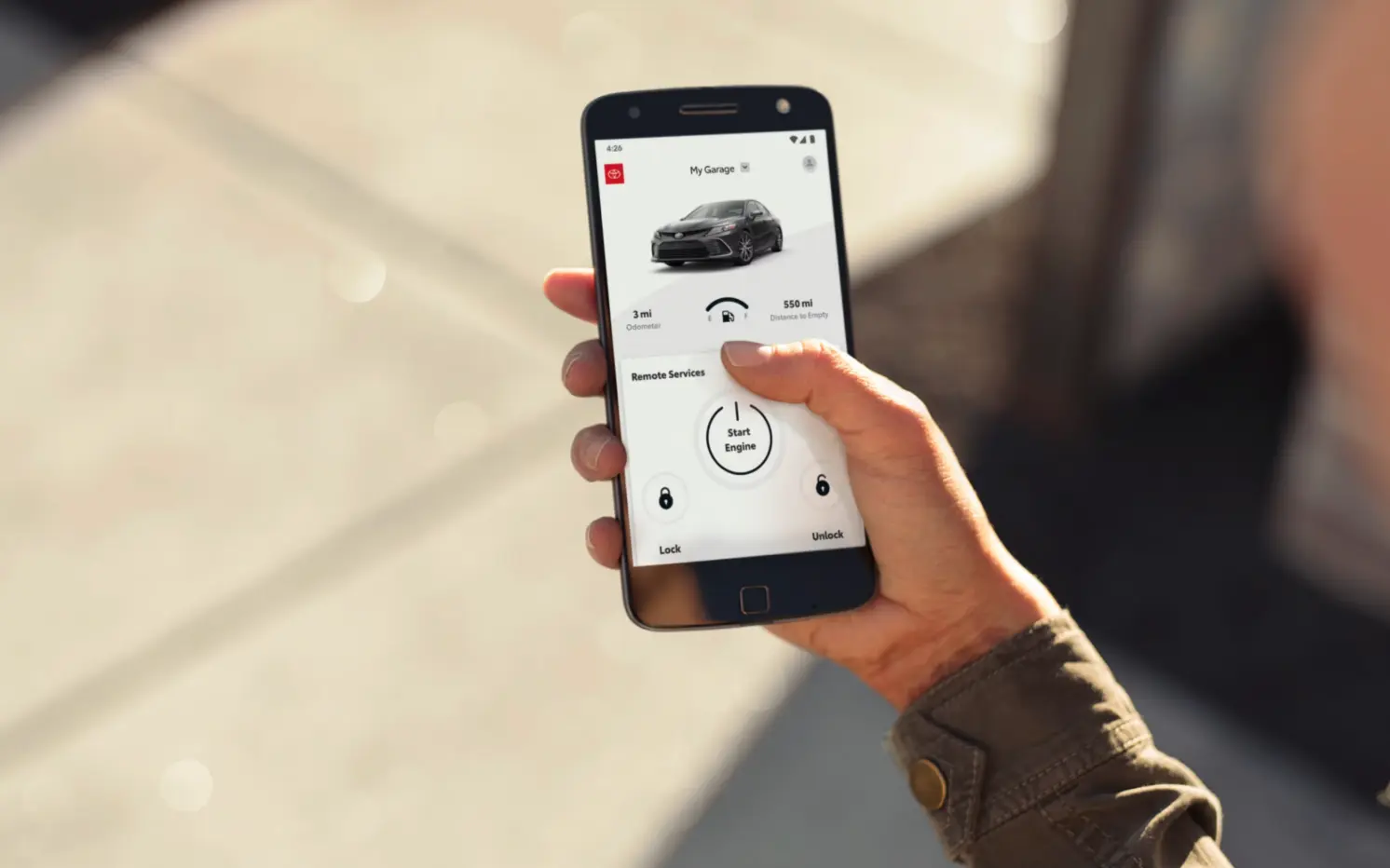
Setting up the Toyota app takes about five minutes once you download it, create an account, and link it to your vehicle using your VIN or a QR code from your glovebox, and once that link is complete you can view maintenance alerts, lock or unlock your doors on supported models, and check your vehicle's status from your phone. Toyota of Bristol walks new and returning owners through this setup every week, and the short answer is this: download the Toyota app from the App Store or Google Play, sign in or create a Toyota account, add your vehicle by VIN, and confirm which connected services your specific model and trim support, since availability varies by vehicle and model year. Consider a Bristol driver who just picked up a new RAV4 and wants to confirm their vehicle is locked before leaving for work each morning. That single feature, checking lock status remotely, is often the first thing new owners set up. We wrote this guide to walk you through downloading the app, linking your vehicle, understanding the difference between Remote Connect, Service Connect, Drive Connect, and Safety Connect, and fixing the most common setup issues we see at our dealership. By the end, you will know exactly how to get your Toyota app running and which features are worth activating for your daily routine, whether you just took delivery or have owned your Toyota for years and never got around to setting it up. Definition: The Toyota app is a smartphone application that links to a compatible vehicle to provide remote vehicle status, maintenance alerts, and available connected services such as Remote Connect and Service Connect. It is designed to give owners convenient access to their vehicle information without being physically present. For drivers in Bristol, Kingsport, and Johnson City, it provides a way to check service reminders and vehicle status from anywhere with cellular coverage. On this guide: How to Download and Set Up the Toyota App Download and Create Your Account Link Your Vehicle What You Can Do Once Setup Is Complete Remote Connect, Service Connect, and Trial Options Comparing the Connected Services Which Service Fits Your Situation Getting Toyota App Support Locally in Bristol and the Tri-Cities Common Toyota App Troubleshooting Tips How the Toyota App Works With ToyotaCare and Service Reminders Key Takeaways Frequently Asked Questions Get Help from Toyota of Bristol How to Download and Set Up the Toyota App Setting up the Toyota app takes three steps: download it, create or sign into a Toyota account, and link your vehicle using your VIN, and the whole process usually takes less than ten minutes. Download and Create Your Account We recommend starting on your phone's app store rather than searching the web, since the official Toyota app is free and available for both Apple and Android devices. Here is the setup sequence we walk new owners through: Download the Toyota app from the App Store or Google Play. Open the app and choose to create an account or sign in with an existing Toyota account. Enter the basic information requested, including your name and contact details. Confirm your account through the verification email or text message the app sends. Accept the Connected Services Terms of Use before adding your vehicle. For a Bristol driver who just picked up a new 2026 RAV4, we recommend completing account creation before leaving our lot, because our team can confirm your VIN and help you finish the first step while you are still with us. This same sequence, download, create an account, verify, and accept the terms, applies whether you drive a brand-new Toyota or one that is a few years old, as long as your model supports connected services. Our sales team can confirm connected services eligibility by VIN before you even open the app, which saves you a step if your model was built earlier in a given production year. Link Your Vehicle Once your account is active, linking your vehicle is the next step. You can add your Toyota using the 17-character VIN found on your dashboard, driver's door jamb sticker, or registration, or by scanning the QR code often found in your glovebox or owner's manual. After entering this information, the app confirms your vehicle and displays which connected services, Remote Connect, Service Connect, Drive Connect, or Safety Connect, are available for your specific model and trim. For a returning Toyota owner who upgraded phones and needs to relink an existing vehicle, we recommend removing the old device from your Toyota account settings first, then reinstalling the app on the new phone and signing back in, since two active devices on the same vehicle can sometimes cause remote commands to lag or fail. Our team can confirm your VIN and registration status if the app does not recognize your vehicle on the first attempt. This step trips up more owners than any other part of setup, usually because the VIN was typed with a mixed-up character or the vehicle had not yet been fully registered with Toyota at the time of purchase. Setup Step New Owner (Just Purchased) Returning or Transferring Owner Download the app Do this before leaving our showroom Reinstall if switching to a new phone Create or sign into account Create a new account Sign into your existing account Link vehicle by VIN Confirm VIN with our team on delivery day Remove the old vehicle first if it was sold or traded Review available features Try every trial feature from day one Reconfirm which features carry over to the new vehicle Remove old devices Not applicable Remove prior phone from account settings Confirm notifications Enable notifications during setup Recheck phone notification permissions after reinstalling Best For / Ideal Use Case New owners should complete setup at delivery with our team present; returning owners switching phones or vehicles should clear old devices and vehicles from their account first. Based on Toyota official website. What You Can Do Once Setup Is Complete Once setup is complete, what we see most new owners use first is the ability to check their vehicle's lock status and last known location before leaving for work or after parking in a crowded lot. From there, our sales team walks customers through the fuller feature set, including remote start on supported models, vehicle health reports, and maintenance alerts tied to your actual mileage rather than a generic calendar reminder. If you want to confirm exactly which connected features apply to your specific Toyota model and trim before you finish setup, our team can pull that information directly from your VIN and walk through it with you in person, whether that is during a delivery appointment or a separate visit weeks later. Research Your Toyota's Connected Features Remote Connect, Service Connect, and Trial Options Remote Connect, Service Connect, Drive Connect, and Safety Connect each cover different features, and most new Toyota vehicles include a trial period before a subscription is required to keep using them. Comparing the Connected Services We put together the comparison below from the current Toyota connected services lineup so you can see what each one actually does before deciding what to activate. Service What It Does Included Trial Best For Remote Connect Lock and unlock, remote start on supported models, vehicle locator, Digital Key on select models Included trial period, length varies by model Owners who want daily convenience and quick vehicle checks Service Connect Vehicle health reports, maintenance alerts tied to mileage Included trial period, length varies by model Owners who want to stay ahead of service needs Drive Connect Cloud navigation, live agent destination assist, voice commands Included trial period, length varies by model Owners who road-trip often or want live routing help Safety Connect Automatic collision notification, emergency assistance button, roadside assistance support Included trial period, length varies by model Owners who prioritize emergency response features Digital Key (select models) Phone-as-key vehicle access without a physical key Availability varies by model and trim Owners who want key-free entry Owner Resources Digital owner's manual and warranty guides Included at no extra cost Any owner who wants quick reference documents Best For / Ideal Use Case New owners should activate Remote Connect and Service Connect first, since those two cover daily convenience and maintenance awareness; add Drive Connect or Safety Connect based on your driving habits. Based on Toyota official website. Based on our experience at Toyota of Bristol, most owners get the most everyday value from Remote Connect and Service Connect, since those two features cover daily convenience and maintenance awareness without requiring you to learn a new navigation system. Drive Connect and Safety Connect add real value for road-trippers and safety-focused drivers, but they are less essential for a short daily commute. Which Service Fits Your Situation If you drive short daily errands, then Remote Connect alone likely covers what you need. If you want maintenance reminders tied to your real mileage, then Service Connect keeps you ahead of service visits. If you take regular road trips across the Tri-Cities or beyond, then Drive Connect's live routing support is worth activating. If emergency response and roadside assistance matter most to you, then Safety Connect should be a priority. For a Kingsport commuter who mainly wants to confirm their car is locked from their desk, we recommend Remote Connect because it covers that single need without adding features you will not use daily. For a Johnson City family tracking maintenance across two Toyota vehicles, we recommend Service Connect because mileage-based alerts help you stay ahead of service instead of guessing from a sticker on the windshield. For an Abingdon driver who frequently crosses into Southwest Virginia for work, we recommend Drive Connect because live destination assist and cloud navigation hold up better than a phone's map app in areas with inconsistent signal. Many owners end up activating more than one service once they see how the features complement each other during daily driving. We invite you to stop by our showroom at 3045 W State St in Bristol if you want help activating any of these features in person rather than working through settings menus on your own. Our team can pull up your VIN, confirm exactly which connected services your Toyota supports, and walk through the app with you step by step. If you already own a Toyota and are not sure whether your trial period is still active, we can check that for you the same day. We also help owners decide which services are worth keeping active once a trial period ends, based on how you actually drive rather than a generic recommendation. Whether you need five minutes of help or a full walkthrough, call us or stop in and we will make time for it. We built this process to be simple, not something you have to figure out alone. Talk to Our Team About Your Toyota App Getting Toyota App Support Locally in Bristol and the Tri-Cities Cellular coverage and terrain across Bristol and the Tri-Cities can affect how quickly Remote Connect and Safety Connect respond, and knowing what to expect locally helps set the right expectations. Local Connectivity and What to Expect Here in the Tri-Cities, we see Remote Connect and Safety Connect work fastest in Bristol, Kingsport, and Johnson City proper, where cellular coverage is strongest, while owners driving mountain routes near Abingdon or rural stretches near Elizabethton may notice a short delay before a remote command confirms, since the app relies on your vehicle's cellular connection rather than your phone's. Area Connectivity Note Recommended Tip Bristol city center Generally strong cellular coverage Remote commands typically respond within seconds I-81 corridor toward Kingsport Coverage mostly consistent, occasional dips in low areas Allow a few extra seconds for remote start confirmation Mountain routes near Abingdon, VA Coverage can vary with elevation and terrain Try the command again once you reach a clearer signal area Rural stretches near Elizabethton and Blountville Coverage can be more limited Vehicle location and lock status still sync once signal returns For a Kingsport commuter whose remote start sometimes takes a few extra seconds to confirm on I-81, we recommend simply waiting a moment before repeating the command, since the delay usually reflects a brief signal gap rather than an app problem. For an Elizabethton owner unsure whether their specific model even supports connected services, we recommend asking our team to check availability by VIN before assuming a feature is missing or broken. A quick VIN check takes our team less than a minute and removes the guesswork entirely. Our team has helped owners across Bristol, Kingsport, Johnson City, Abingdon, and Elizabethton get their Toyota app running correctly for years, and that local troubleshooting experience is part of why so many owners come back to us with app questions instead of guessing on their own. If you are enrolled in our Toyota of Bristol Advantage Plan, our service team can also confirm how your app's maintenance alerts line up with your actual service history. We recommend bringing your phone with the app open when you visit for service, so our technicians can confirm everything is syncing correctly in the same visit. You can request an appointment through toyotaofbristol.com or call our showroom directly. Either way, we treat app questions the same way we treat any other ownership question, with a direct answer, not a runaround. We want your Toyota app working the way it should before you leave. Schedule Service With Toyota of Bristol Common Toyota App Troubleshooting Tips Most Toyota app issues come down to an old device or vehicle still linked to your account, a weak cellular signal, or notification settings on your phone, and each has a straightforward fix. Issue Likely Cause What to Try App shows a vehicle you no longer own Old vehicle was not removed after a trade-in or sale Remove the vehicle from your account settings, then add your current Toyota Remote commands are slow or fail Weak cellular signal at your vehicle's location Wait a moment and try again once you are in a stronger coverage area App will not recognize your VIN VIN entered incorrectly or vehicle not yet registered Double check each character, or ask our team to confirm registration Notifications are not arriving Notification permissions disabled on your phone Check your phone's notification settings for the Toyota app Two devices show conflicting status Vehicle linked to more than one active device Remove the older device from your account settings Based on Toyota official website. For an owner whose app still shows a vehicle they traded in or sold months ago, we recommend removing that vehicle from your account settings before adding your current Toyota, since leaving an old vehicle linked can cause confusing notifications and status updates that have nothing to do with the car you actually drive now. If none of these steps resolve the issue, our team can look at your account directly rather than leaving you to troubleshoot alone. We would rather spend five minutes checking your account in person than have you stuck cycling through the same settings menu at home. Browse Our New Toyota Inventory How the Toyota App Works With ToyotaCare and Service Reminders The Toyota app and ToyotaCare work together to keep your service schedule visible, so maintenance alerts in the app can help you plan the same visits your factory coverage already includes. Service Connect's maintenance alerts are most useful when they line up with what your ToyotaCare coverage already includes, since the app can remind you a service is due while ToyotaCare, when applicable, helps cover the visit itself. Here is how we recommend using both together: Check your app's vehicle health report before scheduling service, so you arrive with a clear picture of what is due. Match app alerts to your ToyotaCare coverage window, since early visits are often included at no extra cost. Use the app to confirm your service history, which helps our technicians move faster at check-in. If your maintenance alert and your ToyotaCare window line up, then scheduling that visit costs you nothing extra in most cases. If your alert appears after your ToyotaCare coverage ends, then we will walk through pricing before any work begins. If you are unsure which applies to your vehicle, then bringing your app to your appointment lets our team confirm it on the spot. For a Johnson City family managing two Toyota vehicles on different service schedules, we recommend checking the app before each visit rather than relying on memory, since mileage-based alerts account for how each vehicle is actually driven rather than assuming both cars age the same way. This habit alone prevents most of the missed-service surprises we see at check-in. See Your Toyota's ToyotaCare Coverage Key Takeaways Setup takes three steps: download the app, create your account, and link your vehicle by VIN. Remote Connect and Service Connect cover most owners' daily needs; Drive Connect and Safety Connect add value for road-trippers and safety-focused drivers. Mountain routes near Abingdon and rural stretches near Elizabethton may show a short delay before remote commands confirm. Removing an old vehicle or device from your account fixes most confusing notifications after a trade-in or phone upgrade. Matching app maintenance alerts to your ToyotaCare window can help you schedule service at no extra cost. Toyota App Questions Bristol Drivers Ask Is the Toyota app free to use? The Toyota app itself is free to download and use for basic account and vehicle information. Many connected services, including Remote Connect, Service Connect, Drive Connect, and Safety Connect, come with an included trial period on eligible models, and a subscription is required to keep using select features after that trial ends. We recommend checking your app's Multimedia Settings screen for your exact trial length and included services, since these vary by model and model year. What is the difference between Remote Connect and Service Connect? Remote Connect focuses on daily convenience, including locking and unlocking your doors, remote start on supported models, and locating your vehicle in a parking lot. Service Connect focuses on ownership upkeep, delivering vehicle health reports and maintenance alerts tied to your actual mileage rather than a generic calendar reminder. Most owners find value in activating both, since one handles daily use and the other keeps you ahead of scheduled service. Why won't my Toyota app connect to my vehicle? This is one of the most common questions we hear from owners who recently traded vehicles or switched phones, and it almost always comes down to an old vehicle or device still linked to the account. Removing the previous vehicle from your account settings, then re-adding your current Toyota by VIN, resolves most connection issues. If the app still will not recognize your VIN after that, our team can confirm your vehicle's registration status directly. Can I use the Toyota app on more than one phone? You can sign into your Toyota account on more than one device, but keeping two active devices linked to the same vehicle can sometimes cause remote commands to lag or show conflicting status. We recommend removing an older phone from your account settings once you switch devices to keep everything running smoothly. Get Help from Toyota of Bristol We are here to help you get your Toyota app working the way it should, whether you just took delivery or have owned your Toyota for years. Stop by our showroom at 3045 W State St in Bristol, TN, and our team will walk through setup, feature activation, or troubleshooting with you in person. If you are enrolled in our Toyota of Bristol Advantage Plan or already follow your ToyotaCare schedule, bring your phone with the app open at your next visit so we can confirm everything is syncing correctly. We proudly support drivers across Bristol, Kingsport, Johnson City, Abingdon, Blountville, and Elizabethton with the same direct, in-person help we would want if the roles were reversed. If you have a specific Toyota app question right now, call us or stop in and we will find you an answer today. We would rather solve it in person in a few minutes than have you searching through settings menus on your own tonight, and that same offer stands whether you bought your Toyota from us or somewhere else entirely. Visit Our Service Center Related Articles Keep reading more Toyota ownership guides, service tips, and technology walkthroughs from Toyota of Bristol. Ownership Guide Is ToyotaCare Worth It in Bristol? See what ToyotaCare covers, how long it lasts, and how Bristol and Tri-Cities owners can get the most from it. Read More Service Comparison Toyota Service Care vs ToyotaCare in Bristol, TN Compare what ToyotaCare includes versus paid Service Care and ToyotaCare Plus options for Tri-Cities owners. Read More Maintenance Guide How Often Should You Change Your Toyota Oil? See how oil intervals, tire rotation, and inspections fit together in your Toyota's factory maintenance schedule. Read More Tire Care Guide How Often Should You Rotate Toyota Tires in Bristol, TN? See rotation intervals, warning signs, and how Tri-Cities driving conditions affect tire wear. Read More

Toyota Trade-Up Program vs Trade-In: What Bristol Drivers Should Know

Toyota Trade-Up Program vs Trade-In: What Bristol Drivers Should Know

A Toyota Trade-Up Program lets you roll the value of your current vehicle directly into a newer Toyota, while a traditional trade-in simply exchanges your car for a credit that can go toward any vehicle you choose. The right choice depends on your loan payoff, your equity position, and how quickly you want newer safety technology and a fresh warranty. Toyota of Bristol works with drivers across the Tri-Cities every week who are weighing these two paths, and the short answer is this: if you have positive equity and want to stay in a newer model without a separate selling process, the Trade-Up Program almost always gets you there faster. If you are unsure about your equity, need cash back, or are comparing vehicles outside the Toyota lineup, a traditional trade-in may fit better. Consider a Bristol driver ready to move from a paid-off Corolla into a newer RAV4 for extra cargo room ahead of family trip season. That is a textbook trade-up scenario. We built this guide to walk you through what separates a trade-up from a trade-in, how appraisal, payoff, and equity actually work, what to bring when you visit us for a valuation, and how to decide which path fits your situation. By the end, you will know exactly which option makes sense for your vehicle, your loan, and your next Toyota, whether you drive a Toyota today or are considering one for the first time. Definition: A trade-up program is a dealership process that applies a vehicle's appraised equity directly toward a newer model in a single visit, while a trade-in is a standard appraisal used as credit toward any vehicle purchase. Both begin with a vehicle valuation and loan payoff check. For drivers in Bristol, Kingsport, and Johnson City, understanding the difference helps determine the faster, lower-paperwork path to a newer vehicle. On this guide: Trade-Up Program vs Traditional Trade-In What Each Option Means Appraisal, Payoff, and Equity Explained Upgrade Options and What We See Locally Comparing Your Options: Trade-Up, Trade-In, and Private Sale Side-by-Side Comparison When Trading Up May Make Sense What to Bring for a Vehicle Appraisal in Bristol Owe More Than It's Worth? Understanding Equity and Payoff Timing Your Trade-Up: Mileage, Model Year, and Warranty Windows Key Takeaways Frequently Asked Questions Start Your Trade-Up at Toyota of Bristol Trade-Up Program vs Traditional Trade-In A trade-up applies your vehicle's equity directly toward a newer Toyota in one visit, while a trade-in is a separate valuation step that can be used toward any vehicle purchase, in cash, or financed elsewhere. What Each Option Means We carry the Trade-Up Program as a standard option for any current owner, Toyota or otherwise, who wants to move into a newer model without running a separate sale on their own. Here is how the main paths differ in practice: Trade-Up Program: Your vehicle's appraised value is applied directly toward a newer Toyota, often the same day, with financing and paperwork handled in one visit. Traditional Trade-In: Your vehicle is appraised and the value is applied as a credit toward any vehicle you choose, new or used, at our dealership. Private Sale: You sell the vehicle yourself, which can take weeks and requires you to handle listings, buyer meetings, and paperwork on your own. For a Bristol driver with a 2021 Toyota RAV4 carrying roughly $3,000 in positive equity, we recommend the Trade-Up Program because that equity applies immediately toward a 2026 RAV4 purchase or lease, and our finance team coordinates the payoff with your current lender directly instead of leaving that step to you. We stock every current RAV4 trim on our lot, so this same driver can move from an older model straight into the configuration that fits their needs without waiting on a special order. Browse Our New Toyota Inventory Appraisal, Payoff, and Equity Explained Our appraisal starts with a market-based valuation of your vehicle using current condition, mileage, and regional demand, similar to the methodology Kelley Blue Book publishes for used vehicle values. From there, our team pulls your exact loan payoff from your lender, since the number on your monthly statement is rarely your true ten-day payoff amount. The difference between your appraised value and your payoff is your equity, and it can be positive or negative. For example, an owner with an $18,000 loan payoff and a vehicle appraised at $21,000 has $3,000 in positive equity, which applies directly toward a new purchase. An owner with a $19,500 payoff and a $17,000 appraisal has $2,500 in negative equity, meaning that gap gets added to the new loan rather than paid out of pocket at signing. Either way, we walk through these numbers with you before you commit to anything. Our technicians also factor in tire wear, brake pad thickness, and any open recalls during the physical inspection, since those details can shift the final appraised value up or down from the initial online estimate. Upgrade Options and What We See Locally What we see here in Bristol is that most trade-up requests come from owners whose vehicle no longer fits a changed need, a growing family, a longer commute, or simply the desire for updated Toyota Safety Sense features and a fresh factory warranty. Our sales team walks customers through every trim available on a comparable new model so the transition feels like an upgrade, not just a swap. For a young professional in Bristol trading in an older off-brand sedan for a first new Toyota Corolla, we recommend starting with a trade-up conversation rather than a private sale, because it consolidates the appraisal, financing, and paperwork into a single, same-day process instead of three separate errands spread across a few weeks. We also see this approach work well for buyers stepping up from a Corolla into a Camry or RAV4 as their needs change, since the appraisal process stays the same regardless of which model you are moving into or away from. Comparing Your Options: Trade-Up, Trade-In, and Private Sale The fastest path to a newer Toyota usually depends on whether your appraised value covers your loan payoff, not on which option sounds better on paper. Side-by-Side Comparison We built the table below from what our own appraisal desk sees week to week, so you can line up speed, paperwork, and equity handling before you decide which path to take. Option Speed Paperwork Equity Application Works With Negative Equity Toyota Trade-Up Program Often same visit Handled in one appointment by our finance team Applied directly to a newer Toyota Case by case, often yes Traditional Trade-In Same-day appraisal Appraisal plus separate purchase paperwork Applied as purchase credit Yes, rolled into new loan Private Sale Typically weeks Full responsibility on the seller Cash before next purchase Payoff must clear before title transfers KBB-Based Online Estimate Minutes online Informational only Not applicable Not applicable Certified Pre-Owned Trade-In Same-day Similar to standard trade-in Applied as purchase credit Yes Lease Return Plus Trade-Up Same-day lease-end appointment Lease-end and trade-up paperwork combined Applied if equity exists Depends on mileage and wear charges Best For / Ideal Use Case Drivers with positive equity who want a newer Toyota the same day should start with the Trade-Up Program; drivers who owe more than their car is worth or want maximum cash should start with a traditional trade-in or private sale conversation. Based on Toyota official website. Based on our experience at Toyota of Bristol, the Trade-Up Program is the better fit whenever your appraised value is equal to or greater than your loan payoff, because it collapses the appraisal, payoff, and next purchase into a single visit instead of three separate transactions. For drivers who owe more than their car is worth or want maximum cash before shopping elsewhere, a traditional trade-in or private sale may still make more sense. When Trading Up May Make Sense If your appraised value covers your loan payoff, then the Trade-Up Program gets you into a newer Toyota the same day. If you owe more than your car is worth, then a traditional trade-in lets us roll the difference into your next loan with clear terms upfront. If you want maximum cash and have weeks to spare, then a private sale may net more money before fees. If your lease is ending within 60 days, then a lease-end trade-up appointment combines your return and upgrade in one visit. If you drive Kingsport's I-81 corridor daily and want to skip listing and negotiating a private sale, then the Trade-Up Program applies your value the same day. If you are a Johnson City family moving from a Corolla to a three-row Grand Highlander before youth sports season, then a traditional trade-in paired with our Get Pre-Qualified tool gives more flexibility to compare configurations first. If you are an Abingdon, VA driver looking to simplify to one easier-to-drive Toyota, then the Trade-Up Program reduces paperwork to a single visit while our team coordinates payoff directly. For a Kingsport commuter who wants to avoid the hassle of a private sale, we recommend the Trade-Up Program because it applies your trade value the same day and skips separate listing and negotiation steps entirely. This same approach works well for anyone balancing a full work schedule who simply does not have time to field calls and texts from private buyers over several weeks. We invite you to stop by our showroom at 3045 W State St in Bristol so our team can walk you through a real trade-up appraisal on your current vehicle. We use current market data and your loan payoff information to give you an accurate number in minutes, not days. If you already have an idea of your vehicle's value, you can start with our Value Your Trade tool on toyotaofbristol.com before you arrive, which speeds up your visit once you are here. Our finance team coordinates directly with your current lender to confirm payoff, so you are never guessing about what you owe. Whether you are ready to trade up today or just want to understand your options, call us and we will set aside time to review your specific numbers. We keep this process straightforward because we want you to leave with a clear answer, not more questions. Get Pre-Qualified For Your Trade-Up What to Bring for a Vehicle Appraisal in Bristol Bristol and Tri-Cities drivers face mountain grades, seasonal weather, and longer commutes that affect vehicle wear and appraisal value, and knowing what to bring speeds up your visit. Appraisal Checklist and Local Driving Factors Here in Bristol, we see accelerated wear on tires, brakes, and suspension components from I-81 grades, seasonal ice on Appalachian elevation changes, and daily Bristol and Kingsport traffic, and our appraisal accounts for these regional factors rather than applying a generic nationwide estimate. Drivers commuting the I-26 corridor toward Johnson City or crossing into Southwest Virginia through Abingdon often show more brake wear than the mileage alone would suggest, so we inspect those components closely rather than relying only on odometer figures. Document or Item Why We Need It Title or most recent loan payoff statement Confirms ownership and remaining loan balance Current vehicle registration Confirms ownership details match our records Both sets of keys and remotes Missing keys can affect the final appraisal number Maintenance and service records Documented upkeep supports stronger value for well-maintained vehicles Valid driver's license Required for any test drive or same-day transaction Current insurance card Needed if you finance a new vehicle the same day For an Elizabethton driver arriving for a first appraisal appointment unsure what paperwork to bring, we recommend bringing your title or most recent loan statement, both sets of keys, and your maintenance records, because these three items alone resolve most of the delays we see at check-in. For a Blountville driver whose 2016 Tacoma is already paid off and in solid mechanical shape, we recommend a traditional trade-in appraisal because a clean title with full ownership lets you apply 100 percent of the appraised value toward your next Toyota, whether that is a trade-up or a straightforward purchase. Paid-off trucks and SUVs with documented maintenance tend to hold value especially well in our market, since local buyers and our own used inventory both place a premium on well-kept, higher-clearance vehicles suited to Tri-Cities winters. Value Your Trade Before You Visit Our team has appraised vehicles for drivers across Bristol, Kingsport, Johnson City, Abingdon, and Elizabethton for years, and that local reputation is part of why so many owners return to us when it is time to trade up again. If you are already part of our Toyota of Bristol Advantage Plan, bring your service records with you, since documented maintenance at our service center often supports a stronger appraisal. We recommend scheduling your appraisal appointment ahead of a weekend visit so our appraiser has time to walk the vehicle with you and answer questions on the spot. You can request an appointment through toyotaofbristol.com or call our showroom directly to reserve a time that works for your schedule. Either way, we will have your paperwork ready before you arrive so the visit moves quickly. We built this process around minimizing your time in the dealership, not maximizing it. Start Your Vehicle Appraisal Owe More Than It's Worth? Understanding Equity and Payoff Negative equity does not rule out a trade-up. It simply means the gap between what you owe and what your car is worth gets added to your next Toyota loan, and knowing that number upfront keeps the process transparent. We recently worked with a driver who owed $19,500 on a vehicle appraised at $17,000, a $2,500 gap. Rather than treating that as a dead end, our finance team rolled the difference into the new loan and reviewed the updated monthly payment before any paperwork was signed, so there were no surprises at delivery. Scenario Payoff Appraised Value Equity Recommended Path Positive equity, small gap $16,000 $19,000 +$3,000 Trade-Up Program Positive equity, large gap $10,000 $22,000 +$12,000 Trade-Up Program or Trade-In Break-even $18,000 $18,000 $0 Trade-Up Program Negative equity, small gap $19,500 $17,000 -$2,500 Trade-Up with rolled balance Negative equity, large gap $24,000 $16,000 -$8,000 Traditional Trade-In with finance review Paid off, no loan $0 $15,000 +$15,000 Trade-In or Trade-Up Best For / Ideal Use Case Any owner uncertain about their equity position should start with a free appraisal before deciding between a trade-up and a trade-in. Based on Toyota official website. Our finance team advises getting your exact payoff number before you assume negative equity is a barrier, because the real gap is often smaller than owners expect once a ten-day payoff quote replaces an estimated monthly statement balance. We also review term length and interest rate on the new loan side by side with your old one, so rolling in negative equity never comes as a surprise on your first new payment. Timing Your Trade-Up: Mileage, Model Year, and Warranty Windows The best time to trade up is usually before high mileage or an expiring warranty pulls your appraisal value down, not after. Mileage and remaining factory warranty coverage both influence your appraisal, and waiting too long can quietly shrink your equity. Here is what we recommend watching for: If your vehicle is approaching 60,000 miles, appraise it now, since values typically step down at that mileage threshold. If your Toyota Basic Warranty is within six months of expiring, a trade-up lets you move into a fresh coverage window before repairs become an out-of-pocket concern. If you are within 60 days of a lease-end date, combine your lease return and trade-up appointment to avoid separate visits. If a new model year has just been announced, expect trade-in values on your current model year to shift, so timing your appraisal before that shift can work in your favor. For a driver nearing the end of a Toyota lease who assumes a trade-up only applies to owned vehicles, we recommend scheduling a lease-end trade-up appointment instead, because our team can review your mileage, wear charges, and next-vehicle options in the same visit rather than treating lease return and shopping as two separate errands. We also track factory incentives that shift by model year, so timing your appraisal around a current offer can add value on top of your vehicle's equity alone. Check Current Toyota Incentives Key Takeaways The Trade-Up Program applies your vehicle's equity directly toward a newer Toyota, often the same day. A $2,500 negative equity gap, for example, simply rolls into your next loan rather than blocking the upgrade. Bring your title or payoff statement, both key sets, and maintenance records to speed up your appraisal. Kingsport commuters and Johnson City families typically benefit most from a same-visit trade-up over a private sale. Appraise your vehicle before it crosses 60,000 miles or your factory warranty expires to protect your equity. Trade-Up and Trade-In Questions Bristol Drivers Ask What is the difference between a Toyota Trade-Up Program and a trade-in? The Trade-Up Program applies your current vehicle's appraised equity directly toward a newer Toyota in one visit, with our finance team coordinating your loan payoff and new financing together. A traditional trade-in is a separate appraisal step, and the resulting credit can go toward any vehicle you choose, new or used, rather than being tied to an immediate upgrade. Most Bristol drivers with positive equity find the Trade-Up Program faster, while drivers comparing several vehicles, including non-Toyota models, often prefer the flexibility of a standard trade-in before deciding what to buy next. Can I use the Trade-Up Program if I owe more than my car is worth? This is one of the most common questions we hear from first-time trade customers in Bristol who assume negative equity rules out an upgrade entirely. It does not. Our finance team confirms your exact ten-day payoff, compares it to your appraisal, and rolls any gap into your new loan with the updated payment shown to you before you sign anything. Many owners are surprised the real gap is smaller than the monthly statement balance suggested, since a payoff quote accounts for interest already paid down. What documents do I need for a trade-up or trade-in appraisal at Toyota of Bristol? Based on what our team sees here in Bristol, bringing your title or most recent loan payoff statement, both sets of keys, your current registration, and any maintenance records covers nearly every appraisal scenario. A valid driver's license and current insurance card are also needed if you plan to finance a new Toyota the same day. Arriving with these items typically cuts appraisal and paperwork time in half compared to arriving without them. If you are missing a document, call ahead and we can often confirm payoff or registration details directly with your lender or the county clerk before your appointment, so a missing paper does not turn into a wasted trip. Does trading up affect my current ToyotaCare or factory warranty coverage? Trading up moves you into a new vehicle with its own fresh ToyotaCare and factory warranty terms, so any remaining coverage on your current vehicle transfers with that vehicle, not with you. This is one reason we recommend trading up before your existing warranty runs low, so you move directly into new coverage without a gap. Start Your Trade-Up at Toyota of Bristol We are here to help you decide between a trade-up and a trade-in with real numbers, not guesswork. Stop by our showroom at 3045 W State St in Bristol, TN, and our team will walk you through an accurate appraisal on your current vehicle the same day. If you are already enrolled in our Toyota of Bristol Advantage Plan or have kept up with ToyotaCare maintenance, bring those records, since they often strengthen your appraisal. We proudly serve drivers across Bristol, Kingsport, Johnson City, Abingdon, Blountville, and Elizabethton, and we build every appraisal around your specific loan, mileage, and vehicle condition. If you are ready to see what your current Toyota is worth toward a newer model, request an appointment on toyotaofbristol.com or call our showroom directly. We will have your paperwork ready before you walk in, so your visit moves quickly and ends with a clear next step. Our goal is the same for every driver who walks through our doors, whether you drive in from Bristol, Kingsport, or across the state line from Abingdon: a straightforward answer about your equity and a clear path to your next Toyota. View Our Trade-Up Program Related Articles Keep reading more Toyota model guides, service tips, and ownership advice from Toyota of Bristol. Ownership Guide Maximizing Your Toyota Trade-In Value: A Bristol Driver's Guide Simple prep steps, from detailing to minor repairs, that can help boost your Toyota's trade-in appraisal before your visit. Read More SUV Comparison 2026 Toyota RAV4 vs Corolla Cross: Which Toyota SUV Fits Bristol Drivers? See how size, cargo room, efficiency, and price compare so shoppers in Bristol, Kingsport, and Johnson City can choose confidently. Read More Safety & Tech Guide Toyota Safety Sense 3.0 Explained: Features, Benefits, and Model Availability See what Toyota Safety Sense 3.0 may include and how Bristol and Tri-Cities shoppers can compare safety tech across Toyota models. Read More Service Guide How Often Should You Rotate Toyota Tires in Bristol, TN? Learn rotation intervals, warning signs, and how mountain roads and Tri-Cities driving conditions affect tire wear. Read More

RAV4_XLE_vs_XSE

2026 Toyota RAV4 vs Corolla Cross: Which Toyota SUV Fits Bristol Drivers?

Choose the 2026 Toyota RAV4 if you want more space, stronger road-trip flexibility, and a hybrid-focused compact SUV with available HEV or PHEV powertrains depending on grade. Choose the 2026 Toyota Corolla Cross if you want a smaller Toyota crossover with easier parking, efficient weekday driving, and gas or hybrid options. Toyota of Bristol helps local shoppers compare both SUVs by size, powertrain, cargo needs, daily route, and family routine. For a Bristol commuter, Corolla Cross may feel easier around town; for a Johnson City family of four, RAV4 usually gives more long-term flexibility. The right answer depends on how much space you need and how you drive most days. RAV4 is the better fit when rear-seat comfort, cargo room, weekend gear, pets, and longer trips matter. Corolla Cross is the better fit when a smaller footprint, strong efficiency, easier parking, and simple Toyota SUV utility are higher priorities. This comparison keeps the focus narrow: RAV4 versus Corolla Cross for Bristol and Tri-Cities shoppers deciding between two Toyota SUVs. We will compare size, efficiency, commuting fit, family use, local roads, and long-term ownership fit without turning this into a broad RAV4 review or a Corolla Cross trim guide. Definition: A RAV4 vs Corolla Cross comparison is a Toyota SUV decision between a compact SUV and a smaller crossover. It helps drivers compare size, efficiency, cargo room, powertrain choices, parking ease, and family practicality for daily use in Bristol and nearby Tri-Cities communities. Compare Toyota SUVs Table of Contents RAV4 vs Corolla Cross at a Glance Size, Cargo Room, Efficiency, and Price Considerations Powertrain Choices: RAV4 HEV or PHEV vs Corolla Cross Gas or Hybrid Interior Comfort, Technology, and Daily Practicality Which SUV Is Better for Commuting? RAV4 vs Corolla Cross Commuter Comparison Table Use-Case Recommendations for I-81, I-26, Parking, and Fuel Efficiency Which SUV Is Better for Families? Rear-Seat Comfort, Cargo Needs, School Runs, Pets, and Weekend Trips Family and Lifestyle Fit: When the RAV4 Is the Better Long-Term Toyota SUV Ownership Cost Analysis: When Corolla Cross Makes More Sense Key Takeaways 2026 Toyota RAV4 vs Corolla Cross FAQ for Bristol Shoppers Is the 2026 RAV4 bigger than the Corolla Cross? Which Toyota SUV is better for commuting? Which Toyota SUV is better for families? Should I choose RAV4 or Corolla Cross if I want better efficiency? Compare Toyota SUVs at Toyota of Bristol RAV4 vs Corolla Cross at a Glance Key Takeaway: RAV4 is the better Toyota SUV for space, family flexibility, and longer trips, while Corolla Cross is the better fit for easy parking, smaller-SUV value, and efficient daily use. Size, Cargo Room, Efficiency, and Price Considerations The biggest difference between the 2026 RAV4 and Corolla Cross is size and role. RAV4 sits higher in the Toyota SUV lineup as a compact SUV with more road-trip and family flexibility. Corolla Cross is smaller and easier to handle in tight daily spaces, which makes it attractive for commuters, first-time Toyota buyers, students, young professionals, and drivers who do not need as much cargo room. For 2026, RAV4 is available with HEV or PHEV powertrains depending on grade, while Corolla Cross offers gas-powered models with FWD or AWD and Hybrid AWD grades. Corolla Cross gas models have an EPA-estimated 32 combined MPG rating, and Corolla Cross Hybrid has an EPA-estimated 42 combined MPG rating. Toyota also lists Corolla Cross with up to 24 cu. ft. of cargo space, which is useful for urban commutes and weekend errands. For a Bristol daily commuter who wants Toyota SUV utility without moving too far up in size, we recommend starting with Corolla Cross. For a Johnson City family of four that regularly carries strollers, sports bags, groceries, and weekend luggage, we recommend starting with RAV4 because the larger footprint better supports family growth. Choose RAV4 if cargo space, rear-seat comfort, and longer trips matter most. Choose Corolla Cross if easy parking, smaller size, and efficient commuting matter most. Choose RAV4 if you want HEV or PHEV powertrain choices depending on grade. Choose Corolla Cross if you want gas or hybrid choices in a smaller Toyota crossover. Compare exact vehicles because drivetrain, features, and availability can vary. Comparison Point 2026 Toyota RAV4 2026 Toyota Corolla Cross Best For Vehicle role Compact SUV with more family and travel flexibility Smaller crossover with city-friendly sizing RAV4 for growing needs; Corolla Cross for right-sized utility Powertrain approach HEV or PHEV depending on grade Gas models or Hybrid AWD grades RAV4 for hybrid-focused SUV shoppers; Corolla Cross for gas or hybrid choice Efficiency context Hybrid-focused 2026 lineup Gas 32 combined MPG, Hybrid 42 combined MPG Corolla Cross Hybrid for smaller-SUV efficiency Cargo approach Better suited for larger family cargo needs Up to 24 cu. ft. of cargo space RAV4 for gear-heavy families; Corolla Cross for lighter cargo routines Parking and maneuvering Still practical, but larger Easier fit for tight parking and daily errands Corolla Cross for apartment parking and short trips Ideal Use Case Family SUV, road trips, pets, and weekend gear Commuting, errands, first Toyota SUV, and efficient daily driving Choose by space needs first Based on Toyota official website. View 2026 RAV4 Details Powertrain Choices: RAV4 HEV or PHEV vs Corolla Cross Gas or Hybrid Powertrain choice is one of the cleanest ways to separate these two SUVs. RAV4 is now a hybrid-focused model with HEV and PHEV choices depending on grade. That makes it a strong fit for shoppers who want Toyota SUV space and electrified power without starting with a gas-only RAV4 decision. Corolla Cross gives shoppers a different kind of flexibility. Gas models are available with FWD or AWD, while Hybrid AWD grades are available for drivers who want stronger efficiency and added traction confidence in a smaller package. For an Abingdon seasonal-weather driver who sees rain, hills, and changing road surfaces, we recommend comparing exact AWD availability on the specific RAV4 or Corolla Cross under consideration. Our team can help shoppers compare RAV4 HEV, RAV4 Plug-in Hybrid, Corolla Cross gas, and Corolla Cross Hybrid without assuming one answer fits every driver. A smaller, efficient Corolla Cross Hybrid can make plenty of sense for commuting. A RAV4 can make more sense when the driver wants extra space and more long-trip flexibility. Interior Comfort, Technology, and Daily Practicality Interior comfort depends on what the cabin needs to do. Corolla Cross is easy to live with for solo drivers, couples, students, and small households. It gives Toyota SUV utility without feeling oversized. RAV4 adds more family-friendly flexibility, especially for drivers who load sports bags, pet supplies, work gear, groceries, and travel luggage. Both models can offer modern Toyota technology and Toyota Safety Sense features, but exact availability should be checked by model, grade, and vehicle. We recommend comparing the actual window sticker, driver-assistance features, screen layout, seating materials, cargo area, and available AWD before deciding. For a Kingsport young professional who wants a smaller Toyota SUV for work, errands, and apartment parking, Corolla Cross is the cleaner starting point. For a Blountville pet owner who carries dog gear, groceries, and weekend items, RAV4 is usually the better fit because extra cargo flexibility matters every week. Which SUV Is Better for Commuting? Key Takeaway: Corolla Cross is usually the easier commuter SUV for tight parking and shorter weekday driving, while RAV4 is better for commuters who also want more space, stronger trip flexibility, and a larger SUV feel. RAV4 vs Corolla Cross Commuter Comparison Table Commuting should not be judged by MPG alone. A good commuter SUV also needs comfortable seating, easy visibility, simple controls, manageable size, driver-assistance confidence, and enough cargo room for daily errands. We recommend deciding based on the commute you actually drive. Commuter Need 2026 Toyota RAV4 2026 Toyota Corolla Cross Best For Daily parking Practical, but larger Easier in tight lots and apartments Corolla Cross for compact spaces Highway confidence Stronger larger-SUV feel for longer drives Confident, smaller, and efficient RAV4 for longer highway stretches Efficiency focus Hybrid-focused lineup Gas or Hybrid, with Hybrid at 42 combined MPG Corolla Cross Hybrid for small-SUV efficiency Errands after work More room for bulkier items Easy to park and load for everyday errands Corolla Cross for light errands, RAV4 for bigger cargo Weekend crossover use Better for family trips and gear Better for light weekend plans RAV4 for multi-purpose households Ideal Use Case I-81 commuter who also needs family space Urban or suburban commuter who values easy sizing Choose by commute plus weekend needs Based on Toyota official website. The commuter verdict is straightforward: we recommend Corolla Cross for drivers who prioritize easy parking, smaller size, efficient daily trips, and simple weekday utility. We recommend RAV4 for commuters who also need extra cargo room, more family flexibility, and a more substantial SUV feel for I-81 or I-26 travel. For Bristol shoppers, the best commuter choice is the SUV that fits both the workweek and the weekend. Use-Case Recommendations for I-81, I-26, Parking, and Fuel Efficiency For a Bristol daily commuter who drives short weekday routes and wants easy parking, we recommend Corolla Cross or Corolla Cross Hybrid because the smaller footprint is easier to manage. For a Kingsport young professional with apartment parking and mostly light cargo, we recommend Corolla Cross because it gives Toyota SUV practicality without adding unnecessary size. For a commuter who drives longer I-81 stretches and carries family gear after work, we recommend RAV4 because extra space becomes more useful quickly. If you drive short city routes, we recommend Corolla Cross because the smaller size makes daily parking easier. If you drive I-81 often and want more cabin confidence, we recommend RAV4 because the larger SUV feel fits longer highway routines. If you want strong small-SUV efficiency, we recommend Corolla Cross Hybrid because Toyota lists 42 combined MPG. If your commute often turns into family errands, we recommend RAV4 because the added room helps after work. If you are choosing your first Toyota SUV, we recommend test driving both because size preference is easiest to feel in person. Shop Toyota SUV Inventory Our sales team can help you compare RAV4 and Corolla Cross side by side so the decision feels practical, not abstract. We can show you cargo openings, rear-seat comfort, driver visibility, hybrid options, available AWD, and current inventory. Start with our new Toyota inventory, or call 423-764-3155 and tell us whether you are leaning toward RAV4 space or Corolla Cross efficiency. We can also help you schedule a test drive that uses the roads you actually drive, including local streets, highway ramps, and parking-lot situations. We recommend bringing your daily routine into the visit so our team can match the SUV to your commute, family needs, and budget. Schedule a Toyota SUV Test Drive Which SUV Is Better for Families? Key Takeaway: RAV4 is usually the better family Toyota SUV because it gives more flexibility for rear-seat comfort, cargo routines, pets, weekend gear, and longer trips. Rear-Seat Comfort, Cargo Needs, School Runs, Pets, and Weekend Trips Family SUV needs tend to grow. A Corolla Cross can work well for a small household, a couple, a first-time SUV buyer, or a parent with lighter cargo needs. RAV4 is the stronger fit when the family routine includes school bags, sports equipment, groceries, pets, strollers, coolers, luggage, and weekend travel across the Tri-Cities. For Johnson City families of four, we recommend starting with RAV4 because its added space and larger-SUV feel give more breathing room for daily life and road trips. For Bristol couples with one child or lighter cargo, Corolla Cross may still fit beautifully if parking ease and efficiency matter more than maximum space. For Abingdon drivers who deal with hills, rain, and family travel, we recommend comparing available AWD by exact vehicle. Family Scenario RAV4 Recommendation Corolla Cross Recommendation Best For Family of four Better starting point for space and flexibility Works if cargo needs stay light RAV4 for growing families School and sports bags More cargo flexibility Fine for smaller routines RAV4 for busier weekly schedules Pets and weekend gear Better for dog gear, groceries, and luggage Better for light pet or errand use RAV4 for Blountville pet owners New driver or student May be more space than needed Easy size and practical utility Corolla Cross for first Toyota SUV Longer road trips Better for comfort and cargo Better for lighter packing RAV4 for Johnson City road trips Ideal Use Case Family growth, weekend travel, and more gear Smaller household, easy parking, efficient errands Choose by daily passengers and cargo Based on Toyota official website. We invite families from Bristol, Kingsport, Johnson City, Abingdon, Blountville, and Elizabethton to compare both SUVs in person because space is easier to judge with your own bags, car seats, stroller, sports gear, or pet crate in mind. We can help you check cargo height, rear-seat access, visibility, available AWD, safety technology, and hybrid options. We also support your ownership through our Toyota of Bristol Advantage Plan, so the conversation does not stop at the sale. Visit us at 3045 W State St, Bristol, TN 37620, start with our 2026 RAV4 information, or call 423-764-3155 with the family routine you need to solve. We will help you decide whether RAV4 space or Corolla Cross simplicity fits your household better. Ask Our Toyota SUV Team Family and Lifestyle Fit: When the RAV4 Is the Better Long-Term Toyota SUV Key Takeaway: RAV4 is the better long-term fit when a shopper expects family needs, cargo routines, pets, and road-trip plans to grow over the next several years. Some shoppers buy for today. Others buy for the next five years. RAV4 becomes the stronger choice when the next few years may include kids, pets, hobbies, longer commutes, new jobs, outdoor gear, or frequent family travel. We recommend RAV4 when a driver wants room to grow rather than just enough space for the current week. For a Blountville pet owner carrying dog gear, groceries, and weekend items, RAV4 is usually the stronger choice because added cargo flexibility matters even when every seat is not full. For a Johnson City family that wants one Toyota SUV for school, errands, vacation, and visiting relatives, RAV4 has the broader lifestyle fit. For a Bristol shopper who wants more confidence that the SUV will still feel useful years from now, RAV4 is the safer long-term recommendation. If your family may grow, we recommend RAV4 because extra space has long-term value. If pets and weekend gear are part of your routine, we recommend RAV4 because cargo flexibility matters. If road trips are common, we recommend RAV4 because passengers and luggage need room together. If you rarely carry more than light cargo, Corolla Cross may still fit better. Ownership Cost Analysis: When Corolla Cross Makes More Sense Key Takeaway: Corolla Cross makes more sense when the buyer values right-sized utility, easy parking, strong efficiency, and Toyota SUV practicality without stepping into a larger vehicle than needed. Corolla Cross is not the consolation prize in this comparison. It is the smarter choice for many drivers who want SUV seating height, Toyota reliability, efficient commuting, and useful cargo space without the larger footprint of RAV4. We recommend Corolla Cross for shoppers who know they do not need the extra room. For an Elizabethton budget-conscious first-time buyer, Corolla Cross can be the better fit because it keeps the Toyota SUV experience practical and approachable. For a Kingsport young professional with apartment parking, Corolla Cross is easier to park and easier to live with every weekday. Corolla Cross Hybrid is especially attractive for drivers prioritizing efficiency, since Toyota lists a 42 combined MPG estimate for the hybrid. If your cargo needs are light, Corolla Cross can save you from buying more size than you use. If parking is tight, Corolla Cross is easier to manage in daily spaces. If efficiency is a priority, Corolla Cross Hybrid deserves a close look. If family space matters more than footprint, RAV4 is the better move. If you are unsure, we recommend driving both before choosing. Get Pre-Qualified for Your SUV Key Takeaways RAV4 is the better choice for more space, family growth, road trips, pets, and cargo flexibility. Corolla Cross is the better choice for easy parking, smaller-SUV utility, and efficient commuting. The 2026 RAV4 offers HEV or PHEV powertrains depending on grade. The 2026 Corolla Cross offers gas models and Hybrid AWD grades. Corolla Cross Hybrid has an EPA-estimated 42 combined MPG rating. 2026 Toyota RAV4 vs Corolla Cross FAQ for Bristol Shoppers Is the 2026 RAV4 bigger than the Corolla Cross? The 2026 RAV4 is the larger Toyota SUV choice compared with Corolla Cross, and we recommend it for shoppers who need more family flexibility, cargo room, and road-trip comfort. Corolla Cross is smaller and easier to park, which makes it a strong fit for commuters, students, first-time Toyota SUV buyers, and small households. For a Johnson City family of four, we would start with RAV4; for a Bristol commuter with light cargo, we would compare Corolla Cross first. Which Toyota SUV is better for commuting? Corolla Cross is often the better commuter SUV if your priorities are easy parking, smaller size, and strong efficiency. RAV4 is the better commuting choice if your workweek also includes family errands, more cargo, longer highway stretches, or weekend trips. For a Kingsport driver with apartment parking and short daily routes, we recommend Corolla Cross. For a Bristol commuter who also needs family space after work, we recommend RAV4. Which Toyota SUV is better for families? RAV4 is usually the better Toyota SUV for families because it offers more long-term flexibility for passengers, groceries, sports gear, pets, and road-trip luggage. Corolla Cross can still work well for smaller households or lighter cargo routines. For families in Bristol, Johnson City, and Abingdon, we recommend comparing both SUVs in person with your real cargo needs in mind. Bring the stroller, sports bag, or pet crate if that helps. Should I choose RAV4 or Corolla Cross if I want better efficiency? Efficiency depends on the exact vehicle and powertrain. Corolla Cross gas models have an EPA-estimated 32 combined MPG rating, while Corolla Cross Hybrid has an EPA-estimated 42 combined MPG rating. The 2026 RAV4 is hybrid-focused with HEV or PHEV options depending on grade. We recommend comparing exact window stickers and test-driving both SUVs before choosing based on efficiency alone. Compare Toyota SUVs at Toyota of Bristol We are here to help you choose the Toyota SUV that fits your daily life, not just the spec sheet. Visit us at 3045 W State St, Bristol, TN 37620, or call 423-764-3155 so we can compare RAV4 and Corolla Cross with your commute, family, cargo, parking, and budget in mind. We serve drivers from Bristol, Kingsport, Johnson City, Abingdon, Blountville, Elizabethton, and nearby Tri-Cities communities. Our Toyota of Bristol Advantage Plan helps support ownership after the sale, and our team can help you compare inventory, test drives, and financing next steps. Tell us how you drive, and we will help you choose the Toyota SUV that fits. Related Articles Keep reading more Toyota model comparisons, SUV shopping guides, and ownership tips from Toyota of Bristol. Guide 2026 Toyota Corolla in Bristol TN, Our Complete Guide Start with the one thing you cannot change later, your budget comfort zone, then match the grade to the way you drive most days. Read More Model Guide 2026 Toyota Camry Hybrid vs 2026 Honda Accord Hybrid Toyota moved Camry to an all-hybrid lineup for the latest generation, pairing a four-cylinder engine with Toyota Hybrid System for smooth, efficient response. Read More Service Guide How Often Should You Change Your Toyota Oil? Toyota oil change intervals are the factory-recommended mileage and time ranges for replacing engine oil and the oil filter. Read More

rotate_tire_toyota_

How Often Should You Rotate Toyota Tires in Bristol, TN?

Most Toyota owners should check the owner’s manual for the exact tire rotation interval and rotation pattern, but Toyota maintenance guidance commonly places tire rotation around every 5,000 to 7,500 miles depending on model, tire type, driving habits, and road conditions. Toyota of Bristol helps local drivers match that guidance to real Bristol driving, including I-81 commuting, I-26 travel, mountain roads, rain, and mixed city traffic. For a Bristol commuter who drives I-81 several days a week, we recommend tracking mileage and scheduling tire rotation before uneven wear becomes visible. Tire rotation matters because tires do not all wear at the same rate. Front tires, rear tires, all-wheel-drive tires, truck tires, and tires on vehicles carrying regular cargo can all wear differently. Our service team looks at tread depth, tire pressure, tire age, alignment symptoms, vibration, and driving pattern before recommending the next step. This guide explains general Toyota tire rotation timing, warning signs, local Tri-Cities driving conditions, and how our tire center can help you schedule rotation, tire inspection, alignment support, or tire replacement guidance when needed. Definition: Tire rotation is the process of moving tires to different wheel positions to help even out tread wear. It is designed to support tire life, handling, traction, and ride comfort for drivers in Bristol, Kingsport, Johnson City, Abingdon, and nearby Tri-Cities communities. Schedule Tire Rotation Table of Contents General Toyota Tire Rotation Guidance The 5,000 to 7,500-Mile Rotation Range and Owner’s Manual Guidance Why Driving Habits and Tire Type Matter FWD, AWD, Trucks, SUVs, and Hybrids: Why Rotation Patterns Can Vary Signs Your Toyota Tires Need Attention Rotation vs Inspection vs Replacement Decision Table Use-Case Recommendations for Commuters, Families, AWD Drivers, and Road-Trippers Why Tire Rotation Matters in the Tri-Cities I-81, I-26, Mountain Roads, Rain, Potholes, and Local Driving Conditions Local Driving Insight: How Bristol Roads Can Change Tire Wear Ownership Cost Analysis: Why Tire Rotation Is Cheaper Than Ignoring Tire Wear Key Takeaways Toyota Tire Rotation FAQ for Bristol Drivers How often should Toyota tires be rotated? Do AWD Toyota vehicles need tire rotation? What signs mean my Toyota tires need attention? Can Toyota of Bristol rotate and inspect my tires? Schedule Tire Service at Toyota of Bristol General Toyota Tire Rotation Guidance Key Takeaway: Toyota tire rotation timing should start with the owner’s manual, but many Toyota maintenance schedules place rotation in the 5,000 to 7,500-mile range depending on tire type, drivetrain, and driving conditions. Visit Our Toyota Tire Center The 5,000 to 7,500-Mile Rotation Range and Owner’s Manual Guidance The safest tire rotation answer starts with the owner’s manual because Toyota models, tire types, wheel sizes, and drivetrain layouts can vary. As a general service guide, Toyota maintenance material commonly places tire rotation around every 5,000 to 7,500 miles. We recommend treating that range as a planning window, then confirming the exact interval and pattern for your Toyota. For a Bristol daily commuter who drives I-81 regularly, the 5,000 to 7,500-mile range is a practical reminder because highway miles, lane changes, braking, and road-surface changes can create uneven wear over time. Our service team advises checking tire pressure and tread condition during the same visit because rotation works best when the tires are also properly inflated and inspected. Based on our experience at Toyota of Bristol, tire rotation should not be treated as a random add-on. We recommend rotating Toyota tires according to the owner’s manual, watching the 5,000 to 7,500-mile service window, and scheduling sooner if you see uneven wear, vibration, pulling, or pressure loss. Check your owner’s manual for your Toyota model’s rotation interval and pattern. Use 5,000 to 7,500 miles as a common planning range unless your Toyota specifies otherwise. Schedule sooner if tread wear looks uneven or the vehicle vibrates. Check tire pressure during every rotation visit. Ask about alignment if the Toyota pulls, drifts, or wears one side faster. Rotation Planning Factor Typical Guidance Why It Matters Ideal Use Case Owner’s manual Primary source for interval and pattern Different Toyota models and tire setups can vary Any Toyota owner checking exact guidance General mileage range Often around 5,000 to 7,500 miles Helps drivers plan routine service Bristol commuter tracking mileage Severe or frequent use May require earlier inspection Loads, hills, traffic, and rough roads can change wear Blountville truck owner carrying tools AWD models Pattern should follow Toyota guidance Even tire wear helps support drivetrain consistency Abingdon AWD SUV driver Warning signs Inspect before waiting for mileage Uneven wear, vibration, or pulling should not wait Kingsport family driver noticing tire wear Best For Plan by mileage, confirm by inspection Combines schedule with real tire condition Tri-Cities Toyota service customer Based on Toyota official website. Book Tire Service Online Why Driving Habits and Tire Type Matter Two Toyota drivers can own similar vehicles and still wear tires differently. A commuter who spends most of the week on I-81 may see a different wear pattern than a Johnson City family running short errands, school pickup, and weekend travel. A driver who parks on rough surfaces, turns tightly, brakes hard, or carries cargo regularly can also change the wear pattern. Tire type matters too. All-season tires, performance-oriented tires, truck tires, SUV tires, and tires with different speed ratings or tread designs should be rotated according to the tire and vehicle guidance. Our tire center can help confirm what is installed on your Toyota before recommending the correct rotation path. For a Johnson City road-tripper preparing for I-26 and I-81 summer travel, we recommend tire rotation, tire pressure check, tread-depth review, and a multi-point inspection before leaving. That service combination helps confirm that the tires are wearing evenly before the vehicle is loaded with passengers and luggage. FWD, AWD, Trucks, SUVs, and Hybrids: Why Rotation Patterns Can Vary Rotation pattern is not one-size-fits-all. Front-wheel-drive Toyota cars, AWD SUVs, trucks, hybrids, and models with directional tires can call for different handling. That is why we recommend following the owner’s manual instead of copying a generic pattern from another vehicle. For an Abingdon AWD SUV driver who deals with hills, rain, and changing road surfaces, even tire wear is especially important. AWD vehicles can be sensitive to tire condition because the tires work together across the drivetrain. Our technicians can inspect tread depth across all four tires and confirm if rotation, alignment, or replacement guidance is the right next step. We also see different needs between models like Camry, Corolla, RAV4, Highlander, Tacoma, Tundra, and Sienna. A commuter sedan, family SUV, and truck that carries regular weekend cargo should not be treated exactly the same. The vehicle, tires, and driver routine all matter. Signs Your Toyota Tires Need Attention Key Takeaway: Uneven tread wear, vibration, pulling, pressure loss, visible damage, or road noise means your Toyota tires should be inspected even if the mileage interval has not arrived yet. Rotation vs Inspection vs Replacement Decision Table Mileage is only one part of tire care. A Toyota can need tire attention before the regular rotation interval if the driver notices vibration, uneven tread, sidewall damage, or repeated pressure warnings. We recommend using the symptom to decide whether the next step is rotation, inspection, alignment review, or tire replacement guidance. Tire Concern Likely Next Step Why It Matters Best For No visible issue, mileage is due Tire rotation Helps even out tread wear Bristol commuter tracking service intervals Uneven front tire wear Rotation plus tread-depth inspection Wear pattern may show alignment or pressure concerns Kingsport family driver Vehicle pulls or steering wheel is off-center Tire inspection and alignment review Rotation alone may not solve pulling I-81 commuter Vibration at speed Tire and wheel inspection Could involve balance, tire damage, or wear Johnson City road-tripper Sidewall bulge, crack, or puncture Prompt tire inspection Visible damage should not wait for mileage Any Toyota owner after road impact Best For Match service to tire condition Prevents guessing and supports safer driving Tri-Cities Toyota owner Based on Toyota official website. The key difference between rotation and inspection is the question being answered. Rotation helps even out tire wear. Inspection tells us whether the tires, alignment, pressure, tread depth, or visible condition needs more attention. We recommend rotation when mileage is due and the tires look healthy, but we recommend inspection first when the Toyota vibrates, pulls, loses pressure, or shows unusual wear. Use-Case Recommendations for Commuters, Families, AWD Drivers, and Road-Trippers For a Bristol commuter who drives I-81 often, we recommend staying close to the regular rotation interval because steady mileage can build quickly. For a Kingsport family driver who notices uneven front tire wear during school and errand routines, we recommend tire rotation plus tread-depth inspection because the pattern may reveal more than normal use. For a Johnson City road-tripper preparing for summer travel, we recommend tire rotation, pressure check, and multi-point inspection before loading the vehicle. If you commute on I-81, we recommend tracking mileage closely because highway driving can add service miles faster than expected. If your Toyota is AWD, we recommend following the owner’s manual pattern because even tire wear matters across the drivetrain. If you carry tools, mulch, or weekend gear, we recommend inspection with rotation because extra load can influence wear. If you notice vibration, we recommend inspection before assuming rotation alone will fix it. If you are planning a road trip, we recommend tire rotation and pressure check before travel day. Our service team can rotate your Toyota tires, inspect tread depth, check tire pressure, review wear patterns, and help decide if alignment or tire replacement guidance is needed. We recommend starting with our online service scheduler if your mileage interval is due or if you notice uneven wear. You can also call us at 423-764-3155 and describe what you are feeling, such as vibration, pulling, pressure loss, or road noise. Our tire center supports Toyota owners with tire service, replacement tire guidance, and service history documentation. We can also pair tire service with oil changes, brake checks, battery testing, or seasonal inspections when your Toyota is already in the service bay. Check Tire Service Options Why Tire Rotation Matters in the Tri-Cities Key Takeaway: Bristol-area tire wear can be shaped by I-81 commuting, I-26 travel, mountain roads, rain, potholes, and short-trip driving across the Tri-Cities. I-81, I-26, Mountain Roads, Rain, Potholes, and Local Driving Conditions Local roads give tires a real workout. Bristol commuters may add mileage quickly on I-81. Johnson City drivers may split time between I-26, city streets, and family errands. Abingdon drivers may deal with hills, changing weather, and darker rural roads. Blountville truck owners may carry tools, mulch, outdoor gear, or weekend supplies. All of those patterns can affect tire wear. For drivers in Bristol, Kingsport, Johnson City, Abingdon, and nearby Tri-Cities communities, we recommend treating tire rotation as local road preparation, not just a mileage task. Rain, potholes, mountain grades, highway speeds, and short-trip braking can all influence how quickly tires show uneven wear. A quick rotation and inspection can help catch problems before a long commute or family trip. Local Condition Tire-Wear Concern Driver Profile Recommended Service Step Bristol I-81 commuting Mileage builds quickly Daily commuter Track mileage and rotate on schedule Kingsport school and errand driving Frequent braking and turning Family driver Rotate and inspect front tire wear Johnson City I-26 travel Highway speed plus trip loads Road-tripper Rotation, pressure check, and multi-point inspection Abingdon hills and rain Traction and wear pattern changes AWD SUV driver Follow Toyota rotation pattern and inspect tread depth Blountville cargo use Load-related tire wear Truck or SUV owner Inspect tread and pressure during rotation Best For Local service planning Tri-Cities Toyota owner Match tire service to real driving conditions Based on Toyota official website. Plan Tri-Cities Tire Service We invite drivers from Bristol, Kingsport, Johnson City, Abingdon, Blountville, and Elizabethton to use our tire center when rotation timing, tire pressure, tread wear, or road-trip preparation is on your mind. We can rotate tires, inspect wear patterns, check pressure, review alignment symptoms, and help you compare tire replacement options when needed. We also support ownership through the Toyota of Bristol Advantage Plan, and eligible ToyotaCare service can help keep routine maintenance organized. Visit us at 3045 W State St, Bristol, TN 37620, start with our Toyota Tire Center, or call 423-764-3155 with your tire concern. We will help you choose the right tire service step for your Toyota and your local driving routine. Schedule Tire Inspection Local Driving Insight: How Bristol Roads Can Change Tire Wear Key Takeaway: Tire wear can change faster when Bristol drivers combine highway miles, hills, rain, curb impacts, short trips, and loaded weekend driving. Tire wear is not only about mileage. It is also about how the Toyota is used. A RAV4 that spends the week on highway commutes may wear differently than a Tacoma carrying weekend supplies. A Camry used for daily errands may show different front-tire wear than a Highlander used for family trips across Southwest Virginia. Our technicians look at those patterns during tire service. For a Blountville truck owner who carries tools, mulch, or outdoor gear, we recommend tire inspection with rotation because added load can change wear. For an Abingdon AWD SUV driver, we recommend monitoring tread depth across all four tires because traction confidence depends on consistent tire condition. For an Elizabethton owner trying to make tires last longer, we recommend regular rotation, pressure checks, and alignment awareness. The most useful tire appointment starts with information. Tell us your mileage, where you drive most, whether you hear road noise, whether the Toyota pulls, and whether the tire-pressure warning has appeared. Those details help our service team connect the wear pattern to your driving routine. Ownership Cost Analysis: Why Tire Rotation Is Cheaper Than Ignoring Tire Wear Key Takeaway: Regular tire rotation is a low-disruption maintenance habit that can help reduce uneven wear, support tire life, and prevent owners from replacing tires earlier than needed. We do not need to use exact pricing to make the value point clear. Ignoring tire rotation can allow uneven wear to build until the tire set loses usable life. Rotation cannot fix a damaged tire or solve a serious alignment problem by itself, but it can help spread normal wear more evenly when performed on schedule. For an Elizabethton budget-conscious owner, we recommend regular rotation because tires are a major ownership item. For a Johnson City family planning summer trips, we recommend pairing rotation with pressure checks and tread inspection. For a Bristol commuter, we recommend making tire rotation part of the same service rhythm as oil changes and multi-point inspections when timing lines up. If the tires are healthy, rotation helps even out normal wear. If wear is uneven, inspection helps identify alignment, pressure, or driving-pattern concerns. If the Toyota pulls or vibrates, diagnosis should come before assuming rotation is enough. If a road trip is coming, tire service helps confirm tread and pressure before travel. If tire replacement is needed, our tire center can help match tire options to your Toyota. We also recommend keeping tire-service records. ToyotaCare, when applicable, can help organize early factory-scheduled maintenance, and our service history can help future visits start with better information. Key Takeaways Check your Toyota owner’s manual for the exact tire rotation interval and pattern. Many Toyota maintenance references place rotation around 5,000 to 7,500 miles. Uneven wear, vibration, pulling, or pressure loss should be inspected before waiting for mileage. I-81 commuting, hills, rain, and cargo use can affect tire wear around Bristol. Regular rotation helps support tire life, handling, traction, and ride comfort. Toyota Tire Rotation FAQ for Bristol Drivers How often should Toyota tires be rotated? Most Toyota owners should check the owner’s manual for the exact tire rotation interval, but many Toyota maintenance references place tire rotation around every 5,000 to 7,500 miles. We recommend using that range as a planning reminder, then confirming the correct interval and pattern for your Toyota. For a Bristol commuter who drives I-81 frequently, tracking mileage closely helps keep tire service from slipping past the ideal window. Do AWD Toyota vehicles need tire rotation? AWD Toyota vehicles still need tire rotation, and we recommend following the owner’s manual pattern for the exact model and tire setup. Even wear matters because all four tires work together across the drivetrain. For an Abingdon driver with a RAV4 AWD, Highlander AWD, or another AWD Toyota, we recommend checking tread depth across all four tires during service rather than assuming every tire is wearing the same way. What signs mean my Toyota tires need attention? Your Toyota tires need attention if you notice uneven tread wear, vibration, pulling, road noise, repeated pressure warnings, sidewall damage, or a puncture. We recommend inspection before waiting for the next mileage interval when any of those symptoms appear. A Kingsport family driver who notices front tire wear during school and errand driving should schedule a tire inspection because the issue may involve pressure, alignment, or rotation timing. Can Toyota of Bristol rotate and inspect my tires? Our service center can rotate Toyota tires, inspect tread depth, check tire pressure, review wear patterns, and help with tire replacement guidance when needed. We recommend scheduling online or calling 423-764-3155 if your tire rotation interval is due or if you notice uneven wear, vibration, pulling, or pressure loss. We serve Bristol, Kingsport, Johnson City, Abingdon, Blountville, Elizabethton, and nearby Tri-Cities communities. Schedule Tire Service at Toyota of Bristol We are here to help your Toyota feel ready for Bristol commutes, Tri-Cities errands, mountain roads, rain, and summer travel. Visit us at 3045 W State St, Bristol, TN 37620, or call 423-764-3155 so our service team can rotate your tires, inspect tread, check pressure, and review wear patterns. We support drivers from Bristol, Kingsport, Johnson City, Abingdon, Blountville, and Elizabethton. Our Toyota of Bristol Advantage Plan and ToyotaCare support help keep ownership easier after the sale. Schedule tire service online when your mileage interval is due or when your Toyota shows tire-wear warning signs. Related Articles Keep reading more Toyota service guides, safety tips, and seasonal ownership advice from Toyota of Bristol. Battery Guide A Step-by-Step Toyota Jumpstart Guide Use this Toyota battery guide for safe jumpstart steps, hybrid 12V reminders, and service advice after a no-start. Read More Safety Guide Is a Cracked Windshield Dangerous? Here’s Why You Shouldn’t Ignore It See why windshield damage can affect visibility, vehicle structure, and Toyota safety-system confidence. Read More Seasonal Service Spring Car Cleaning and Service Tips in Bristol Freshen your Toyota with filter checks, glass cleaning, tire rotation reminders, and simple seasonal service tips. Read More

RAV4_XLE_vs_XSE

2026 Toyota RAV4 XLE vs XSE: Which Trim Fits Bristol Drivers?

Choose the 2026 Toyota RAV4 XLE if you want a practical, comfort-focused RAV4 with strong value for commuting, errands, and family use. Choose the 2026 Toyota RAV4 XSE if you want a sportier look, a more feature-forward feel, and a trim that stands out visually while keeping RAV4 practicality. Toyota of Bristol helps local shoppers compare both trims by daily route, seating needs, cargo use, design preference, and available drivetrain. For a Bristol commuter who wants comfort and value, we usually start with XLE; for a Kingsport driver who wants a sharper style and more premium daily feel, we usually start with XSE. This comparison stays focused on XLE versus XSE, not every RAV4 grade. That matters because the redesigned 2026 RAV4 lineup includes electrified powertrain choices and multiple style groups, so a trim decision should be practical and specific. Our goal is to help you understand what changes between XLE and XSE, what those differences feel like in daily use, and which one fits Bristol-area driving better. We will compare features, style, comfort, commuting, family use, long-term value, and local driving conditions across Bristol, Kingsport, Johnson City, Abingdon, Blountville, Elizabethton, and the Tri-Cities. Definition: A 2026 RAV4 XLE vs XSE comparison is a trim-level decision between a comfort-focused RAV4 grade and a sport-focused RAV4 grade. It helps drivers compare design, features, powertrain context, daily comfort, technology, and value for commuting, family driving, and local travel. View 2026 RAV4 Details Table of Contents 2026 RAV4 XLE vs XSE at a Glance Feature, Style, and Value Differences Powertrain, Efficiency, and Drivetrain Availability Interior Comfort, Technology, and Daily Use Which RAV4 Trim Is Better for Commuting? XLE vs XSE Commuter Comparison Table Use-Case Recommendations for I-81, I-26, and Daily Bristol Driving Which RAV4 Trim Is Better for Families? Cargo, Rear-Seat Comfort, Safety Tech, and Local Family Use Trim-Level Deep Dive: When the XSE Upgrade Makes Sense Ownership Cost Analysis: Why XLE May Be the Smarter Value Play Key Takeaways 2026 Toyota RAV4 XLE vs XSE FAQ for Bristol Shoppers What is the biggest difference between the 2026 RAV4 XLE and XSE? Is the 2026 RAV4 XSE worth it over the XLE? Which 2026 RAV4 trim is better for families? Which RAV4 trim should Bristol commuters choose? Shop the 2026 Toyota RAV4 at Toyota of Bristol 2026 RAV4 XLE vs XSE at a Glance Key Takeaway: XLE is the better starting point for value-focused comfort, while XSE is the better fit for drivers who want sportier design, stronger visual presence, and a more expressive RAV4 experience. Feature, Style, and Value Differences The biggest difference between the 2026 RAV4 XLE and XSE is personality. XLE is designed for shoppers who want a well-equipped RAV4 without jumping straight into a sport-focused look. XSE is designed for shoppers who want a more expressive RAV4 with sharper visual attitude and a more upscale daily feel. We recommend deciding first by how much you value comfort and practicality versus sportier styling. For 2026, Toyota positions RAV4 with Core, Rugged, and Sport styles. XLE sits in the practical comfort conversation, while XSE belongs in the sportier shopper conversation. Exact features, powertrain availability, drivetrain, packages, and inventory can vary, so we recommend checking the window sticker on the exact RAV4 you are considering. Based on our experience at Toyota of Bristol, the 2026 RAV4 XLE is the better fit for a Bristol daily commuter who wants a balanced SUV for work, groceries, and weekend drives. The 2026 RAV4 XSE is the better fit for a Kingsport young professional who wants the same RAV4 usefulness with a more stylish presence. The choice is not about good versus bad; it is about whether value or sport style matters more every day. Choose XLE if you want comfort, value, and an easy everyday fit. Choose XSE if you want sportier design and a more distinctive RAV4 feel. Choose XLE if you want to stay focused on practical features and payment fit. Choose XSE if you want your RAV4 to feel more personal and visually upgraded. Compare exact vehicles because availability can vary by grade, package, and inventory timing. Comparison Point 2026 Toyota RAV4 XLE 2026 Toyota RAV4 XSE Best For Main personality Comfort-focused and value-minded Sport-focused and more expressive XLE for practical buyers; XSE for style-focused drivers Design feel Clean, approachable, everyday-friendly Sharper, sportier, more visually distinctive XSE for shoppers who care about appearance Daily value Strong fit for comfort and payment balance Better fit if added style and features feel worth it XLE for budget focus; XSE for daily enjoyment Buyer mindset Practical, family-minded, commute-focused Sport-style, tech-minded, long-term enjoyment Choose by how you want the SUV to feel Inventory check Confirm exact equipment and drivetrain Confirm exact equipment and drivetrain Both require exact-vehicle review Ideal Use Case Bristol commuter or family shopper Kingsport driver who wants stronger style Match trim to daily routine Based on Toyota official website. Powertrain, Efficiency, and Drivetrain Availability The 2026 RAV4 moves into a fully electrified direction. Toyota confirms the redesigned RAV4 offers HEV or PHEV powertrains depending on grade, with available FWD or AWD depending on grade. That is important for XLE versus XSE shoppers because the powertrain conversation should be tied to the exact RAV4 you are comparing, not a generic assumption. For an Abingdon seasonal-weather driver dealing with hills, summer rain, and changing mountain roads, we recommend confirming the drivetrain on the exact RAV4 XLE or XSE. Available AWD can matter for confidence, but availability depends on grade and vehicle configuration. For a Bristol commuter, efficiency and total daily comfort may carry more weight than choosing the sportiest trim. Our team can help you compare the window sticker, drivetrain, hybrid or plug-in hybrid configuration, charging needs if applicable, Toyota Safety Sense features, and equipment before you make the final call. We recommend reviewing the actual vehicle because Toyota’s official details can vary by grade and timing. Browse RAV4 Inventory Interior Comfort, Technology, and Daily Use Interior decisions usually become clear when a shopper sits in both trims. XLE gives the practical RAV4 experience many drivers want: comfortable seating, flexible cargo use, modern Toyota controls, and an easy daily rhythm. XSE adds a more expressive feel that can make the vehicle more enjoyable for drivers who care about design and a richer cabin impression. For a Johnson City family of four, we recommend comparing both trims with daily cargo in mind. Bring the stroller, sports bag, backpack, pet crate, or cooler if that helps. The RAV4 shape is naturally useful, but the right trim depends on how much you want added style and feature content versus keeping the choice more value-focused. For Elizabethton long-term owners who plan to keep the SUV for years, XSE can make sense if the sport styling and added daily enjoyment still feel worth it after the first test drive. For Blountville budget-conscious shoppers, XLE may be the better match because it keeps the RAV4 decision grounded in practical ownership. Which RAV4 Trim Is Better for Commuting? Key Takeaway: XLE is usually the better commuter value, while XSE is the stronger commuter choice for drivers who want their daily SUV to feel sportier, sharper, and more personal. XLE vs XSE Commuter Comparison Table A commuter RAV4 should feel comfortable, efficient, easy to use, and worth the monthly payment. That is why we recommend comparing XLE and XSE by daily benefit, not only by trim name. The right choice depends on how much you care about commute comfort, highway feel, design, and long-term satisfaction. Commuter Need 2026 RAV4 XLE 2026 RAV4 XSE Best For Payment-conscious commuting Better starting point for value Worth comparing if added features matter XLE for budget-focused drivers Daily comfort Strong comfort and practical use Comfort plus sportier feel XLE for straightforward comfort Highway personality Calm, balanced RAV4 feel More expressive RAV4 character XSE for drivers who want more style Fuel and drivetrain review Confirm exact HEV, drivetrain, and equipment Confirm exact HEV or PHEV context where applicable Both require exact-vehicle review After-work errands Practical for groceries and daily cargo Same RAV4 usefulness with stronger design appeal XLE for function; XSE for function plus flair Ideal Use Case Bristol commuter who wants value and comfort Kingsport commuter who wants a sportier daily SUV Choose by commute style and payment fit Based on Toyota official website. The commuter verdict is clear: we recommend XLE for drivers who want the most sensible RAV4 fit for daily comfort, work trips, errands, and payment discipline. We recommend XSE for drivers who want their commute to feel more distinctive and are willing to prioritize sport design and a more expressive trim. For Bristol-area drivers, the better trim is the one you still like after a normal weekday drive, not only after reading the feature list. Use-Case Recommendations for I-81, I-26, and Daily Bristol Driving For a Bristol daily commuter using I-81 several days a week, we recommend starting with XLE because comfort, value, and everyday ease usually matter most. For a Kingsport young professional who wants a more expressive SUV for work, errands, and weekend plans, we recommend test driving XSE because the sportier look may be worth the upgrade. For an Abingdon driver facing rain, hills, and changing roads, we recommend confirming exact drivetrain availability on the specific XLE or XSE. If you commute on I-81 and want value, we recommend XLE because it keeps the decision practical. If you want a sportier Toyota SUV for daily use, we recommend XSE because design may matter every time you walk up to it. If your commute includes I-26 or longer Tri-Cities drives, we recommend comparing exact drivetrain and comfort features. If you carry family cargo after work, we recommend checking cargo access and rear-seat space in both trims. If you are choosing a long-term SUV, we recommend test driving both before deciding on price alone. Our sales team can help you compare the 2026 RAV4 XLE and XSE side by side so the decision feels specific to your routine. We can review current inventory, window stickers, drivetrain availability, packages, interior details, and Toyota Safety Sense features on the exact vehicles available. Start with our new Toyota inventory, or call 423-764-3155 and tell us which RAV4 trims you are comparing. We can also help you schedule a test drive that includes the types of roads you use most often. We recommend bringing your commute, cargo needs, and budget into the conversation so we can guide you toward the trim that fits cleanly. Schedule a RAV4 Test Drive Which RAV4 Trim Is Better for Families? Key Takeaway: XLE is usually the better family value trim, while XSE can make sense for families who want the same RAV4 usefulness with a stronger style and feature feel. Cargo, Rear-Seat Comfort, Safety Tech, and Local Family Use Families usually compare RAV4 trims differently than solo commuters. The question becomes how the SUV handles school bags, groceries, child seats, sports gear, pets, weekend luggage, and longer drives between Bristol, Johnson City, Kingsport, and Abingdon. Both XLE and XSE keep the core RAV4 usefulness, but the reason to choose one over the other changes by household. For a Johnson City family of four, we recommend starting with XLE if the priority is comfort, practical features, and a smart monthly payment. We recommend comparing XSE if the family plans to keep the SUV for years and wants a more stylish daily experience. For an Abingdon seasonal-weather driver, we recommend reviewing exact drivetrain availability and tires on the vehicle being considered. Family Scenario 2026 RAV4 XLE Recommendation 2026 RAV4 XSE Recommendation Best For Family of four Strong value and practical comfort Worth it if style and features matter XLE for value; XSE for upgraded daily feel School and sports gear Practical RAV4 cargo fit Same basic SUV utility with stronger design XLE for practical family use Weekend road trips Comfortable and budget-conscious More enjoyable if you value the sport trim feel XSE for long-term enjoyment Pet and grocery routines Smart everyday RAV4 choice Better if design matters as much as utility XLE for Blountville pet owners on a budget Growing household Keeps the purchase grounded Better if you want the nicer-feeling trim for years Choose by budget and ownership length Ideal Use Case Family wants value, comfort, and flexibility Family wants style, features, and personality Match trim to household priorities Based on Toyota official website. For families in Bristol and the Tri-Cities, the XLE versus XSE choice should be made with real cargo in mind. Bring the stroller, sports bag, pet crate, cooler, or backpack pile if that helps. We can show you seating access, cargo loading, rear visibility, Toyota Safety Sense features, and current RAV4 inventory. We also support your ownership through the Toyota of Bristol Advantage Plan, so the relationship does not stop after the sale. Visit us at 3045 W State St, Bristol, TN 37620, start with our 2026 RAV4 information, or call 423-764-3155 with the family routine you need the vehicle to handle. Ask Our RAV4 Team Trim-Level Deep Dive: When the XSE Upgrade Makes Sense Key Takeaway: The XSE upgrade makes the most sense when a shopper wants RAV4 practicality plus a sportier design identity that feels better every day. The XSE is the right RAV4 conversation when design and daily enjoyment matter as much as function. Some shoppers want the most practical trim that fits the budget. Others want a RAV4 that feels more personal, more expressive, and more visually distinct. XSE is for that second buyer. For an Elizabethton long-term owner who plans to keep the SUV for years, we recommend considering XSE if the styling, trim feel, and feature mix make the vehicle more enjoyable every day. That matters because an SUV is not only a spreadsheet decision. You see it in the driveway, sit in it every morning, and use it for every part of your routine. If you care about sport-inspired styling, XSE should be on your list. If you want more personality from your daily SUV, XSE may be worth the upgrade. If your budget is firm, compare XLE first before adding features. If you plan to keep the RAV4 for years, consider which trim you will still enjoy later. We recommend test driving XSE after driving XLE. That sequence makes the upgrade easier to judge because you can feel whether the sportier trim changes the experience enough for your budget. Ownership Cost Analysis: Why XLE May Be the Smarter Value Play Key Takeaway: XLE may be the smarter value play when the shopper wants RAV4 comfort, safety, cargo practicality, and Toyota ownership support without paying mainly for sport-style upgrades. XLE makes sense because many RAV4 shoppers are not chasing the most expressive trim. They want a Toyota SUV that feels comfortable, efficient, versatile, and financially sensible. We recommend XLE for shoppers who want to keep the purchase grounded in daily use rather than emotional upgrades. For a Blountville budget-conscious shopper, XLE can be the better fit because it keeps the RAV4 decision focused on the essentials: comfort, utility, safety tech, cargo flexibility, and payment confidence. For a Bristol commuter with predictable routes, XLE may provide the practical RAV4 experience without stepping into a trim that emphasizes style more heavily. If monthly payment matters most, compare XLE first. If you care more about comfort than sport style, XLE is the cleaner fit. If you want more visual personality, compare XSE before deciding. If you need financing support, our team can review options with your budget in mind. If you are unsure, drive both trims before choosing from numbers alone. Get Pre-Qualified for RAV4 Key Takeaways The 2026 RAV4 XLE is the stronger choice for comfort, value, family practicality, and daily commuting. The 2026 RAV4 XSE is the stronger choice for sportier design, trim personality, and long-term daily enjoyment. Toyota confirms the 2026 RAV4 offers HEV or PHEV powertrains depending on grade. Exact drivetrain, features, and packages should be verified on the specific RAV4 you compare. Bristol commuters should start with XLE, while style-focused drivers should compare XSE in person. 2026 Toyota RAV4 XLE vs XSE FAQ for Bristol Shoppers What is the biggest difference between the 2026 RAV4 XLE and XSE? The biggest difference is trim personality. We recommend the 2026 RAV4 XLE for shoppers who want comfort, value, and practical daily use. We recommend the 2026 RAV4 XSE for shoppers who want a sportier design and a more distinctive RAV4 feel. Exact equipment, drivetrain, packages, and availability should be confirmed on the specific vehicle because Toyota’s 2026 RAV4 details can vary by grade and configuration. Is the 2026 RAV4 XSE worth it over the XLE? The 2026 RAV4 XSE is worth comparing if sportier styling, feature feel, and daily enjoyment matter enough to justify the upgrade. For a Kingsport driver who wants the RAV4 to feel more personal every day, we recommend test driving XSE. For a Bristol commuter who wants strong value and straightforward comfort, we recommend starting with XLE before moving up. Which 2026 RAV4 trim is better for families? The 2026 RAV4 XLE is usually the better family value trim because it keeps the decision practical while still giving RAV4 flexibility. XSE can still make sense for families who want the same core SUV usefulness with a sportier look and richer daily feel. For Johnson City families carrying sports bags, groceries, pets, and weekend gear, we recommend comparing both trims in person with real cargo needs in mind. Which RAV4 trim should Bristol commuters choose? Bristol commuters should start with the 2026 RAV4 XLE if value, comfort, and predictable daily driving matter most. XSE is the better commuter choice if the driver wants a sportier RAV4 and expects the added design personality to matter every day. We recommend driving both trims on a route similar to your commute before deciding. Shop the 2026 Toyota RAV4 at Toyota of Bristol We are here to help you choose the 2026 RAV4 trim that fits your commute, family, budget, and driving personality. Visit us at 3045 W State St, Bristol, TN 37620, or call 423-764-3155 so we can compare XLE and XSE with your daily routine in mind. We serve drivers from Bristol, Kingsport, Johnson City, Abingdon, Blountville, Elizabethton, and nearby Tri-Cities communities. Our Toyota of Bristol Advantage Plan helps support ownership after the sale, and our team can help with inventory, test drives, and financing next steps. Tell us how you drive, and we will help you choose the RAV4 trim that fits. Related Articles Keep reading more Toyota model comparisons, SUV shopping guides, and ownership tips from Toyota of Bristol. New 2026 Toyota Sienna Hybrid: The Minivan Bristol Families Have Been Waiting For The 2026 Toyota Sienna Hybrid is a family minivan with a standard hybrid powertrain, flexible seating, sliding side doors, and available all-wheel drive. Read More New A Step-by-Step Toyota Jumpstart Guide A safe Toyota jumpstart starts with inspection, correct cable order, a secure ground point, and a service follow-up if the battery problem repeats. Read More Service Guide Toyota A/C Service in Bristol, TN: Summer Cooling Guide Review weak airflow signs, cabin air filter guidance, and summer service timing for Bristol and Tri-Cities drivers. Read More

Toyota-SS_50

Toyota Safety Sense 3.0 Explained: Features, Benefits, and Model Availability

Toyota Safety Sense 3.0 is a current-generation Toyota active safety and driver-assistance suite that may include features such as Pre-Collision System, Lane Departure Alert, Lane Tracing Assist, Dynamic Radar Cruise Control, Road Sign Assist, Automatic High Beams, and Proactive Driving Assist, depending on the Toyota model and configuration. Toyota of Bristol helps shoppers compare those features by exact model, trim, window sticker, and owner’s manual. For a Bristol family comparing Camry, RAV4, Corolla Cross, and Highlander safety tech, we recommend checking the specific vehicle rather than assuming every Toyota has the same Safety Sense version. That model-specific approach matters because Toyota Safety Sense is not one universal feature list across every Toyota ever built. The version, functions, operating conditions, and availability can vary. Our sales team helps local shoppers understand what a system can help with, when driver attention still matters, and how safety tech fits daily driving around Bristol, Kingsport, Johnson City, Abingdon, Blountville, and Elizabethton. This guide explains what TSS 3.0 may include, how the major features support the driver, which features matter most for different routines, and how we help shoppers compare Toyota safety technology before choosing a model. Definition: Toyota Safety Sense 3.0 is a suite of active driver-assistance features designed to support awareness, braking assistance, lane support, cruise control, sign recognition, and low-light driving assistance. For drivers in Bristol and nearby Tri-Cities communities, it provides helpful support during commuting, school traffic, rain, night driving, and longer highway trips. Compare Toyota Safety Features Table of Contents What Is Toyota Safety Sense 3.0? Pre-Collision, Lane Support, Cruise Control, and Road Sign Features Cameras, Radar, and Why Driver Attention Still Matters What TSS 3.0 Can Help With During Daily Driving Toyota Safety Sense 3.0 Features and Benefits Compared Feature-by-Feature Comparison Table Which Safety Features Matter Most for Your Driving Routine How Toyota Safety Sense Helps Bristol Drivers I-81 Commuting, School Traffic, Rain, Night Driving, and Mountain Roads Technology Walkthrough: Which Toyota Models May Offer TSS 3.0? Safety Engineering Detail: Why TSS 3.0 Supports the Driver, But Does Not Replace the Driver Key Takeaways Toyota Safety Sense 3.0 FAQ for Bristol Shoppers What is Toyota Safety Sense 3.0? What features may be included in Toyota Safety Sense 3.0? Do all 2026 Toyota models have Toyota Safety Sense 3.0? Can Toyota Safety Sense 3.0 drive the vehicle for me? Compare Toyota Safety Features at Toyota of Bristol What Is Toyota Safety Sense 3.0? Key Takeaway: Toyota Safety Sense 3.0 is a driver-assistance suite that can support awareness, braking, lane guidance, speed management, sign recognition, and low-light visibility when equipped and used under proper conditions. Pre-Collision, Lane Support, Cruise Control, and Road Sign Features Toyota Safety Sense 3.0 is built around several active safety and driver-assistance functions. Toyota’s official TSS 3.0 material includes Pre-Collision System, Lane Departure Alert, Dynamic Radar Cruise Control, Lane Tracing Assist, Road Sign Assist, Automatic High Beams, and Proactive Driving Assist. Availability can vary by model and trim, so we recommend confirming the exact feature set on the Toyota you are considering. The core idea is driver support. Pre-Collision System can help detect certain vehicles, pedestrians, bicyclists, and motorcyclists under specific conditions. Lane support features can help with lane awareness and steering assistance in certain situations. Dynamic Radar Cruise Control can help maintain a set speed and distance from a vehicle ahead. Road Sign Assist and Automatic High Beams can support awareness in specific driving conditions. Pre-Collision System supports forward-collision warning and braking assistance under certain conditions. Lane Departure Alert can help warn the driver if the vehicle may be leaving its lane. Lane Tracing Assist can help support lane centering when enabled and conditions are met. Dynamic Radar Cruise Control can help manage following distance on compatible roads. Road Sign Assist can help display certain detected road signs. Automatic High Beams can help manage high-beam use during night driving. TSS 3.0 Feature What It Helps With Driver Benefit Best For Pre-Collision System Forward hazard awareness and braking assistance Supports the driver when certain frontal risks are detected Johnson City parent in school traffic Lane Departure Alert Lane awareness Can help warn if the vehicle may leave its lane Bristol commuter on longer highway stretches Lane Tracing Assist Lane-centering support when conditions are met Can reduce driver workload on compatible roads Kingsport driver using I-81 regularly Dynamic Radar Cruise Control Speed and following-distance support Can help maintain distance from a vehicle ahead I-26 and I-81 commuters Road Sign Assist Sign recognition support Can help display certain detected signs Elizabethton older driver on mixed roads Ideal Use Case Driver-assistance support during daily driving Helps the driver stay aware, not replace the driver Safety-focused Toyota shopper Based on Toyota official website. View New Toyota Inventory Cameras, Radar, and Why Driver Attention Still Matters TSS 3.0 features use sensing technology such as a forward-facing camera and radar sensor. Those systems are designed to help read lane markings, vehicles, certain road users, road signs, and traffic conditions depending on the feature. The technology is helpful, but it still has operating limits based on weather, road markings, sensor cleanliness, lighting, traffic movement, and driver input. Our team explains this carefully during test drives because Toyota Safety Sense is not autonomous driving. The driver must stay attentive, keep hands available, watch the road, and respond to changing conditions. For a Blountville first-time Toyota buyer, we recommend viewing TSS 3.0 as added support, not as permission to stop paying attention. What most buyers do not realize is that safety tech depends on the condition around it. A dirty windshield, blocked camera area, heavy rain, faded lane lines, or poor visibility can affect how driver-assistance systems behave. We recommend reading the owner’s manual for the exact Toyota you choose. What TSS 3.0 Can Help With During Daily Driving Daily driving is where Toyota Safety Sense can feel most useful. A Kingsport commuter may care most about Dynamic Radar Cruise Control and Lane Tracing Assist on I-81. A Johnson City parent may care more about Pre-Collision System support in busy school traffic. An Abingdon night driver may pay closer attention to Automatic High Beams on darker rural roads. We recommend comparing features based on your driving routine, not only the technology name. If you do most of your driving on highways, cruise and lane support features may feel more valuable. If your week includes school zones, intersections, and errands, forward detection and sign support may matter more. If you drive at night through Southwest Virginia, lighting assistance may be part of the conversation. Toyota Safety Sense 3.0 Features and Benefits Compared Key Takeaway: The most useful TSS 3.0 feature depends on whether your routine involves highway commuting, school traffic, night driving, unfamiliar roads, or mixed daily errands. Feature-by-Feature Comparison Table We use feature comparisons to help shoppers connect Toyota Safety Sense to real situations. A feature list is useful, but it does not answer the practical question most shoppers ask: which safety features matter most for how I drive? Driving Need Most Relevant TSS 3.0 Feature How It Helps Best For Forward-traffic awareness Pre-Collision System Can warn and assist braking under certain conditions Parents and city drivers Lane awareness Lane Departure Alert Can warn if the vehicle may drift from its lane Daily commuters Highway support Lane Tracing Assist Can support lane centering when enabled and conditions are met I-81 and I-26 drivers Following-distance support Dynamic Radar Cruise Control Can help maintain a set gap from a vehicle ahead Kingsport commuters Sign awareness Road Sign Assist Can display certain detected road signs Elizabethton drivers on mixed routes Ideal Use Case Match feature to routine Choose the Toyota and trim that fit your actual driving Bristol safety-focused shopper Based on Toyota official website. The key difference between Toyota Safety Sense features is the situation they support. We recommend Pre-Collision System as a high-priority feature for shoppers who drive in busy traffic, school zones, or stop-and-go conditions. We recommend Dynamic Radar Cruise Control and Lane Tracing Assist for drivers who spend more time on I-81, I-26, or longer Tri-Cities commutes. The best safety-feature match depends on the driver, the model, and the exact feature availability. Which Safety Features Matter Most for Your Driving Routine For a Kingsport daily commuter using I-81, we recommend prioritizing Dynamic Radar Cruise Control and Lane Tracing Assist where equipped because those features can support speed and lane management on longer highway drives. For a Johnson City parent driving through school zones and busy intersections, we recommend focusing on Pre-Collision System and Road Sign Assist where equipped because forward awareness and sign visibility can be useful in dense traffic. For an Abingdon night driver, we recommend asking about Automatic High Beams because darker rural routes make lighting support more relevant. If you commute on I-81, we recommend comparing Dynamic Radar Cruise Control and Lane Tracing Assist because highway support may matter most. If you drive children through school traffic, we recommend prioritizing Pre-Collision System because forward-traffic support is valuable in busy zones. If you drive rural routes after dark, we recommend checking Automatic High Beams because lighting support may reduce repeated manual switching. If you often drive unfamiliar routes, we recommend reviewing Road Sign Assist because sign recognition can support awareness. If you are a first-time Toyota buyer, we recommend a test drive because the best way to understand safety tech is to see the alerts, displays, and controls in person. Our sales team can help you compare Toyota Safety Sense features by model, trim, and current availability. We can walk you through the vehicle’s window sticker, Toyota model information, owner’s manual references, and test-drive controls so you understand what is actually equipped. Start with our new Toyota inventory at our new Toyota inventory, or call us at 423-764-3155 and tell us which Toyota models you are comparing. We can help shoppers compare Camry, Corolla, RAV4, Corolla Cross, Highlander, Grand Highlander, and other Toyota models without making assumptions. We recommend bringing your daily driving routine into the conversation so the feature comparison stays practical. Schedule a Safety Tech Test Drive How Toyota Safety Sense Helps Bristol Drivers Key Takeaway: Toyota Safety Sense can be especially helpful around Bristol because local drivers mix interstate commuting, school traffic, summer rain, night routes, and Appalachian elevation changes. I-81 Commuting, School Traffic, Rain, Night Driving, and Mountain Roads Bristol-area driving can change quickly. A morning commute may include I-81 traffic, wet roads, lane markings affected by rain, and stop-and-go slowdowns. A family afternoon may include school zones, grocery lots, and traffic near Johnson City or Kingsport. An evening drive toward Abingdon or Southwest Virginia may bring darker roads and changing visibility. For Bristol and Tri-Cities drivers, we recommend comparing Toyota Safety Sense features by real route. A commuter on I-81 may value Dynamic Radar Cruise Control and Lane Tracing Assist more than a driver who stays mostly in town. A Johnson City parent may value Pre-Collision System support during school traffic. An Abingdon night driver may value Automatic High Beams where equipped, especially on darker rural roads. Local Driving Scenario Helpful TSS Feature Why It Helps Best For Bristol I-81 commuting Dynamic Radar Cruise Control Can support speed and following distance under certain conditions Daily commuter Kingsport to Bristol traffic Lane Tracing Assist Can support lane-centering assistance when enabled Highway driver Johnson City school zones Pre-Collision System Can support forward hazard awareness under certain conditions Parent driver Abingdon darker rural roads Automatic High Beams Can assist with high-beam switching in certain night conditions Night driver Elizabethton mixed routes Road Sign Assist Can display certain detected road signs Older driver or new local driver Ideal Use Case Feature match by route Compare safety tech based on where you drive most Tri-Cities Toyota shopper Based on Toyota official website. Compare Bristol Toyota Models We invite shoppers from Bristol, Kingsport, Johnson City, Abingdon, Blountville, and Elizabethton to compare safety technology with us in person. We can help you check exact model availability, review window stickers, discuss owner’s manual guidance, and test the displays and controls during a drive. We also connect safety-tech conversations to ownership support through our Toyota of Bristol Advantage Plan because choosing a Toyota is only one part of the relationship. Visit us at 3045 W State St, Bristol, TN 37620, start at our Toyota of Bristol website, or call 423-764-3155 with the models you are comparing. We will help you match the right safety features to the way you drive around the Tri-Cities. Contact Our Toyota Team Technology Walkthrough: Which Toyota Models May Offer TSS 3.0? Key Takeaway: Toyota Safety Sense 3.0 availability should always be confirmed by exact Toyota model, trim, model year, window sticker, and owner’s manual because feature sets can vary. We do not recommend assuming that every Toyota model or trim has the same Toyota Safety Sense version. Toyota Safety Sense is widely available across many new Toyota vehicles, but the exact version and feature list can vary. The most accurate way to confirm TSS 3.0 is to review the specific vehicle details. For a Bristol family comparing Camry, RAV4, Corolla Cross, Highlander, and Grand Highlander, we recommend checking each exact vehicle instead of relying on a broad model assumption. A feature may be standard on one model, unavailable on another, or tied to a specific trim or model year. Our team can help confirm the feature set before you test drive. Check the Toyota model information for the exact model year. Review the window sticker for the exact vehicle. Ask our team to confirm trim-level safety technology. Read the owner’s manual for operating conditions and limitations. Use the test drive to review displays, alerts, steering wheel controls, and driver settings. For safety-focused shoppers in Bristol, the best answer is exact-vehicle verification. We recommend asking us to confirm TSS 3.0 availability before comparing monthly payments, colors, or accessories because safety technology is often a deciding factor for families and commuters. Safety Engineering Detail: Why TSS 3.0 Supports the Driver, But Does Not Replace the Driver Key Takeaway: Toyota Safety Sense 3.0 is driver-assistance technology, not self-driving technology, so the driver remains responsible for steering, braking, awareness, and safe vehicle control. Toyota Safety Sense features are designed to support the driver under certain conditions. They are not designed to take over the full driving task. Weather, lane markings, sensor visibility, speed, road shape, traffic movement, sunlight, darkness, dirt, and camera or radar obstruction can all affect system performance. For a Blountville first-time Toyota buyer, we recommend reading the owner’s manual and asking us to demonstrate the system during a test drive. For an Elizabethton older driver who wants extra confidence with sign recognition and following distance, we recommend choosing the Toyota that provides the right mix of safety features without assuming the vehicle will drive itself. Keep the windshield and camera area clean. Keep the radar area clear of dirt, snow, stickers, and obstruction. Watch road markings closely during rain, glare, construction, or faded-lane conditions. Use driver-assistance features only as described in the owner’s manual. Schedule service if warning messages appear or a sensor area is damaged. Our service center can help if a Toyota displays safety-system warnings or if a windshield, bumper, camera, or radar area has been repaired. We recommend scheduling service rather than ignoring warning messages, especially before long highway trips or family travel. Schedule Safety System Support Key Takeaways Toyota Safety Sense 3.0 may include Pre-Collision System, lane support, cruise control, sign recognition, lighting assistance, and Proactive Driving Assist depending on model and configuration. Feature availability should be checked by exact Toyota model, trim, model year, window sticker, and owner’s manual. I-81 commuters may value Dynamic Radar Cruise Control and Lane Tracing Assist where equipped. Families in school traffic may prioritize Pre-Collision System and Road Sign Assist where equipped. TSS 3.0 supports attentive driving, but it does not replace the driver. Toyota Safety Sense 3.0 FAQ for Bristol Shoppers What is Toyota Safety Sense 3.0? Toyota Safety Sense 3.0 is a Toyota active safety and driver-assistance suite that may include features such as Pre-Collision System, Lane Departure Alert, Lane Tracing Assist, Dynamic Radar Cruise Control, Road Sign Assist, Automatic High Beams, and Proactive Driving Assist. We recommend confirming the exact feature set on the Toyota model and trim you are considering because availability can vary by vehicle. What features may be included in Toyota Safety Sense 3.0? Toyota Safety Sense 3.0 may include Pre-Collision System, Lane Departure Alert, Lane Tracing Assist, Dynamic Radar Cruise Control, Road Sign Assist, Automatic High Beams, and Proactive Driving Assist, depending on model and configuration. For a Kingsport commuter, we would focus on cruise and lane-support features where equipped. For a Johnson City parent, we would focus more on forward-awareness and sign-support features where equipped. Do all 2026 Toyota models have Toyota Safety Sense 3.0? Not every Toyota model, trim, or model year should be assumed to have the same Toyota Safety Sense version or feature list. Toyota describes Safety Sense as active safety technology available on many new Toyota vehicles, but exact availability should be confirmed by model, trim, window sticker, and owner’s manual. Our team can help Bristol shoppers confirm the safety technology on the exact Toyota they want to compare. Can Toyota Safety Sense 3.0 drive the vehicle for me? Toyota Safety Sense 3.0 cannot replace the driver. It is driver-assistance technology that supports awareness, lane guidance, speed management, and braking assistance under certain conditions when equipped. We recommend staying attentive, keeping hands available, watching the road, and reading the owner’s manual for system limitations before relying on any safety feature. Compare Toyota Safety Features at Toyota of Bristol We are here to help you compare Toyota Safety Sense features with confidence before you choose your next vehicle. Visit us at 3045 W State St, Bristol, TN 37620, or call 423-764-3155 so we can review model availability, trims, window stickers, and test-drive controls with you. We serve shoppers from Bristol, Kingsport, Johnson City, Abingdon, Blountville, Elizabethton, and nearby Tri-Cities communities. Our Toyota of Bristol Advantage Plan helps support ownership after the sale, and our service center can help with safety-system questions when warning messages or sensor concerns appear. Start with our inventory, then let us help you match the right Toyota safety technology to your daily driving routine. Find a Toyota With Safety Tech Related Articles Keep reading more Toyota safety guides, service tips, and model comparisons from Toyota of Bristol. Safety Guide Is a Cracked Windshield Dangerous? Here’s Why You Shouldn’t Ignore It See why windshield damage can affect visibility, vehicle structure, and Toyota safety-system confidence. Read More Model Guide 2026 Toyota Corolla in Bristol, TN: Our Complete Guide Compare Corolla trims, efficiency, technology, safety features, and daily-driving fit for Bristol-area shoppers. Read More EV Guide The All-New 2026 Toyota C-HR: A Fully Electric Crossover in Bristol, TN Get a local look at Toyota EV range, charging, tech, safety, and ownership fit for Bristol-area drivers. Read More

Toyota A/C Service

Toyota A/C Service in Bristol, TN: Summer Cooling Guide

Toyota A/C service in Bristol, TN is recommended when your Toyota blows warm air, has weak airflow, produces musty odors, makes unusual noises, or struggles to cool the cabin during summer humidity. Toyota of Bristol helps local drivers identify whether the issue may involve airflow, cabin filtration, refrigerant performance, electrical controls, or another HVAC concern. For a Bristol commuter whose A/C feels weak after the vehicle sits in afternoon heat, we recommend scheduling an A/C diagnosis instead of guessing at parts. Summer comfort matters here because Bristol drivers deal with humid afternoons, I-81 traffic, family errands, and road trips across the Tri-Cities. A Toyota that cools well in the morning may feel different after sitting in a parking lot at school pickup, work, or a weekend event. Our service team looks at the full pattern: when the symptom happens, whether the airflow changes by vent setting, whether there is an odor, and whether the cabin air filter is restricting flow. This guide explains A/C warning signs, cabin air filter checks, summer service timing, and how we help drivers from Bristol, Kingsport, Johnson City, Abingdon, Blountville, and Elizabethton prepare their Toyota for warm-weather driving. Definition: Toyota A/C service is an inspection and diagnostic process for cabin cooling, airflow, filtration, and related HVAC components. It is designed to help restore comfortable cabin temperatures, cleaner airflow, and dependable cooling for drivers in Bristol and nearby Tri-Cities communities. Schedule Toyota A/C Service Table of Contents Signs Your Toyota A/C May Need Service Weak Airflow, Warm Air, Odors, and Noises What A/C Symptoms Tell Us During a Service Visit When a Cabin Air Filter Helps and When It Does Not Cabin Air Filter and Cooling System Checks Cabin Filter vs Cooling System Diagnosis Which Toyota A/C Service Step Fits Your Situation When to Schedule Toyota A/C Service in Bristol, TN Summer Humidity, I-81 Trips, Short Commutes, and Family Travel Local Driving Insight: Why Summer A/C Issues Feel Different in the Tri-Cities Ownership Cost Analysis: How Early A/C Checks Help Avoid Guesswork Key Takeaways Toyota A/C Service FAQ for Bristol Drivers Why is my Toyota A/C blowing warm air? Can a dirty cabin air filter make Toyota A/C weak? When should I schedule Toyota A/C service before a summer trip? Does Toyota of Bristol handle A/C and cabin filter service? Book Toyota Service at Toyota of Bristol Signs Your Toyota A/C May Need Service Key Takeaway: Weak airflow, warm air, odor, noise, or inconsistent cooling are the clearest signs that your Toyota A/C system should be inspected before summer driving gets harder on the cabin. Weak Airflow, Warm Air, Odors, and Noises The first warning sign is weak airflow. If the fan is set high but the air barely moves through the vents, we recommend checking the cabin air filter and blower performance. A clogged cabin air filter can restrict the air you feel from the vents, especially in pollen-heavy months or after driving dusty roads. It may not be the only issue, but it is a practical place to begin. Warm air is different. If the fan blows strongly but the air never becomes cold, our service team looks beyond the filter and checks cooling-system performance. That may include refrigerant-related concerns, compressor operation, electrical controls, or another HVAC component. A Bristol commuter who notices warm air after the vehicle sits in afternoon heat should tell us whether the A/C cools after several minutes or stays warm the whole drive. Odors and noises also matter. A musty smell can point us toward the cabin filter or moisture-related odor inside the HVAC system. Clicking, rattling, squealing, or sudden changes in fan behavior should be inspected rather than ignored. Weak airflow can point toward a cabin filter, blower, or ducting concern. Warm air can point toward A/C performance, refrigerant, compressor, or control issues. Musty odors can point toward cabin filtration or moisture-related HVAC odor. Unusual noises can point toward fan, pulley, belt, or component concerns. Intermittent cooling should be diagnosed with the timing and driving pattern noted. A/C Symptom What the Driver Feels Possible Service Direction Best For Weak airflow Fan sounds active, but vents feel low Cabin air filter and blower airflow check Kingsport parent during school pickup Warm air Air moves, but it does not cool the cabin A/C performance diagnosis Bristol commuter after afternoon parking Musty odor Smell appears when A/C starts Cabin filter and HVAC odor review Abingdon driver after humid mornings Noise when A/C is on Clicking, rattling, squealing, or grinding Component and fan inspection Blountville older Toyota owner Intermittent cooling Cold air comes and goes System diagnosis with symptom timing Johnson City road-trip family No cooling at all Cabin stays hot even on max A/C Prompt A/C inspection Any Toyota owner preparing for summer travel What A/C Symptoms Tell Us During a Service Visit A/C service works better when the technician knows what happened before the appointment. We recommend telling us whether the A/C is weak all the time, only at idle, only after the vehicle sits in heat, or only during longer drives. Those details help us avoid guessing. They also help us separate an airflow concern from a cooling concern. For a Johnson City road-trip family, intermittent cooling deserves special attention before I-26 or I-81 travel. A system that cools for ten minutes and then fades may not be solved by a cabin filter alone. For a Bristol commuter, warm air that improves after highway speed may tell a different story than warm air that never improves at all. Based on our experience at Toyota of Bristol, the best A/C appointment starts with a clear symptom pattern. We recommend noting the outside temperature, fan setting, vent mode, odor, noise, and whether the issue happens at idle or while moving. That gives our technicians better information from the start. Visit Our Toyota Service Center When a Cabin Air Filter Helps and When It Does Not A cabin air filter is important, but it is not a cure for every A/C symptom. The filter helps clean air entering the cabin and can affect airflow when it becomes clogged with dust, pollen, leaves, or debris. In the Tri-Cities, pollen and seasonal debris can build up faster than some drivers expect, especially if the vehicle parks under trees or travels dusty roads. A cabin filter can help when the main complaint is weak airflow, dusty air, or odor. It usually will not solve a Toyota that blows warm air with strong fan speed. That is why we recommend an inspection instead of assuming the lowest-effort fix will solve every cooling concern. For an Abingdon driver who notices a musty odor after rain, a cabin filter check is a smart first step. For a Bristol driver whose Toyota never cools after sitting in heat, we recommend a broader A/C diagnosis. Cabin Air Filter and Cooling System Checks Key Takeaway: A cabin air filter check helps with airflow and air quality, while A/C diagnosis is needed when the Toyota has warm air, inconsistent cooling, noises, or system-performance concerns. Cabin Filter vs Cooling System Diagnosis The cabin air filter and the A/C cooling system work together for comfort, but they are not the same repair path. We recommend thinking of the cabin filter as the airflow and air-cleanliness check. We recommend thinking of A/C diagnosis as the cooling-performance check. A Toyota can need one, the other, or both. Service Question Cabin Air Filter Check A/C System Diagnosis Why It Matters Main purpose Supports cleaner airflow into the cabin Checks why cooling performance is weak Helps avoid treating every A/C issue the same way Best symptom match Weak airflow, odor, dusty cabin air Warm air, intermittent cooling, system noises Symptom type guides the first service step Driver example Kingsport parent with low vent airflow Bristol commuter with warm air after parking Different drivers need different checks What it cannot confirm alone Refrigerant or compressor performance Filter cleanliness unless inspected Both may need review in one visit Timing Good during seasonal maintenance Best when cooling symptoms appear Summer prep can catch issues early Ideal Use Case Odor, pollen, or airflow concern Warm air or inconsistent cooling Choose based on the actual symptom Based on Toyota official website. The key difference is simple: a dirty cabin air filter can restrict airflow, but it does not diagnose the whole A/C system. We recommend a cabin filter check for airflow or odor concerns, and we recommend A/C diagnosis for warm air, noise, or cooling that changes during the drive. For Bristol-area drivers, the best service path starts with the symptom, not a guess. Which Toyota A/C Service Step Fits Your Situation For a Bristol commuter whose Toyota blows warm air after sitting in a hot parking lot, we recommend an A/C performance diagnosis because the issue may go beyond airflow. For a Kingsport parent with weak vent output during school pickup, we recommend a cabin air filter inspection plus an airflow check because restricted airflow can make the cabin feel hotter even when the cooling system is working. For a Johnson City family heading out on a summer road trip, we recommend a seasonal inspection before travel because cooling issues are easier to handle before luggage and passengers are loaded. If your Toyota has weak airflow, we recommend a cabin air filter and blower airflow check because vent output matters before cooling can feel effective. If your Toyota blows warm air, we recommend A/C diagnosis because refrigerant, compressor, control, or other system concerns may be involved. If your Toyota smells musty, we recommend a filter and HVAC odor review because moisture and debris can affect cabin comfort. If your Toyota cools inconsistently, we recommend noting when the issue appears because timing helps our technicians diagnose it. If you have a summer trip planned, we recommend service before departure because cooling issues are harder to manage on the road. Our service team can check airflow, cabin filter condition, cooling performance, odors, and noises in one appointment. We can also help you bundle A/C concerns with other summer service needs, such as tire pressure, battery health, wiper condition, and multi-point inspection. Start with our online scheduler at https://www.toyotaofbristol.com/schedule-service.html, or call us at 423-764-3155 and describe the symptom you are feeling. We recommend telling us whether the A/C is weak at idle, after parking, during highway driving, or only after rain. That detail helps us prepare for the visit and gives our technicians a clearer starting point. Book an A/C Inspection When to Schedule Toyota A/C Service in Bristol, TN Key Takeaway: Toyota A/C service is best scheduled before heat, humidity, road trips, and family travel turn a small cooling complaint into a stressful summer drive. Summer Humidity, I-81 Trips, Short Commutes, and Family Travel Summer in Bristol can make a small A/C concern feel bigger quickly. A Toyota that seems fine on a cool morning may struggle after sitting in the afternoon sun. Short trips can also make the issue feel inconsistent because the cabin may not have enough time to cool fully before the next stop. Families traveling between Bristol, Kingsport, Johnson City, and Abingdon feel this faster because passengers in every row notice the cabin temperature. For Toyota owners in Bristol and the Tri-Cities, we recommend A/C service when cooling changes with humidity, traffic, parking-lot heat, or longer I-81 drives. A system that feels weak during summer errands may become much more noticeable on a loaded family road trip, especially when kids, pets, groceries, or luggage are in the cabin. Local Driving Condition A/C Stress Point Driver Profile Recommended Service Step Bristol afternoon parking Hot cabin after vehicle sits in sun Daily commuter Check cooling performance if warm air continues Kingsport school pickup Stop-and-go heat and low airflow Parent driver Cabin filter and airflow inspection Johnson City summer road trip Longer drives with passengers and luggage Family traveler Pre-trip A/C and multi-point inspection Abingdon humid mornings Musty odor and moisture-related comfort issues Mountain-route commuter Cabin filter and HVAC odor review Blountville errands Repeated short drives with hot restarts Older Toyota owner Symptom-based A/C diagnosis Elizabethton weekend travel Heat builds up before longer drives Budget-conscious owner Early inspection to avoid guessing at parts We invite drivers from Bristol, Kingsport, Johnson City, Abingdon, Blountville, and Elizabethton to schedule service before summer cooling concerns become part of every drive. We can inspect cabin airflow, filter condition, A/C performance, and related comfort concerns at our service center. We also help Toyota owners keep maintenance records clear through ToyotaCare when applicable and through our Toyota of Bristol Advantage Plan ownership support. Visit us at 3045 W State St, Bristol, TN 37620, start at https://www.toyotaofbristol.com/service-center.html, or call 423-764-3155 with your A/C symptoms. We will help you choose the right service step based on what your Toyota is actually doing. Plan Summer Toyota Service Local Driving Insight: Why Summer A/C Issues Feel Different in the Tri-Cities Key Takeaway: Bristol-area A/C symptoms often feel worse because humidity, pollen, parked-vehicle heat, rain, and mountain-route driving all affect cabin comfort differently. A Toyota A/C system does not operate in a vacuum. Local conditions change how quickly a driver notices a problem. Humidity can make a cabin feel heavy even after air begins moving. Pollen can clog cabin filters faster. Rain and moisture can make musty odors more noticeable when the blower starts. Parking in direct sun can heat the dashboard, seats, glass, and vents before the drive even begins. For a Blountville older Toyota owner who hears a noise only when the fan is high, we recommend service because noise is a clue, not a comfort preference. For an Abingdon driver who notices odor after damp mornings, we recommend a cabin filter check and odor discussion. For a Bristol commuter who feels poor cooling at idle but better cooling at highway speed, we recommend reporting that exact pattern. The most useful thing you can bring to an A/C appointment is a specific description. Tell us whether the symptom is warm air, weak airflow, odor, noise, or inconsistent cooling. Tell us when it happens. Tell us if the issue changed after pollen season, a long trip, or parking in heat. Those details help our team work smarter from the first inspection. Ownership Cost Analysis: How Early A/C Checks Help Avoid Guesswork Key Takeaway: Early A/C service helps Toyota owners avoid guessing at filters, parts, or repairs by matching the service path to the actual symptom. We are intentionally not giving exact A/C repair pricing here because the right cost depends on what our technicians find. A weak airflow complaint, a clogged cabin filter, warm air, a noise, and intermittent cooling can all lead to different service paths. The better approach is to diagnose first, then decide what the Toyota needs. For an Elizabethton budget-conscious owner, we recommend early service because waiting can make the issue harder to describe and more frustrating to solve. A cabin filter check is straightforward, but a true cooling concern deserves proper diagnosis. Guessing at parts can cost more time than a focused appointment. If the symptom is weak airflow, we recommend starting with cabin filter and airflow checks. If the symptom is warm air, we recommend A/C performance diagnosis. If the symptom is odor, we recommend a filter and HVAC moisture discussion. If the symptom is noise, we recommend service before the sound becomes louder. If the symptom appears before a trip, we recommend scheduling before travel day. We also recommend keeping service records clear. ToyotaCare can support factory-recommended maintenance for eligible vehicles, and our service team can document A/C concerns, filter replacement, and related inspections. That record helps the next visit start with better information. Review ToyotaCare Support Key Takeaways Weak airflow, warm air, odors, noises, and intermittent cooling are the main signs your Toyota A/C should be inspected. A cabin air filter can affect airflow and cabin air quality, but it does not diagnose every A/C concern. Bristol humidity, I-81 travel, pollen, and parking-lot heat can make A/C symptoms more noticeable. Service before a summer road trip helps reduce cooling stress during family travel. Symptom notes help our technicians match the service path to the real issue. Toyota A/C Service FAQ for Bristol Drivers Why is my Toyota A/C blowing warm air? A Toyota A/C system can blow warm air for several reasons, including cooling-system performance concerns, control issues, compressor-related concerns, or other HVAC problems. We recommend service diagnosis when airflow is strong but the cabin does not cool. For a Bristol commuter whose A/C stays warm after parking in afternoon heat, we would ask when the problem starts, whether cooling improves while driving, and whether any noises appear. Can a dirty cabin air filter make Toyota A/C weak? A dirty cabin air filter can make Toyota A/C feel weak if airflow through the vents is restricted. It can also contribute to dusty air or musty odors inside the cabin. It usually does not explain every warm-air complaint, especially if the fan blows strongly but the air never becomes cold. Our service team recommends a cabin filter check for airflow or odor concerns and a broader A/C diagnosis for true cooling issues. When should I schedule Toyota A/C service before a summer trip? We recommend scheduling Toyota A/C service before a summer road trip if the system has weak airflow, delayed cooling, warm air, odor, noise, or inconsistent performance. A Johnson City family heading onto I-26 or I-81 with kids, luggage, and summer heat should not wait until travel day to test the cabin cooling. A pre-trip appointment can also include tires, battery, wipers, and a multi-point inspection. Does Toyota of Bristol handle A/C and cabin filter service? Our service center can inspect Toyota A/C symptoms, cabin airflow, cabin air filter condition, odors, noises, and related summer service needs. We recommend scheduling online or calling 423-764-3155 with the symptom details before the appointment. We serve Bristol, Kingsport, Johnson City, Abingdon, Blountville, Elizabethton, and nearby Tri-Cities drivers. Book Toyota Service at Toyota of Bristol We are here to help your Toyota feel ready for Bristol summer driving, humid afternoons, family errands, and road trips across the Tri-Cities. Visit us at 3045 W State St, Bristol, TN 37620, or call 423-764-3155 so our service team can review your A/C symptoms and recommend the right next step. We support drivers from Bristol, Kingsport, Johnson City, Abingdon, Blountville, and Elizabethton. Our Toyota of Bristol Advantage Plan and ToyotaCare support help keep ownership straightforward after the sale. Schedule service online when your Toyota has weak airflow, warm air, odor, noise, or inconsistent cooling. Schedule Toyota Service Now Related Articles Keep reading more Toyota service guides, safety tips, and seasonal ownership advice from Toyota of Bristol. Service Guide A Step-by-Step Toyota Jumpstart Guide Use this Toyota battery guide for safe jumpstart steps, hybrid 12V reminders, and service advice after a no-start. Read More Safety Guide Is a Cracked Windshield Dangerous? Here’s Why You Shouldn’t Ignore It See why windshield damage can affect visibility, vehicle structure, and Toyota safety-system confidence. Read More Seasonal Service Spring Car Cleaning and Service Tips in Bristol Freshen your Toyota with filter checks, glass cleaning, tire rotation reminders, and simple seasonal service tips. Read More Ownership Support ToyotaCare Benefits at Toyota of Bristol Review ToyotaCare maintenance support, roadside assistance, and how Toyota-trained technicians support your ownership plan. Read More

2026 toyota land cruiser

Best 2026 Toyota SUVs for Off-Road Adventures Near Bristol, TN

Toyota of Bristol can answer the adventure question clearly: the strongest 2026 Toyota choices for off-road driving near Bristol are the 2026 4Runner TRD Pro or Trailhunter for serious trail use, the 2026 Land Cruiser for full-time 4WD adventure comfort, and the 2026 Tacoma TRD Off-Road or TRD Pro for drivers who need a truck bed with trail capability. For a Bristol outdoor driver heading toward South Holston Lake, Appalachian gravel access roads, or weekend campsites, we recommend choosing the Toyota based on terrain, gear, passengers, and how often the vehicle will also handle daily driving. The best answer is not always the most specialized trim. A Johnson City camper may want a 4Runner Trailhunter because overlanding equipment matters. An Abingdon driver may prefer Land Cruiser because full-time 4WD and road-trip comfort fit mountain-weather driving. A Blountville homeowner who hauls bikes, tools, mulch, and muddy gear may be better served by Tacoma because the truck bed is the point. This guide compares 4Runner, Land Cruiser, and Tacoma for Bristol, Kingsport, Johnson City, Abingdon, Blountville, and Elizabethton drivers who want real capability without buying more off-road hardware than they need. Definition: Off-road Toyota SUVs are adventure-oriented Toyota vehicles built with traction systems, ground clearance, trail-control features, and rough-road hardware for loose surfaces, uneven roads, and outdoor travel. For Bristol-area drivers, they help support camping, gravel access roads, mountain weather, and weekend recreation. Check Toyota Adventure Inventory Table of Contents 2026 4Runner, Land Cruiser, and Tacoma Off-Road Capability Compared 2026 4Runner TRD Pro and Trailhunter: Built for Appalachian Trails 2026 Land Cruiser: Full-Time 4WD and Hybrid Adventure Power 2026 Tacoma TRD Off-Road: Trail Capability With a Truck Bed Which 2026 Toyota Off-Road Model Should You Choose? 4Runner vs Land Cruiser vs Tacoma Decision Table Use-Case Recommendations for Camping, Gravel Roads, Towing, and Daily Driving Why These Toyota Models Fit Bristol, Kingsport, Johnson City, and Abingdon Adventures Local Roads, Trailheads, Lake Trips, Mountain Weather, and Weekend Gear Technical Deep Dive: When TRD Pro or Trailhunter Is Actually Worth It Ownership Cost Analysis: Off-Road Toyota Maintenance After Weekend Adventures Key Takeaways 2026 Toyota Off-Road SUV FAQ for Bristol Adventure Drivers What is the best 2026 Toyota SUV for off-road adventures? Is the 2026 4Runner better than the Land Cruiser off-road? Should I choose Tacoma instead of an SUV for camping? Do I need TRD Pro for gravel roads near Bristol? Find Your Off-Road Toyota at Toyota of Bristol 2026 4Runner, Land Cruiser, and Tacoma Off-Road Capability Compared Key Takeaway: The 2026 4Runner is the most flexible Toyota SUV for trail-focused shoppers, Land Cruiser is the best comfort-focused full-time 4WD choice, and Tacoma is the better fit when outdoor gear needs a truck bed. 2026 4Runner TRD Pro and Trailhunter: Built for Appalachian Trails The 2026 4Runner is the Toyota SUV we recommend first for shoppers who want a dedicated off-road SUV with multiple ways to configure capability. Toyota lists 4Runner ground clearance at up to 10.1 inches, and the lineup includes trail-focused grades such as TRD Off-Road, TRD Pro, and Trailhunter. The i-FORCE MAX hybrid powertrain is standard on TRD Pro, Trailhunter, and Platinum, giving those versions strong torque delivery for technical driving and loaded weekend trips. For a Johnson City camper who wants cargo space, roof-rack flexibility, and serious trail hardware, we recommend 4Runner Trailhunter or TRD Pro because those trims are built around outdoor use rather than appearance alone. For a Bristol outdoor driver heading to South Holston Lake or gravel access roads, we may recommend TRD Off-Road or TRD Off-Road Premium if the goal is confidence on rough roads without paying for the most specialized equipment. Choose 4Runner TRD Off-Road for strong trail capability and better everyday balance. Choose 4Runner TRD Pro when suspension performance and aggressive off-road hardware matter. Choose 4Runner Trailhunter when overlanding equipment and self-sufficient adventure setup matter. Choose 4Runner Limited or Platinum when comfort matters more than difficult trail use. Model Primary Off-Road Strength Powertrain Context Trail Hardware Focus Best For 2026 4Runner Trail-focused SUV flexibility i-FORCE or available i-FORCE MAX on select trims TRD Off-Road, TRD Pro, Trailhunter choices Drivers who want a dedicated adventure SUV 2026 Land Cruiser Full-time 4WD and comfort i-FORCE MAX hybrid with 326 hp Full-time 4WD, 2-speed transfer case, trail tech Drivers who want trail confidence and road-trip comfort 2026 Tacoma Truck-bed utility with off-road trims i-FORCE or available i-FORCE MAX on select trims TRD Off-Road and TRD Pro hardware Drivers hauling bikes, tools, muddy gear, and camping equipment Ground Clearance Focus 4Runner leads the SUV trail conversation Trim-dependent Up to 10.1 in. on 4Runner Rough trail access and uneven surfaces Towing Focus Land Cruiser supports adventure towing 326-hp i-FORCE MAX hybrid Up to 6,000-lb towing Small camper or gear trailer users Ideal Use Case Match vehicle to terrain and gear Hybrid torque can help in loaded use Choose hardware based on real trail difficulty Bristol-area weekend adventure drivers Based on Toyota official website. 2026 Land Cruiser: Full-Time 4WD and Hybrid Adventure Power The 2026 Land Cruiser is the Toyota we recommend for drivers who want off-road credibility with a more composed road-trip personality. Toyota lists Land Cruiser with a full-time 4WD system, electronically controlled 2-speed transfer case, 326-hp i-FORCE MAX hybrid powertrain, and up to 6,000 pounds of towing capacity. That combination works well for Abingdon mountain-road drivers who want traction confidence year-round and still want a comfortable cabin for long drives. For a Kingsport daily driver with weekend trail plans, Land Cruiser can make more sense than the most aggressive 4Runner trim. It gives rugged capability, but it does not push every buyer into the most specialized trail setup. We recommend it for drivers who split time between commuting, family travel, gravel roads, and occasional outdoor weekends. Compare Land Cruiser Details 2026 Tacoma TRD Off-Road: Trail Capability With a Truck Bed Tacoma belongs in this conversation because many outdoor drivers need a truck more than they need an SUV. A Blountville homeowner who hauls bikes, tools, mulch, wet gear, and camping equipment may be better served by Tacoma TRD Off-Road than by an enclosed SUV. The truck bed changes what the vehicle can do after the trail ride is over. The Tacoma lineup includes trims built for off-road shoppers, including TRD Off-Road and TRD Pro, and Toyota positions Tacoma as a truck for work, play, and adventure. Available i-FORCE MAX hybrid power in Tacoma delivers 326 horsepower and 465 lb-ft of torque on equipped models, based on Toyota’s current Tacoma powertrain family. For a driver who wants to tow, haul, and keep muddy gear out of the cabin, Tacoma is often the cleanest answer. Which 2026 Toyota Off-Road Model Should You Choose? Key Takeaway: We recommend 4Runner for SUV-based trail use, Land Cruiser for full-time 4WD comfort, and Tacoma when cargo-bed utility matters more than enclosed SUV space. 4Runner vs Land Cruiser vs Tacoma Decision Table Choosing between these Toyota adventure models should start with the job. If the hardest job is trail driving with passengers and enclosed cargo, 4Runner is the natural place to start. If the hardest job is balancing daily driving, traction confidence, comfort, and weekend adventure, Land Cruiser deserves a close look. If the hardest job is carrying dirty gear, tools, bikes, and outdoor equipment, Tacoma should be on the list. Buying Question 2026 4Runner 2026 Land Cruiser 2026 Tacoma Best core identity Trail-ready SUV Comfortable full-time 4WD adventure SUV Off-road truck with bed utility Best for camping Strong fit, especially Trailhunter Strong fit for comfortable trips Best if gear is dirty, bulky, or bed-friendly Best for daily driving Good, trim-dependent Strongest comfort balance Good if a pickup fits your routine Best for rougher trails TRD Pro or Trailhunter Capable, but comfort-focused TRD Off-Road or TRD Pro Best for hauling gear Enclosed cargo space Enclosed cargo space Open bed is the advantage Ideal Use Case Johnson City camper or Bristol trail driver Abingdon driver wanting traction and comfort Blountville homeowner and outdoor hauler Based on Toyota official website. The key difference between these choices is lifestyle fit. We recommend 4Runner when trail capability is the center of the purchase. We recommend Land Cruiser when the driver wants trail confidence but also values long-drive comfort, full-time 4WD, and a refined daily feel. We recommend Tacoma when the bed solves problems an SUV cannot solve. Use-Case Recommendations for Camping, Gravel Roads, Towing, and Daily Driving For a Bristol outdoor driver who spends summer weekends near South Holston Lake and drives gravel access roads, we recommend 4Runner TRD Off-Road or TRD Off-Road Premium because it gives useful trail capability without forcing the highest trim price. For a Johnson City camper who wants a vehicle built around gear, sleeping setups, and extended weekends, we recommend 4Runner Trailhunter because the overlanding focus has a real purpose. For a Kingsport daily driver who wants one Toyota for commuting and weekend trails, we recommend Land Cruiser if comfort, full-time 4WD, and road manners matter most. For a Blountville homeowner who hauls bikes, mulch, tools, and muddy camping gear, we recommend Tacoma TRD Off-Road because the bed is more useful than folding SUV seats. If you camp often, we recommend 4Runner Trailhunter because overlanding hardware can support longer outdoor trips. If you drive gravel roads but commute daily, we recommend Land Cruiser because full-time 4WD and comfort matter together. If you haul muddy gear, we recommend Tacoma TRD Off-Road because the truck bed keeps the cabin cleaner. If you want the most aggressive SUV stance, we recommend 4Runner TRD Pro because its suspension focus fits serious trail use. If you only drive light gravel, we recommend avoiding overbuying and choosing a balanced trim instead. Our team can help you compare 4Runner, Land Cruiser, Tacoma, and other Toyota adventure models in person before you commit to one setup. We can talk through trails, camping gear, towing plans, daily commuting, financing, trade value, and availability. Start with our new Toyota inventory at https://www.toyotaofbristol.com/searchnew.aspx, then schedule a test drive when you want to feel the difference between an SUV and a truck. You can also call us at 423-764-3155 and tell us where you drive most often. We will help you choose capability that fits real Bristol-area weekends instead of paying for equipment you may never use. Schedule an Adventure Test Drive Why These Toyota Models Fit Bristol, Kingsport, Johnson City, and Abingdon Adventures Key Takeaway: Bristol-area adventure driving rewards traction, clearance, durable hardware, and smart cargo planning because local trips often mix interstate driving, lake access, gravel roads, and mountain weather. Local Roads, Trailheads, Lake Trips, Mountain Weather, and Weekend Gear Outdoor driving around Bristol is not one kind of road. A weekend can start on I-81, turn toward South Holston Lake, continue onto gravel access roads, and end with wet shoes, camping gear, bikes, coolers, and dogs. That is why the right Toyota is not only about a badge. It is about how the vehicle handles the entire trip from driveway to destination and back. For Appalachian roads near Bristol and Southwest Virginia, we recommend matching the Toyota to the terrain: 4Runner for tighter trail-focused SUV use, Land Cruiser for full-time 4WD comfort over mixed surfaces, and Tacoma for drivers who need a bed for dirty or bulky gear. The best choice is the one that fits the road and the gear, not simply the one with the most aggressive trim name. Local Adventure Scenario Main Challenge Recommended Toyota Why It Fits South Holston Lake weekend Gear, passengers, mixed pavement and gravel 4Runner or Tacoma 4Runner fits enclosed gear, Tacoma fits dirty or bulky cargo Kingsport weekday plus weekend trails Daily comfort and light adventure Land Cruiser Full-time 4WD and comfort balance both needs Johnson City camping trips Gear organization and rougher access roads 4Runner Trailhunter Overlanding focus fits extended outdoor use Abingdon mountain weather Changing traction and elevation Land Cruiser or 4Runner 4WD systems and clearance support confidence Blountville home and trail use Tools, yard supplies, bikes, and muddy gear Tacoma TRD Off-Road Truck bed handles cargo that should stay outside Elizabethton family adventures Weekday errands plus light outdoor weekends 4Runner TRD Off-Road Premium or Land Cruiser Balances family use with outdoor confidence We invite drivers from Bristol, Kingsport, Johnson City, Abingdon, Blountville, and Elizabethton to visit us at 3045 W State St, Bristol, TN 37620 with real trip details. Tell us if you tow, camp, bike, fish, hunt, travel with kids, or need a daily commuter during the week. We can compare 4Runner, Land Cruiser, Tacoma, Sequoia, and Tundra based on the way you actually use a vehicle. We can also discuss the Toyota of Bristol Advantage Plan and our service support for tires, brakes, alignment, accessories, and maintenance. Visit https://www.toyotaofbristol.com/ or call 423-764-3155, and we will help you find the Toyota that fits your local adventure life. See Our Advantage Plan Technical Deep Dive: When TRD Pro or Trailhunter Is Actually Worth It Key Takeaway: TRD Pro and Trailhunter are worth it when the driver will use the suspension, protection, traction hardware, and trail-focused equipment often enough to justify the upgrade. We like the specialized trims, but we do not recommend them automatically. TRD Pro is the better fit when suspension performance, high-speed rough-road control, and aggressive trail hardware matter. Trailhunter is the better fit when camping, overlanding, power needs, and longer self-sufficient trips are part of the plan. A driver who mostly visits gravel lots, boat ramps, and maintained forest roads may not need either one. Trim Type Primary Purpose Worth It When Not Necessary When Best For TRD Off-Road Trail capability with daily balance You want real 4WD features without maximum hardware You only need paved-road confidence Light to moderate trail users TRD Pro Performance-focused off-road hardware You drive rough trails often enough to use the suspension You mostly commute and like the look Serious off-road SUV or truck drivers Trailhunter Overlanding and extended adventure setup You camp, carry gear, and travel farther off pavement You take short gravel-road trips only Campers and overlanding shoppers Land Cruiser Full-time 4WD adventure comfort You want traction confidence plus daily comfort You need a truck bed Mixed-use adventure families Tacoma TRD Off-Road Trail truck utility You need cargo-bed function with off-road capability You need enclosed third-row passenger space Outdoor haulers and homeowners Ideal Use Case Right-size capability You match hardware to real trail difficulty You buy only for styling Drivers who want value and capability together Based on Toyota official website. For an Elizabethton family adventurer who mainly handles school, errands, weekend gravel roads, and occasional camping, we may recommend 4Runner TRD Off-Road Premium or Land Cruiser before jumping to TRD Pro. The smartest off-road build is the one that matches how often the hardware gets used. Ownership Cost Analysis: Off-Road Toyota Maintenance After Weekend Adventures Key Takeaway: Off-road ownership does not end when the trail ends, because tires, brakes, alignment, underbody components, and fluids should be checked after rough or muddy use. Our service team advises adventure drivers to treat off-road use as a maintenance factor. Even light trail driving can add dirt, mud, gravel impacts, brake wear, tire damage, and alignment changes. That does not mean every weekend trip requires major service, but it does mean drivers should build a smarter inspection routine. After rocky or rutted roads, we recommend checking tire sidewalls and tread. After muddy trips, we recommend underbody cleaning and visual inspection. After repeated gravel-road driving, we recommend watching alignment and steering feel. After towing or long mountain trips, we recommend paying attention to brakes and fluids. Before summer travel, we recommend a multi-point inspection through our service center. For a Bristol driver who uses 4Runner, Land Cruiser, Tacoma, or Tundra for weekend adventure, scheduled service is part of keeping the vehicle ready for the next trip. ToyotaCare can help with early scheduled maintenance, and our certified technicians can help with tires, brakes, alignments, accessories, and genuine Toyota parts. Schedule Off-Road Service Check Key Takeaways 4Runner is the strongest Toyota SUV choice for trail-focused adventure driving. Land Cruiser is the best Toyota choice for full-time 4WD comfort and mixed-use outdoor travel. Tacoma is the better answer when the driver needs a truck bed for dirty or bulky gear. TRD Pro and Trailhunter are worth it when the hardware will be used often. Off-road Toyota ownership should include tire, brake, alignment, underbody, and fluid checks. 2026 Toyota Off-Road SUV FAQ for Bristol Adventure Drivers What is the best 2026 Toyota SUV for off-road adventures? For most serious off-road SUV shoppers, we recommend the 2026 4Runner TRD Pro or Trailhunter because those trims are built around trail capability, ground clearance, and specialized hardware. Land Cruiser is the better fit when full-time 4WD comfort and daily drivability matter more than maximum trail specialization. For Bristol-area adventure drivers, the best choice depends on terrain, passengers, gear, and daily use. Is the 2026 4Runner better than the Land Cruiser off-road? The 2026 4Runner is usually the better choice for shoppers who want a more trail-focused SUV, especially in TRD Pro or Trailhunter form. Land Cruiser is still highly capable, but we recommend it more for drivers who want full-time 4WD, hybrid power, comfort, and mixed-use adventure confidence. A Johnson City camper may prefer 4Runner, while an Abingdon mountain-road commuter may prefer Land Cruiser. Should I choose Tacoma instead of an SUV for camping? We recommend Tacoma instead of an SUV when your camping setup includes muddy gear, bikes, tools, firewood, coolers, or equipment that is easier to carry in a truck bed. Tacoma TRD Off-Road is especially useful for Blountville homeowners and outdoor drivers who need both daily utility and trail capability. Choose 4Runner or Land Cruiser when enclosed cargo and passenger comfort matter more. Do I need TRD Pro for gravel roads near Bristol? Most drivers do not need TRD Pro for maintained gravel roads near Bristol. We recommend TRD Pro when you regularly drive rougher trails, want upgraded suspension hardware, and will actually use the extra capability. For light gravel, lake access, and daily driving, a balanced 4Runner, Land Cruiser, or Tacoma TRD Off-Road may be the smarter buy. Find Your Off-Road Toyota at Toyota of Bristol We are here to help you choose the right Toyota for Appalachian roads, lake trips, camping weekends, towing, gear hauling, and daily driving. Visit us at 3045 W State St, Bristol, TN 37620, or call Sales at 423-764-3155 so we can compare 4Runner, Land Cruiser, Tacoma, Tundra, Sequoia, and other Toyota models with your actual trips in mind. We serve drivers from Bristol, Kingsport, Johnson City, Abingdon, Blountville, Elizabethton, and the wider Tri-Cities area. Our Toyota of Bristol Advantage Plan and service center support help keep your vehicle ready after the weekend ends. Tell us where you drive, what you carry, and how much capability you need, and we will help you choose the right setup. Get Pre-Qualified for Adventure

2026 toyota sienna family car

2026 Toyota Sienna Hybrid: The Minivan Bristol Families Have Been Waiting For

Toyota of Bristol can answer the family-vehicle question directly: the 2026 Toyota Sienna Hybrid is the Toyota minivan for Bristol drivers who need standard hybrid efficiency, sliding-door practicality, available all-wheel drive, flexible cargo space, and seating for up to eight. Every 2026 Sienna uses a hybrid powertrain rated at 245 net combined horsepower, and Toyota lists up to an EPA-estimated 36 combined MPG on FWD models. For a Bristol family with three kids, school drop-off, sports bags, grocery runs, and weekend travel across the Tri-Cities, we see Sienna as one of Toyota’s most practical family choices. The reason is not only fuel economy. It is the way Sienna makes everyday family tasks easier. Sliding side doors help in tight school and grocery parking lots. The available all-wheel-drive system adds confidence for families who drive through changing weather. The 60/40 One-Motion-Stow Split & Stow 3rd Row gives families a simple way to change the cabin from passenger duty to cargo duty without turning the whole afternoon into a puzzle. This guide explains the 2026 Sienna’s hybrid performance, FWD versus AWD choice, trim differences, family use cases, local driving fit, and how the minivan compares with three-row Toyota SUVs such as Grand Highlander and Highlander. Definition: The 2026 Toyota Sienna Hybrid is a family minivan with a standard hybrid powertrain, flexible seating, sliding side doors, and available all-wheel drive. It is designed for daily efficiency, passenger access, cargo flexibility, and family travel in Bristol and nearby Tri-Cities communities. View Sienna Family Features Table of Contents Standard Hybrid Powertrain, MPG, and Daily Family Efficiency Hybrid Powertrain and Fuel Economy for Daily Driving FWD vs AWD: Which Sienna Setup Fits Bristol Families Toyota Safety Sense and Family Confidence Features 2026 Toyota Sienna Trims, Seating, and Family Configuration Choices LE vs XLE vs XSE vs Woodland Edition vs Limited vs Platinum Which Sienna Trim Fits Your Family Routine Why Sienna Works for Bristol, Kingsport, Johnson City, and Abingdon Families School Runs, Road Trips, Groceries, Sports Gear, and Grandparent Access Family and Lifestyle Fit: Why a Minivan Can Beat a Three-Row SUV Ownership Cost Analysis: Why Hybrid MPG Matters for Busy Families Key Takeaways 2026 Toyota Sienna Hybrid FAQ for Bristol Families Is the 2026 Toyota Sienna only available as a hybrid? How many people can the 2026 Toyota Sienna seat? Is AWD worth it on the 2026 Toyota Sienna? Is the Sienna better than a three-row SUV for families? Visit Us for the 2026 Toyota Sienna Hybrid in Bristol, TN Standard Hybrid Powertrain, MPG, and Daily Family Efficiency Key Takeaway: The 2026 Sienna gives families standard hybrid efficiency, available AWD, and practical minivan space without asking them to choose between fuel savings and daily usability. Hybrid Powertrain and Fuel Economy for Daily Driving The biggest reason we recommend Sienna to busy families is that every 2026 model is hybrid. Toyota rates the Sienna Hybrid System at 245 net combined horsepower, with manufacturer-estimated 36 combined MPG for FWD models and 35 combined MPG for AWD models. That matters for families who drive the same routes every week: school drop-off, work, practices, errands, weekend trips, and last-minute grocery runs. For a Kingsport parent commuter, we recommend the Sienna LE or XLE because the hybrid powertrain helps lower fuel use without forcing the family into a smaller vehicle. For a Bristol family with three kids and a calendar full of sports, the Sienna’s fuel economy is not an abstract number. It means fewer fuel stops during weeks that already feel packed. Standard hybrid powertrain on every 2026 Sienna 245 net combined horsepower Manufacturer-estimated 36 combined MPG on FWD models Manufacturer-estimated 35 combined MPG on AWD models Available seating for up to eight in select configurations Available 60/40 One-Motion-Stow Split & Stow 3rd Row Feature 2026 Toyota Sienna Hybrid Family Benefit Powertrain Standard Toyota Hybrid System Every trim gives families hybrid efficiency Horsepower 245 net combined hp Enough power for daily family driving and road trips Fuel Economy Up to manufacturer-estimated 36 combined MPG Helps reduce fuel stops during busy family weeks Drivetrain FWD or available AWD Lets families choose efficiency focus or added traction confidence Seating Up to 8 passengers in select configurations Works for kids, grandparents, carpooling, and guests Ideal Use Case Busy family daily driving Best for families that need space and lower fuel use together Based on Toyota official website. FWD vs AWD: Which Sienna Setup Fits Bristol Families The FWD versus AWD decision is one of the most important choices in the Sienna lineup. We recommend FWD for families focused on the strongest fuel economy and lower overall cost. We recommend AWD for families who regularly drive through rain, hilly roads, gravel driveways, or changing winter weather around Bristol, Abingdon, and Southwest Virginia. For an Abingdon family that deals with colder mornings, mountain roads, and wet routes, an AWD Sienna makes more sense than choosing a larger SUV just for traction confidence. For an Elizabethton family with mostly city and highway driving, a FWD Sienna can be the better value because it keeps the highest combined MPG rating. Our sales team walks customers through this choice by asking where they drive, not just which badge they like. Check New Sienna Availability Toyota Safety Sense and Family Confidence Features Sienna is also a strong family choice because Toyota includes Toyota Safety Sense driver-assistance technology. Features vary by Toyota Safety Sense generation and model configuration, but the family value is clear: Sienna is built around supporting the driver during routine traffic, school zones, long highway stretches, and busy parking lots. For families, that kind of confidence matters every day. What we see here in Bristol is that family shoppers often start by asking about MPG or seating, then quickly move into safety and ease of use. That is the right order. A minivan needs to be efficient, but it also needs to feel calm with kids in the second row, traffic ahead, and groceries in the back. Available Front and Rear Parking Assist with Automatic Braking, available digital camera systems, and modern Toyota multimedia features can make daily use feel easier. For a Bristol family moving from an older SUV into a modern Toyota minivan, we recommend test driving Sienna in the situations that matter most: parking, second-row access, third-row folding, and lane-change visibility. 2026 Toyota Sienna Trims, Seating, and Family Configuration Choices Key Takeaway: The best Sienna trim depends on whether the family values entry price, comfort, sport styling, AWD confidence, premium road-trip features, or top-level convenience most. LE vs XLE vs XSE vs Woodland Edition vs Limited vs Platinum The 2026 Sienna lineup gives families several clear personalities. LE is the practical starting point, and Toyota added more standard features for 2026, including an 8-speaker audio system, power rear door, rear window shades, and a power tilt/slide moonroof. XLE is the stronger comfort step. XSE adds a sportier look and feel. Woodland Edition brings standard AWD and an outdoors-oriented personality. Limited and Platinum move into premium family comfort. Trim Starting MSRP Drivetrain Availability Family Personality Best For LE $39,185, MSRP excludes destination charge FWD or AWD Practical hybrid family value Budget-focused families needing up to 8 seats XLE $43,995, MSRP excludes destination charge FWD or AWD Comfort-forward family trim Families wanting more convenience for daily routines XSE $47,220, MSRP excludes destination charge FWD or AWD Sportier styling and road feel Drivers who want minivan practicality with a sharper look Woodland Edition $51,075, MSRP excludes destination charge AWD Outdoor-oriented family setup Families heading to campsites, trails, and mountain weekends Limited $51,985, MSRP excludes destination charge FWD or AWD Premium comfort and convenience Road-trip families who want an upscale cabin Platinum $58,605, MSRP excludes destination charge AWD Top-level family convenience Families wanting the highest-content Sienna Based on Toyota official website. The key difference between these trims is not the hybrid system because every Sienna is hybrid. The real difference is how much comfort, convenience, styling, and AWD confidence the family wants. We recommend LE for families focused on value, XLE for the broadest family fit, Woodland Edition for families who want standard AWD and outdoor personality, and Limited or Platinum for long-trip comfort. Which Sienna Trim Fits Your Family Routine For a Bristol family with three kids, school drop-off, sports bags, and weekend travel, we recommend XLE or Limited because those trims match family comfort with everyday usability. For a Kingsport parent commuter who wants sliding doors, hybrid MPG, and a lower starting point, we recommend LE or XLE because they keep the practical minivan strengths without overcomplicating the purchase. For a Johnson City family road-tripper, we recommend Limited or Platinum because the cabin comfort and added convenience features matter more after several hours on the road. For an Abingdon family that drives in changing weather or heads toward outdoor weekend routes, we recommend an AWD Sienna or Woodland Edition because traction confidence is more useful than simply buying a larger SUV. If you want the strongest value, we recommend LE because it keeps the standard hybrid powertrain and family seating flexibility. If you want the best everyday family balance, we recommend XLE because comfort and convenience matter in daily routines. If you want sportier styling, we recommend XSE because it keeps minivan usefulness with a more expressive design. If you want standard AWD and outdoor personality, we recommend Woodland Edition because it fits weekend family travel. If you want premium long-trip comfort, we recommend Limited or Platinum because family road trips reward better cabin amenities. Our team can help you compare Sienna trims, seating layouts, color choices, AWD availability, and current local inventory before you make a family-vehicle decision. We can also help you test the features families actually use, including sliding doors, car-seat access, third-row folding, cargo loading, and driver visibility. Start with our Sienna information at https://www.toyotaofbristol.com/toyota-sienna, then schedule a test drive if you want to compare trims in person. You can call us at 423-764-3155 and tell us how many passengers you carry, what your weekly routine looks like, and whether AWD matters for your routes. We will help narrow the choices so the minivan fits real family life, not just a trim chart. Schedule a Sienna Test Drive Why Sienna Works for Bristol, Kingsport, Johnson City, and Abingdon Families Key Takeaway: Sienna fits Tri-Cities family life because it handles school routines, errands, road trips, sports gear, grandparents, and changing weather without forcing families into a larger SUV. School Runs, Road Trips, Groceries, Sports Gear, and Grandparent Access Family driving around Bristol is rarely one type of trip. A single week can include school traffic, I-81 commuting, soccer practice, grocery runs, medical appointments, and a weekend drive toward Johnson City or Southwest Virginia. Sienna works well because it is built around access. Sliding doors help with kids in tight lots. The low step-in height helps younger passengers and grandparents. The stowable third row helps when cargo takes priority over seating. For Bristol-area families, we recommend the 2026 Sienna when passenger access, fuel economy, and cargo flexibility matter more than SUV image. A minivan with sliding doors and a flexible third row can be easier to use every day than a three-row SUV, especially for families handling car seats, sports gear, groceries, and grandparents in tight parking spaces. Local Family Scenario Primary Need Sienna Feature That Helps Recommended Trim Direction Bristol school drop-off Fast, easy passenger access Sliding side doors and family-focused cabin LE or XLE Kingsport parent commute Fuel efficiency and comfort Standard hybrid powertrain LE or XLE Johnson City road trips Long-distance comfort and technology Premium cabin options and Toyota Audio Multimedia Limited or Platinum Abingdon weather changes Added traction confidence Available AWD AWD XLE, XSE, Limited, or Woodland Edition Blountville grandparent caregiver Easier entry and passenger movement Low step-in height and sliding doors XLE or Limited Elizabethton sports family Cargo flexibility for gear Split & Stow 3rd Row XLE or XSE We invite families from Bristol, Kingsport, Johnson City, Abingdon, Blountville, and Elizabethton to bring the whole family when comparing Sienna. That may sound obvious, but it helps. Kids notice second-row comfort. Parents notice parking-lot access. Grandparents notice step-in height. We can help you check those details at 3045 W State St, Bristol, TN 37620, and we can also talk through the Toyota of Bristol Advantage Plan as part of your ownership plan. Visit https://www.toyotaofbristol.com/ or call 423-764-3155, and tell us what your family week actually looks like. We will help you choose a Sienna that fits the routine you live every day. See Our Advantage Plan Family and Lifestyle Fit: Why a Minivan Can Beat a Three-Row SUV Key Takeaway: A minivan can be the smarter family choice when access, car seats, third-row use, cargo loading, and fuel efficiency matter more than SUV styling. We like Toyota SUVs, and we recommend Grand Highlander, Highlander, and Sequoia every day for the right driver. But for families with young kids, grandparents, car seats, and constant cargo changes, Sienna can be easier to live with. The sliding doors are the biggest difference. They make tight parking lots less stressful and give parents more room to buckle children into seats. Toyota Model Primary Strength Best For When We Recommend It 2026 Sienna Sliding-door access and hybrid family efficiency Families with kids, car seats, and daily cargo needs Choose it when everyday ease matters most Grand Highlander Three-row SUV space and family comfort Families wanting SUV shape with strong passenger room Choose it when SUV seating and style are priorities Highlander Midsize SUV practicality Smaller families that need occasional third-row use Choose it when daily size and SUV utility matter Sequoia Full-size SUV strength and towing Large families that tow campers, boats, or trailers Choose it when towing strength is a deciding factor Access Focus Sienna leads with sliding doors Parents and caregivers loading passengers often Choose Sienna if tight-lot access is a daily issue Ideal Use Case Sienna balances efficiency and family access Busy family with school, sports, errands, and trips Choose Sienna for the easiest daily family routine Based on Toyota official website. For a Blountville grandparent caregiver, we recommend Sienna XLE or Limited because easier entry and sliding doors matter more than a taller SUV stance. For a family still deciding between SUV image and daily practicality, we recommend loading car seats, backpacks, and sports gear into both styles before deciding. The answer usually becomes clear quickly. Ownership Cost Analysis: Why Hybrid MPG Matters for Busy Families Key Takeaway: Sienna’s hybrid MPG matters because family vehicles rack up miles quickly through school routes, work commutes, practices, errands, and road trips. A family vehicle can cover a surprising number of miles without ever feeling like a road-trip vehicle. Ten-minute drives add up when they happen all day. That is why the Sienna’s standard hybrid system matters so much. For an Elizabethton budget-conscious family, we recommend LE or XLE because both keep the hybrid efficiency, passenger space, and Toyota family features without pushing into the most expensive trims. We also recommend thinking about ownership through maintenance, not only fuel. ToyotaCare helps cover factory-scheduled maintenance for a set early ownership period, and our service center can help with tire rotations, brake inspections, multi-point inspections, genuine Toyota parts, and hybrid ownership questions after that. Busy families need a vehicle that is efficient to drive and straightforward to maintain. If your weekly routine includes school, work, and practices, hybrid MPG matters because short trips repeat constantly. If you drive between Bristol and Johnson City often, we recommend considering comfort and fuel economy together. If you plan to keep the minivan long-term, we recommend staying current on ToyotaCare and scheduled service. If you need AWD, we recommend comparing the small MPG difference against the traction confidence it adds. Review ToyotaCare Benefits Key Takeaways The 2026 Sienna is offered exclusively with a hybrid powertrain. FWD models are rated up to a manufacturer-estimated 36 combined MPG. AWD is available for families who want added traction confidence. XLE is our broadest family recommendation because it balances comfort, value, and usability. Sienna can be easier than an SUV for families using car seats, sliding doors, and flexible cargo space daily. 2026 Toyota Sienna Hybrid FAQ for Bristol Families Is the 2026 Toyota Sienna only available as a hybrid? The 2026 Toyota Sienna is offered as a 100% hybrid lineup. Every trim uses Toyota’s hybrid system with 245 net combined horsepower, so families do not have to pay extra just to get hybrid efficiency. We recommend Sienna for Bristol-area families that want lower fuel use than many traditional family vehicles while still keeping minivan passenger space, sliding doors, and cargo flexibility. How many people can the 2026 Toyota Sienna seat? The 2026 Sienna can seat up to eight people in select configurations. Other configurations use second-row captain’s chairs and seat seven, which can make the cabin feel more open and comfortable. We recommend eight-passenger seating for families that carpool or carry extra passengers often. We recommend seven-passenger seating for families that value second-row comfort and easier movement through the cabin. Is AWD worth it on the 2026 Toyota Sienna? AWD can be worth it on the 2026 Sienna for families who drive through rain, hills, gravel driveways, or changing weather around Bristol, Abingdon, and Southwest Virginia. FWD is the stronger fuel-economy and value choice for many families. We recommend AWD when traction confidence is part of your weekly routine, not only when it sounds good on a feature list. Is the Sienna better than a three-row SUV for families? Sienna can be better than a three-row SUV when families need easier passenger access, sliding doors, low step-in height, and flexible cargo loading every day. A Toyota SUV such as Grand Highlander or Sequoia may be better for shoppers who want SUV styling, higher stance, or stronger towing capability. We recommend Sienna when the daily family routine matters more than SUV image. Visit Us for the 2026 Toyota Sienna Hybrid in Bristol, TN We are here to help your family decide whether the 2026 Toyota Sienna Hybrid is the right minivan for school, work, road trips, sports gear, and daily life. Visit us at 3045 W State St, Bristol, TN 37620, or call Sales at 423-764-3155 so we can compare trims, seating layouts, AWD availability, and current options. We serve families from Bristol, Kingsport, Johnson City, Abingdon, Blountville, Elizabethton, and the wider Tri-Cities area. Our Toyota of Bristol Advantage Plan and ToyotaCare support help make ownership feel clearer after the sale. Tell us who rides with you, where you drive, and what your week looks like, and we will help match you with the Sienna that fits. Get Pre-Qualified for Sienna

Image-by-StockSnap-from-Pixabay-1024x768

A Step-by-Step Toyota Jumpstart Guide

Toyota of Bristol can answer the emergency question clearly: most gas Toyota vehicles can be jump-started with properly connected jumper cables or a correctly rated jump pack, while Toyota hybrid models must be handled through the 12-volt system and the model-specific jump terminal or battery location described in the owner’s manual. The safe starting point is always the same: inspect the battery area first, connect positive to positive, connect the final negative clamp to a safe ground point, and stop if you see leaking fluid, heavy corrosion, smoke, damaged cables, or warning signs that do not make sense. For a Bristol commuter with a dead battery before work, a jumpstart may get the vehicle moving, but it does not explain why the battery died. For a Kingsport family after a long evening event, the cause may be as simple as an interior light left on. For a Johnson City hybrid owner whose Toyota will not show READY mode, the issue may be a discharged 12-volt battery even though the high-voltage hybrid battery is a different system. This guide explains safe jumpstart steps, Toyota hybrid rules, local battery-drain scenarios, and when our service team recommends a battery test instead of another roadside attempt. Definition: A Toyota jumpstart is a temporary restart procedure that uses an external 12-volt power source to restore enough electrical power for the vehicle to start or enter READY mode. It is an emergency step, not a replacement for battery diagnosis. Schedule Battery Service Table of Contents How to Jumpstart a Toyota Safely, Step by Step Before You Connect Anything: Safety Checks and Tools Jumper Cable Order for Most Gas Toyota Vehicles What to Do After the Toyota Starts Toyota Hybrid Jumpstart Rules: 12V Battery, READY Mode, and What Not to Touch Gas Toyota vs Toyota Hybrid Jumpstart Comparison Hybrid Use Cases: Prius, Camry Hybrid, RAV4 Hybrid, Sienna Hybrid, and Corolla Hybrid Battery Trouble Around Bristol, Kingsport, Johnson City, and Abingdon Local Weather, Short Trips, Events, Road Trips, and Battery Drain Technical Deep Dive: Why the 12V Battery Matters So Much in Toyota Hybrids Ownership Cost Analysis: When a Jumpstart Means You Need Battery Service Key Takeaways Toyota Jumpstart FAQ for Bristol Drivers Can you jumpstart a Toyota hybrid? Where do I connect jumper cables on a Toyota hybrid? What if my Toyota does not start after a jump? Is it safe to use a portable jump starter on a Toyota? Schedule Toyota Battery Service in Bristol, TN How to Jumpstart a Toyota Safely, Step by Step Key Takeaway: A safe Toyota jumpstart starts with inspection, correct cable order, a secure ground point, and a service follow-up if the battery problem repeats. Before You Connect Anything: Safety Checks and Tools The safest jumpstart is the one you do not rush. Before connecting cables, we recommend checking the battery area, cable condition, terminal condition, and vehicle surroundings. A normal dead battery is one thing. A swollen battery case, leaking fluid, burning smell, damaged cable, or heavy corrosion is different. In those situations, do not continue the jumpstart attempt. Call roadside assistance or schedule service. For a Bristol commuter on a cold morning, the pressure to get moving is real. Still, our service team advises taking one full minute to check the basics. Make sure the vehicles are in Park, the parking brakes are set, accessories are off, cables are not tangled near belts or fans, and the booster source is appropriate for a 12-volt automotive battery. Use jumper cables in good condition or a properly rated portable jump starter. Keep clamps away from moving belts, fans, and hot components. Turn off headlights, climate control, audio, and accessories before connecting. Do not jumpstart a battery that is leaking, smoking, frozen, cracked, or badly swollen. Check the owner’s manual before jumpstarting a hybrid Toyota. Situation Safe to Proceed? Recommended Action Best For Battery appears normal but vehicle is dead Usually yes Follow correct jumpstart steps Bristol commuter with a one-time no-start Light corrosion on terminals Pause first Inspect connections and consider service Older Toyota owner with slow starts Battery case is swollen or leaking No Do not jumpstart; call service support Summer heat battery failure Hybrid Toyota will not enter READY mode Manual required Use model-specific 12V jump guidance Johnson City Prius or RAV4 Hybrid owner Jumpstart works but battery dies again Temporary only Schedule battery and charging-system test Elizabethton driver needing repeated jumps Ideal Use Case Proceed only when safe Jump once, then confirm battery health Any Toyota driver with a no-start Based on Toyota official website and Toyota owner manual guidance. Visit Our Service Center Jumper Cable Order for Most Gas Toyota Vehicles For most gas Toyota vehicles with accessible 12-volt battery terminals, the standard cable order is positive first, then ground. Connect one red clamp to the positive terminal on the dead Toyota battery. Connect the other red clamp to the positive terminal on the good battery or approved booster source. Connect one black clamp to the negative terminal on the good battery. Connect the final black clamp to an unpainted metal ground point away from the dead battery. Our service team recommends this order because the final connection should be away from the battery whenever possible. After the clamps are secure, start the assisting vehicle if using another vehicle, let it run briefly, then try to start the Toyota. If the Toyota starts, remove the cables in reverse order and keep the clamps from touching each other. We recommend the following Toyota jumpstart cable order for most gas models: red to the dead battery positive terminal, red to the booster positive terminal, black to the booster negative terminal, and black to a safe metal ground point on the Toyota. If your Toyota has a special jump terminal or the manual gives a different model-specific procedure, follow the manual instead. What to Do After the Toyota Starts A successful jumpstart is not the end of the battery story. Once the Toyota starts, let the vehicle run long enough to stabilize, remove the cables carefully, and avoid shutting it off immediately unless you are safely parked where help is available. If the vehicle struggles, warning lights stay on, the battery light appears, or the engine dies again, we recommend service instead of repeated jumps. For a Kingsport family after an event, a jump may be enough if an interior light drained the battery one time. For an Elizabethton older Toyota owner who needs three jumps in one month, the jumpstart is a symptom, not a fix. Our technicians would check battery health, terminal condition, charging performance, and parasitic draw possibilities. If the Toyota starts, drive carefully and schedule a battery check if the cause is unclear. Repeated jumpstarts can mask a weak battery, charging-system concern, accessory drain, or connection issue. Toyota Hybrid Jumpstart Rules: 12V Battery, READY Mode, and What Not to Touch Key Takeaway: Toyota hybrids can often be restarted after a 12V battery discharge, but drivers must use the correct 12V jump terminal or battery location and never treat the high-voltage hybrid battery like a normal jumpstart point. Gas Toyota vs Toyota Hybrid Jumpstart Comparison A Toyota hybrid jumpstart is different because the goal is usually to restore enough 12-volt power for the vehicle’s computers, electronic key system, and hybrid startup logic to wake up. The high-voltage hybrid battery is not the battery drivers jump with cables. Toyota hybrid manuals commonly direct owners to use a model-specific 12-volt jump terminal or battery connection point, then look for the READY indicator after the system restarts. Jumpstart Topic Gas Toyota Toyota Hybrid Why It Matters Battery involved 12-volt starting battery 12-volt auxiliary battery or designated jump terminal The hybrid high-voltage battery is not the jump point Primary goal Crank and start the engine Power electronics and enter READY mode READY mode confirms the hybrid system is active Connection location Usually battery terminals and ground point Model-specific terminal, fuse box terminal, or battery location Owner’s manual matters more on hybrids What not to touch Damaged battery or unsafe wiring High-voltage hybrid components Hybrid systems require extra caution After success Let vehicle run and test battery Confirm READY, then test 12V battery A weak 12V battery may return as a no-start Ideal Use Case Gas Toyota with one-time dead battery Hybrid Toyota with discharged 12V battery Correct procedure prevents damage and confusion Based on Toyota official website. The key difference between a gas Toyota jumpstart and a Toyota hybrid jumpstart is what the 12-volt battery does. In a gas Toyota, the battery helps crank the engine. In a Toyota hybrid, the 12-volt battery helps power the control systems that allow the hybrid system to enter READY mode. We recommend checking the owner’s manual before connecting anything on a hybrid. Hybrid Use Cases: Prius, Camry Hybrid, RAV4 Hybrid, Sienna Hybrid, and Corolla Hybrid For a Johnson City Prius or Corolla Hybrid owner whose vehicle will not enter READY mode, we recommend treating the 12V battery as the first practical check. If the electronic key is present, the vehicle is in Park, and the display is dark or weak, a discharged 12-volt battery may be the reason the hybrid system cannot wake up. The correct next step is model-specific jump guidance, not touching orange high-voltage cables. For a Bristol RAV4 Hybrid owner, a Camry Hybrid commuter, or a Sienna Hybrid family, the safest rule is to open the owner’s manual and locate the proper jump terminal or 12V battery access point before using cables. Toyota manuals may direct owners to open the hood, remove a fuse box cover, open the exclusive jump-starting terminal cover, and connect the positive clamp to that designated terminal. If your hybrid will not show READY, we recommend checking 12V battery guidance first. If the manual shows an under-hood jump terminal, use that terminal exactly as directed. If warning messages remain after the jump, we recommend service inspection. If the 12V battery dies again soon, we recommend battery testing and replacement evaluation. If you are unsure which terminal is correct, stop and call our service team. Our service center can help Toyota owners separate a simple 12V battery issue from a larger electrical concern. We can test the battery, inspect terminals, review warning messages, and help determine whether the battery needs charging, replacement, or additional diagnosis. Start with our online service scheduler at https://www.toyotaofbristol.com/schedule-service.html, or call 423-764-3155 if your Toyota needed a jump and you do not trust the battery yet. We especially recommend inspection after repeated no-starts, a hybrid READY issue, or a jumpstart that only worked briefly. We would rather check the battery early than have you stranded again in Bristol, Kingsport, Johnson City, Abingdon, Blountville, or Elizabethton. Book a Battery Test Battery Trouble Around Bristol, Kingsport, Johnson City, and Abingdon Key Takeaway: Bristol-area battery failures often show up after cold mornings, summer heat, short trips, event parking, accessory use, or long gaps between drives. Local Weather, Short Trips, Events, Road Trips, and Battery Drain Battery problems are local in a very real way. A driver in Abingdon may notice weak starts during colder mornings. A Bristol commuter may have battery strain after short trips that never give the system much time to recover. A Kingsport family may come back from an event to find an interior light or accessory drained the battery. A Blountville road-trip driver may discover a weak battery the day before leaving. For Toyota drivers around Bristol and the Tri-Cities, we recommend a battery test after any unexplained jumpstart because local driving patterns can hide battery weakness until the worst moment. Cold mornings, summer heat, short trips, and long parking periods can all expose a 12-volt battery that was already near the end of its service life. Local Scenario Battery Risk Driver Profile Recommended Action Bristol cold morning before work Weak battery shows up as a no-start Daily commuter Jump safely, then schedule battery test Kingsport event parking Interior light or accessory drain Family driver Jump once and confirm battery health Johnson City hybrid owner Discharged 12V prevents READY mode Hybrid driver Follow manual and inspect 12V battery Abingdon winter short trips Battery never fully recovers Mountain-road commuter Battery health and charging check Blountville road-trip prep Weak battery discovered before travel Weekend traveler Test battery before leaving Elizabethton repeated no-starts Battery, alternator, or drain concern Older Toyota owner Schedule diagnostic service We invite Toyota drivers from Bristol, Kingsport, Johnson City, Abingdon, Blountville, and Elizabethton to bring battery concerns to us before the next no-start. We can test the battery, inspect terminals, check for corrosion, review charging performance, and help with Toyota Genuine battery replacement when needed. Our Toyota of Bristol Advantage Plan and ToyotaCare support reflect the same goal: help ownership feel less stressful after the sale. Visit us at 3045 W State St, Bristol, TN 37620, start at https://www.toyotaofbristol.com/, or call 423-764-3155 for service help. Tell us what happened before the battery died, and we can help decide whether it was a one-time drain or a warning sign. See Our Advantage Plan Technical Deep Dive: Why the 12V Battery Matters So Much in Toyota Hybrids Key Takeaway: A Toyota hybrid can feel completely dead when the 12V battery is discharged because the vehicle needs 12-volt power to wake up the electronics and enter READY mode. The most common hybrid misunderstanding is thinking the high-voltage hybrid battery is the battery being jumped. It is not. The driver-accessible emergency jump procedure is about the 12-volt system. That system supports computers, relays, locks, displays, and the startup sequence that lets the hybrid system become active. That is why a Prius, RAV4 Hybrid, Camry Hybrid, Corolla Hybrid, Highlander Hybrid, or Sienna Hybrid can appear dead even when the hybrid battery itself is not the issue. A weak 12V battery can create confusing symptoms such as dim lights, no READY indicator, key detection trouble, or warning messages. We recommend taking those symptoms seriously instead of repeatedly jumping the vehicle and hoping they disappear. For a Blountville road-trip driver carrying a portable jump pack, the safest approach is preparation. Keep the jump pack charged, store it according to the manufacturer’s instructions, and confirm the correct Toyota jump terminal before the trip. If you cannot identify the correct 12V connection point, call service support rather than experimenting. Ownership Cost Analysis: When a Jumpstart Means You Need Battery Service Key Takeaway: One jumpstart may solve a simple drain, but repeated jumps, slow cranking, corrosion, warning lights, or quick battery failure after a jump mean the Toyota needs service. A jumpstart should be treated as temporary help. If the battery died because a light stayed on once, the fix may be simple. If the Toyota needs repeated jumps, starts slowly, shows warning lights, or loses power again shortly after running, we recommend testing instead of guessing. Battery age, terminal corrosion, loose connections, charging-system concerns, and accessory drain can all create no-start patterns. Warning Sign Possible Cause Recommended Service Step Ideal Use Case One-time dead battery Accessory or light left on Battery test if cause is unclear Kingsport family after event parking Slow cranking Weak 12V battery Battery health test Bristol commuter Repeated jumpstarts Failing battery or charging concern Battery and charging-system inspection Elizabethton older Toyota owner Corrosion at terminals Poor connection or battery aging Terminal inspection and battery review Abingdon short-trip driver Hybrid no READY after jump 12V battery or system concern Diagnostic inspection Johnson City hybrid owner Ideal Use Case Prevent repeat no-starts Test before replacing parts blindly Any Toyota driver after a jumpstart For long-term ownership, we recommend documenting when the battery died, how old the battery is, whether accessories were left on, and whether the Toyota started normally afterward. ToyotaCare includes a no-cost maintenance plan for new Toyota vehicles for 2 years or 25,000 miles, whichever comes first, and 24-hour roadside assistance for 2 years with unlimited miles. Our service team can help with battery testing, Toyota Genuine replacement batteries, and multi-point inspections. Review ToyotaCare Support Key Takeaways Most Toyota jumpstarts use 12-volt power, correct cable order, and a safe ground point. Toyota hybrids rely on the 12V battery to wake up electronics and enter READY mode. Never jump a Toyota hybrid using high-voltage hybrid components. Repeated jumpstarts, slow cranking, corrosion, or warning lights mean service is needed. Bristol-area weather, short trips, and event parking can expose weak Toyota batteries. Toyota Jumpstart FAQ for Bristol Drivers Can you jumpstart a Toyota hybrid? A Toyota hybrid can often be restarted when the 12-volt battery is discharged, but it must be done through the model-specific 12V jump procedure. We recommend using the owner’s manual before connecting cables because many hybrids use an under-hood jump terminal or specific battery access point. The goal is to get the Toyota into READY mode, not to jump the high-voltage hybrid battery. Where do I connect jumper cables on a Toyota hybrid? The correct connection point depends on the model. Some Toyota hybrids use an exclusive under-hood jump-starting terminal inside the fuse box area, while others may have different access instructions. We recommend opening the owner’s manual and following the exact terminal and ground-point directions for your vehicle. If the correct point is unclear, call our service team before connecting cables. What if my Toyota does not start after a jump? If your Toyota does not start after a jump, stop repeated attempts and check for loose clamps, poor ground connection, corrosion, battery damage, or warning messages. A gas Toyota may have a weak battery, starter concern, or charging issue. A hybrid Toyota may have a 12V battery or system concern that prevents READY mode. We recommend service inspection before the next attempt causes more trouble. Is it safe to use a portable jump starter on a Toyota? A portable jump starter can be safe when it is properly rated, charged, connected correctly, and used according to both the jump pack instructions and the Toyota owner’s manual. We recommend keeping the jump pack away from heat, checking clamp polarity carefully, and stopping if the battery appears damaged. Hybrid owners should confirm the correct 12V terminal before using any booster pack. Schedule Toyota Battery Service in Bristol, TN We are here to help when your Toyota needs a jump, starts slowly, will not enter READY mode, or keeps losing 12-volt power. Visit us at 3045 W State St, Bristol, TN 37620, or call 423-764-3155 so our service team can test the battery, inspect connections, and check related systems. We serve drivers from Bristol, Kingsport, Johnson City, Abingdon, Blountville, Elizabethton, and nearby Tri-Cities communities. Our Toyota of Bristol Advantage Plan and ToyotaCare support help make ownership easier after the sale. If your Toyota needed a jump and the cause is not obvious, schedule service before the next no-start. Schedule Toyota Battery Help

2026 toyota sequoia

2026 Toyota Sequoia: Full Size Power and Comfort at Toyota of Bristol

Toyota of Bristol can answer the main question directly: the 2026 Toyota Sequoia is the full-size Toyota SUV for drivers who need hybrid power, serious towing strength, three-row seating, and a more commanding family vehicle than a midsize crossover. It uses Toyota’s i-FORCE MAX twin-turbo V6 hybrid system with 437 horsepower and 583 lb-ft of torque, can tow up to 9,500 pounds when properly equipped, and offers seating for up to eight with second-row bench seating. For a Bristol family that needs to tow a camper on the weekend and still carry kids, luggage, coolers, and sports gear during the week, we see Sequoia as the most capable Toyota SUV answer. That does not mean every shopper needs the same Sequoia. A Kingsport driver who wants towing confidence for lake trips may be happiest in an SR5 or Limited. A Johnson City family that wants premium comfort for longer road trips may prefer Platinum or 1794 Edition. An Abingdon driver who spends weekends on rougher access roads may look hard at TRD Pro. Our job is to help match the trim, seating layout, towing setup, and budget to the way the SUV will actually be used. This guide covers Sequoia power, towing, trims, local driving fit, ownership considerations, and how it compares with Grand Highlander and Tundra for shoppers around Bristol, Kingsport, Johnson City, Abingdon, Blountville, and Elizabethton. Definition: The 2026 Toyota Sequoia is a full-size three-row hybrid SUV built for towing, passenger space, and long-distance comfort. For drivers in Bristol, Kingsport, Johnson City, Abingdon, Blountville, and Elizabethton, it provides truck-based strength with family-focused seating and cargo flexibility. Table of Contents i-FORCE MAX Hybrid Power, Towing, and Full-Size SUV Capability i-FORCE MAX Hybrid Engine: 437 HP and 583 lb-ft Up to 9,500 Pounds of Towing and Trailer-Friendly Features Suspension, Drive Modes, and TRD Capability for Local Roads 2026 Toyota Sequoia Trims and Which One We Recommend SR5 vs Limited vs Platinum vs 1794 Edition vs TRD Pro vs Capstone Which Sequoia Trim Fits Your Family, Towing, or Adventure Needs Why the Sequoia Fits Bristol, Kingsport, Johnson City, and Abingdon Drivers Local Towing, Family Travel, and Appalachian Driving Conditions Ownership Cost Analysis: Why Hybrid Power Matters in a Full-Size SUV Family and Lifestyle Fit: When Sequoia Makes More Sense Than Grand Highlander or Tundra Key Takeaways 2026 Toyota Sequoia FAQ for Bristol Full-Size SUV Shoppers How much can the 2026 Toyota Sequoia tow? Which 2026 Toyota Sequoia trim is best for families? Does the 2026 Toyota Sequoia seat eight people? Is the Sequoia better than the Grand Highlander for towing? Visit Us for the 2026 Toyota Sequoia in Bristol, TN i-FORCE MAX Hybrid Power, Towing, and Full-Size SUV Capability Key Takeaway: The 2026 Sequoia stands out because every trim uses Toyota’s i-FORCE MAX hybrid powertrain, giving full-size SUV shoppers real towing strength and hybrid efficiency in one package. i-FORCE MAX Hybrid Engine: 437 HP and 583 lb-ft The core reason we recommend the 2026 Sequoia for serious family and towing use is its standard i-FORCE MAX twin-turbo V6 hybrid system. Toyota rates this powertrain at 437 horsepower and 583 lb-ft of torque, paired with a 10-speed automatic transmission. That torque number matters more than shoppers sometimes realize because torque is what helps a large SUV move confidently with passengers, cargo, and a trailer attached. Based on our experience at Toyota of Bristol, shoppers who compare Sequoia with smaller SUVs often notice the difference as soon as they talk through their real weekend needs. A family of six in Bristol may not need 9,500 pounds of maximum towing every day, but they may need the confidence to pull a camper, boat, utility trailer, or loaded cargo trailer without feeling like they bought too little vehicle. Standard i-FORCE MAX twin-turbo V6 hybrid powertrain 437 horsepower 583 lb-ft of torque 10-speed automatic transmission Up to an EPA-estimated 22 combined MPG rating Available 4WD for drivers who want added traction confidence Specification 2026 Toyota Sequoia Why It Matters Engine i-FORCE MAX Twin-Turbo V6 Hybrid Gives every trim the same core hybrid power foundation Horsepower 437 hp Supports confident acceleration in a full-size SUV Torque 583 lb-ft Helps with towing, merging, hill climbs, and loaded driving Maximum Towing Up to 9,500 lb when properly equipped Fits campers, boats, utility trailers, and family recreation gear Fuel Efficiency Up to EPA-estimated 22 combined MPG Strong efficiency context for a full-size SUV Ideal Use Case Large family with towing needs Best when three-row space and towing strength both matter Based on Toyota official website. View 2026 Sequoia Details Up to 9,500 Pounds of Towing and Trailer-Friendly Features The 2026 Sequoia can tow up to 9,500 pounds when properly equipped, and that figure puts it in a different category than most three-row crossovers. For a Kingsport commuter who tows a fishing boat on weekends, we recommend starting with towing needs before choosing a trim. The right setup depends on trailer weight, passenger count, cargo load, and how often the driver will be on I-81, I-26, or mountain routes outside Bristol. The Sequoia also offers towing-focused support features such as available power-extending tow mirrors, Tow/Haul and Tow+ modes, and available load-leveling rear height control air suspension. The practical benefit is control. A full-size SUV should not just pull a trailer; it should help the driver feel stable, informed, and prepared while towing. For Johnson City families pulling a camper toward the mountains, we recommend choosing Sequoia because the combination of 583 lb-ft of torque, available towing aids, and full-size structure gives the vehicle a stronger towing foundation than a midsize family SUV. That recommendation matters when the same vehicle also needs to handle school drop-off, groceries, and long-distance travel. Suspension, Drive Modes, and TRD Capability for Local Roads Sequoia is not only about towing in a straight line. Toyota offers available Adaptive Variable Suspension, available Load-leveling Rear Height Control Air Suspension, available Crawl Control, available Multi-Terrain Monitor, and an available electronic locking rear differential depending on trim and package. Those features matter for drivers who split time between paved roads, gravel access roads, wet driveways, and uneven campsites. What we see here in Bristol is that large SUV shoppers often need one vehicle to do many jobs. An Abingdon outdoor driver may want the TRD Pro because its FOX internal bypass shocks, TRD Pro hardware, and off-road focus better fit rougher weekend use. A Blountville family may prefer Limited because comfort and towing matter more than trail hardware. A buyer who wants a premium road-trip feel may choose Platinum, 1794 Edition, or Capstone. Schedule a Sequoia Test Drive 2026 Toyota Sequoia Trims and Which One We Recommend Key Takeaway: The best 2026 Sequoia trim depends on whether the buyer values price, family comfort, towing confidence, off-road hardware, or premium interior appointments most. SR5 vs Limited vs Platinum vs 1794 Edition vs TRD Pro vs Capstone The Sequoia lineup gives shoppers six core trim personalities. We recommend SR5 for shoppers who want full-size Sequoia capability at the lowest starting point. Limited is the most natural fit for many families because it adds comfort and technology without jumping straight to the highest price tier. Platinum, 1794 Edition, and Capstone bring more premium interior content, while TRD Pro is the off-road-focused choice. Trim Starting MSRP EPA-Est. MPG City/Hwy Key Feature Focus Best For SR5 $65,025, MSRP excludes destination charge 21/24 TSS 2.5, 18-in. wheels, 8-in. multimedia touchscreen Budget-aware full-size SUV shoppers Limited $70,795, MSRP excludes destination charge 21/24 20-in. wheels, leather-trimmed seats, 14-in. touchscreen Families wanting comfort and value balance Platinum $81,035, MSRP excludes destination charge 19/22 Premium lighting, panoramic roof, premium comfort content Road-trip families wanting a more upscale cabin 1794 Edition $81,850, MSRP excludes destination charge 19/22 Saddle Tan interior and American walnut wood-grain trim Drivers who want premium western-inspired style TRD Pro $81,765, MSRP excludes destination charge 19/22 FOX shocks, TRD Pro suspension, BBS wheels Outdoor drivers and rough-road weekend users Capstone $85,435, MSRP excludes destination charge 19/22 22-in. wheels, premium textured leather, power running boards Shoppers wanting the highest-content Sequoia feel Based on Toyota official website. The key difference between the trims is not power because every 2026 Sequoia uses the same i-FORCE MAX hybrid output. The difference is comfort, technology, suspension hardware, design character, and how much premium content the driver wants. We recommend Limited for many family shoppers because it adds the 14-in. Toyota Audio Multimedia touchscreen and leather-trimmed seating while keeping the focus on family usefulness. We recommend TRD Pro only when off-road hardware is a real use case, not just a style preference. Which Sequoia Trim Fits Your Family, Towing, or Adventure Needs Driver Profile plus Scenario plus Recommendation plus Reason is the easiest way to choose the right Sequoia. If you are a Bristol family of six towing a camper several times a year, we recommend Limited or Platinum because both keep the Sequoia’s 9,500-lb maximum towing capability context while adding the comfort families notice on longer trips. If you are a Kingsport lake driver towing a boat on weekends, we recommend SR5 or Limited because the standard hybrid powertrain already gives you the strength you need, while the trim choice can stay focused on budget and comfort. If you are a Johnson City business owner carrying clients during the week and towing equipment on weekends, we recommend Platinum or 1794 Edition because the cabin presentation matters as much as capability. If you are an Abingdon outdoor driver using rougher access roads, we recommend TRD Pro because the FOX shocks, TRD Pro suspension, and off-road-oriented hardware are built for that job. If you need the strongest value point, we recommend SR5 because it keeps the i-FORCE MAX powertrain standard. If you have a large family and want the most balanced trim, we recommend Limited because it adds comfort and a larger touchscreen. If you take frequent road trips, we recommend Platinum because the cabin and comfort upgrades matter over long distances. If you spend time on rough access roads, we recommend TRD Pro because the off-road hardware serves a real purpose. If you want the most premium Sequoia, we recommend Capstone because it brings the highest-content interior feel. Our team can help you compare Sequoia trims in person, check current availability, request a quote, and look at financing options before you visit. We can also walk through seating needs, towing plans, and trade-in value so you are not guessing from a spec sheet alone. Start with our 2026 Sequoia model information at https://www.toyotaofbristol.com/2026-toyota-sequoia.html, then use our test drive form when you are ready to get behind the wheel. You can also call Sales at 423-764-3155 and tell us how many passengers you carry, what you tow, and which communities you drive through most often. We will help you narrow the Sequoia lineup to the trim that fits your life instead of pushing a one-size answer. Request a Sequoia Quote Why the Sequoia Fits Bristol, Kingsport, Johnson City, and Abingdon Drivers Key Takeaway: Sequoia fits the Tri-Cities region because it combines towing strength, family seating, hybrid power, and available traction features for mountain weather, interstate driving, and weekend hauling. Local Towing, Family Travel, and Appalachian Driving Conditions For our local roads, the Sequoia’s value is not just size. It is the way size, power, towing support, and comfort come together. Bristol drivers often deal with I-81 traffic, seasonal rain, mountain grades, and quick weekend trips into Southwest Virginia. Kingsport and Johnson City families may need one SUV for school, work, sports, and towing. Abingdon drivers may care more about rough-road confidence and cargo flexibility for outdoor weekends. Local Scenario Driver Need Sequoia Feature That Helps Recommended Trim Direction Bristol family towing a camper on I-81 Power, stability, room for passengers i-FORCE MAX torque and up to 9,500-lb towing Limited or Platinum Kingsport lake-trip driver Boat towing plus weekday comfort Tow/Haul and Tow+ modes, available tow mirrors SR5 or Limited Johnson City road-trip family Cabin comfort and technology Available 14-in. Toyota Audio Multimedia touchscreen Limited, Platinum, or Capstone Abingdon outdoor driver Rough-road confidence TRD Pro suspension, Crawl Control, Multi-Terrain Monitor TRD Pro Blountville shopper with a growing family Three rows with stronger capability than a crossover Up to eight seats and full-size SUV structure Limited Elizabethton weekend traveler Cargo, comfort, fuel-conscious full-size travel Hybrid power and power-folding third-row cargo flexibility Limited or Platinum For a Bristol-area family that needs one SUV for towing, passengers, and regional travel, we recommend the 2026 Sequoia over a smaller crossover when trailer weight and passenger count both matter. The i-FORCE MAX hybrid system gives the Sequoia 583 lb-ft of torque, while the available towing and suspension features help it feel prepared for Appalachian elevation changes, interstate traffic, and weekend recreation. That is the local reason this SUV makes sense here. We also recommend thinking beyond the sale and planning ownership with service in mind. Our certified Toyota technicians can help with tire rotations, brake inspections, multi-point inspections, ToyotaCare maintenance, and genuine Toyota parts as the miles add up. That matters more on a full-size SUV that may tow, carry passengers, and see changing weather across East Tennessee and Southwest Virginia. We invite you to visit us at 3045 W State St, Bristol, TN 37620 so we can connect the Sequoia to the way you actually drive around Bristol, Kingsport, Johnson City, Abingdon, Blountville, and Elizabethton. Instead of only comparing trim names online, we can help you sit in the cabin, check the second-row setup, look at cargo access, and talk through towing plans. We can also review the Toyota of Bristol Advantage Plan and show how our service center supports ownership after you buy. If you already own a Toyota SUV or truck, bring your trade details so we can help you understand your next step. Visit https://www.toyotaofbristol.com/ or call 423-764-3155 and ask our team to help you compare Sequoia trims for your family, trailer, and budget. Check New Toyota Inventory Ownership Cost Analysis: Why Hybrid Power Matters in a Full-Size SUV Key Takeaway: Sequoia’s hybrid system matters because full-size SUV owners care about power, but they also feel fuel use, maintenance planning, and long-trip efficiency in real household budgets. A full-size SUV is a major purchase, so we recommend looking at ownership from more than the monthly payment. Sequoia gives buyers standard hybrid power, and Toyota lists fuel efficiency as high as an EPA-estimated 22 combined MPG rating. That does not turn a full-size SUV into a compact hybrid, but it does give families a more fuel-conscious way to buy the size and towing strength they need. For an Elizabethton road-trip family, that matters because long weekends can add up quickly. A vehicle that can tow, carry passengers, and still deliver hybrid efficiency in Toyota’s full-size SUV lineup helps balance capability with real-world use. We would not recommend choosing Sequoia only because it is hybrid. We recommend it because the hybrid system is attached to genuine power, useful torque, and the full-size structure many families need. Our service team also advises planning regular maintenance around the way the SUV is used. A Sequoia that tows, travels loaded, or spends time on mountain roads should stay current on tire rotations, brake inspections, fluid checks, and multi-point inspections. ToyotaCare helps cover scheduled maintenance for a set early ownership period, and our service center can help keep the maintenance plan clear after that coverage period ends. Review ToyotaCare Benefits Family and Lifestyle Fit: When Sequoia Makes More Sense Than Grand Highlander or Tundra Key Takeaway: Sequoia makes the most sense when a shopper needs both three-row family space and stronger truck-like capability than a midsize SUV can provide. Many Toyota shoppers compare Sequoia with Grand Highlander and Tundra, and that is a smart comparison. We recommend Grand Highlander for families that mainly need three-row space, easier everyday maneuverability, and strong comfort without full-size towing demands. We recommend Tundra for buyers who need a pickup bed, heavier work use, or open cargo hauling. We recommend Sequoia when the buyer needs three-row seating and towing strength in the same vehicle. Toyota Model Primary Strength Best For When We Recommend It 2026 Sequoia Full-size three-row SUV capability Families that tow and travel loaded Choose it when seating and towing both matter 2026 Grand Highlander Family space and everyday comfort Families prioritizing room and daily ease Choose it when towing is not the deciding factor 2026 Tundra Truck bed utility and work capability Drivers hauling tools, materials, or gear Choose it when open-bed cargo matters most Seating Focus Sequoia and Grand Highlander Families with kids, guests, and gear Choose Sequoia if towing is added to the family equation Utility Focus Tundra and Sequoia Towing, hauling, and weekend projects Choose Tundra if the truck bed is essential Ideal Use Case Sequoia balances passengers and capability Large family with camper, boat, or trailer Choose Sequoia for one family vehicle that can tow seriously Based on Toyota official website. Choose Sequoia if you need three rows and strong towing in one SUV. Choose Grand Highlander if your priority is family room with easier daily driving. Choose Tundra if you need a truck bed more than enclosed third-row passenger space. For a Blountville shopper choosing between Grand Highlander and Tundra, the Sequoia becomes the middle answer only if both passenger space and trailer capability matter. That is why we recommend building the decision around the hardest job the vehicle must do, not just the nicest feature list. Key Takeaways The 2026 Sequoia uses a standard i-FORCE MAX twin-turbo V6 hybrid powertrain with 437 hp and 583 lb-ft. Properly equipped, Sequoia can tow up to 9,500 pounds. Limited is our most balanced family recommendation; TRD Pro fits rough-road outdoor use. Sequoia is the Toyota SUV choice when three-row seating and towing strength both matter. ToyotaCare and our service center help support early ownership and long-term maintenance planning. 2026 Toyota Sequoia FAQ for Bristol Full-Size SUV Shoppers How much can the 2026 Toyota Sequoia tow? The 2026 Toyota Sequoia can tow up to 9,500 pounds when properly equipped. We recommend checking trailer weight, passenger load, cargo weight, trim, and equipment before deciding if a specific Sequoia setup fits your towing plan. For a Bristol family pulling a camper or a Kingsport driver towing a boat, that rating gives Sequoia the strength needed for many recreational towing needs while still keeping three-row SUV usefulness. Which 2026 Toyota Sequoia trim is best for families? For many families, we recommend the 2026 Sequoia Limited because it balances price, comfort, technology, and family usability well. It adds features such as leather-trimmed seats and a 14-in. Toyota Audio Multimedia touchscreen while keeping the same standard i-FORCE MAX hybrid powertrain used across the lineup. Families that want more premium comfort may prefer Platinum, while outdoor-focused families who need trail hardware should compare TRD Pro. Does the 2026 Toyota Sequoia seat eight people? The 2026 Sequoia can seat up to eight people when equipped with second-row bench seating. Available second-row captain’s chairs reduce seating capacity to seven but make second-row comfort and third-row access easier for many families. We recommend the bench seat for families that regularly carry more passengers, and we recommend captain’s chairs for families who prioritize comfort, easier movement through the cabin, and longer road-trip convenience. Is the Sequoia better than the Grand Highlander for towing? Sequoia is the stronger towing choice because it is Toyota’s full-size SUV and can tow up to 9,500 pounds when properly equipped. Grand Highlander can be the better everyday family choice for shoppers who do not need that level of towing strength. Our recommendation is simple: choose Sequoia when towing and three-row space both matter, and choose Grand Highlander when passenger room, comfort, and daily driving ease matter more than maximum trailer capability. Visit Us for the 2026 Toyota Sequoia in Bristol, TN We are here to help you decide whether the 2026 Toyota Sequoia is the right full-size SUV for your family, trailer, road trips, and daily life. Visit us at 3045 W State St, Bristol, TN 37620, or call Sales at 423-764-3155 so we can walk through trims, seating layouts, current availability, trade value, and financing options. We serve drivers from Bristol, Kingsport, Johnson City, Abingdon, Blountville, Elizabethton, and the wider Tri-Cities area. Our Toyota of Bristol Advantage Plan and ToyotaCare support help make ownership feel clearer after the sale. Tell us how you drive, what you tow, and who rides with you, and we will help match you with the Sequoia that fits. Get Pre-Qualified for Sequoia

Contact Us

Fill out this form below and we'll contact you shortly
*Required Fields