

The most common signs your Toyota transmission needs service are delayed or hesitant shifting, gears that slip or feel like they lose power while accelerating, grinding or whining noises, a burning smell, red or brown fluid under the vehicle, and a dashboard warning light related to the transmission or hybrid system. Toyota of Bristol sees these symptoms across gas and hybrid Toyota models alike, though what causes them and how urgent they are can differ depending on whether your vehicle uses a conventional automatic transmission or Toyota’s hybrid eCVT. If you notice more than one of these signs at the same time, that combination usually means it is time to schedule an inspection rather than wait and see.
Consider a Bristol commuter who feels a short hesitation every time they shift from Park into Drive. On its own, that hesitation might be minor, but paired with a new noise or a dashboard light, it becomes a much clearer signal. We wrote this guide to walk you through the most common warning signs, how gas and hybrid Toyota drivetrains show trouble differently, when a symptom means you should stop driving instead of scheduling a routine visit, and what our technicians actually check during a transmission inspection. By the end, you will know which signs matter most, how quickly you should act on them, and what our technicians actually look for once you bring your Toyota in.
- Common Toyota Transmission Warning Signs
- Gas Transmission vs Hybrid Drivetrain Symptoms
- Scheduling a Transmission Check in Bristol and the Tri-Cities
- When to Stop Driving and Schedule Service
- What Happens During a Toyota Transmission Inspection
- Key Takeaways
- Frequently Asked Questions
- Book Toyota Service in Bristol, TN
Common Toyota Transmission Warning Signs
Delayed Shifts and Slipping
A healthy transmission should engage smoothly and promptly when you shift from Park into Drive or Reverse. Here is what we ask owners to pay attention to:
- A noticeable pause or hesitation before the vehicle moves after shifting.
- A jolt or thud when the gear finally engages.
- The engine revving higher than usual without a matching increase in speed, which points to slipping.
- Difficulty maintaining speed on an incline that used to feel effortless.
For a Bristol commuter who feels a short hesitation every time they shift into Drive at a stoplight, we recommend having the vehicle looked at soon rather than waiting for the symptom to worsen, since delayed engagement often points to fluid condition or an internal component that is easier to address early than after it fails completely. This same hesitation can feel almost unnoticeable at first, which is exactly why we encourage owners to mention it during a routine oil change instead of waiting for it to become obvious enough to worry them.
| Symptom Severity | Example | General Guidance |
|---|---|---|
| Minor, worth watching | Occasional slight hesitation shifting into Drive | Schedule an inspection soon, continue normal driving in the meantime |
| Minor, worth watching | A faint, consistent whine that has not changed | Mention it at your next scheduled service visit |
| Needs attention soon | Slipping gears or engine revving without matching speed | Schedule service within the next few days |
| Needs attention soon | A new grinding or clunking noise during shifts | Schedule service within the next few days |
| Needs immediate attention | Burning smell combined with any other symptom | Have the vehicle inspected right away |
| Needs immediate attention | Red or brown fluid actively leaking under the vehicle | Have the vehicle inspected right away |
| Best For / Ideal Use Case | Use this table as a general planning guide; any symptom paired with a dashboard warning light should move straight to immediate attention regardless of how minor it seems alone. | |
Based on Toyota official website.
Unusual Noises and Smells
Noises and smells often show up before a transmission problem becomes obvious in how the vehicle drives. Whining that changes with engine speed, grinding during a shift, clunking when moving from Park to Drive, or a burning odor from the engine bay are the signals our service team hears about most often. A single faint noise that has not changed in weeks is different from a new noise that is getting louder.
For a used Toyota Tacoma owner in Blountville who hears a new grinding noise while towing a trailer up a grade, we recommend stopping the tow as soon as it is safe and having the vehicle inspected before continuing, since added load can turn a manageable issue into a more serious one quickly. A noise that only appears under load, like towing or climbing a grade, is still worth mentioning even if it disappears once you are back on flat ground.
Dashboard Warning Lights and Fluid Leaks
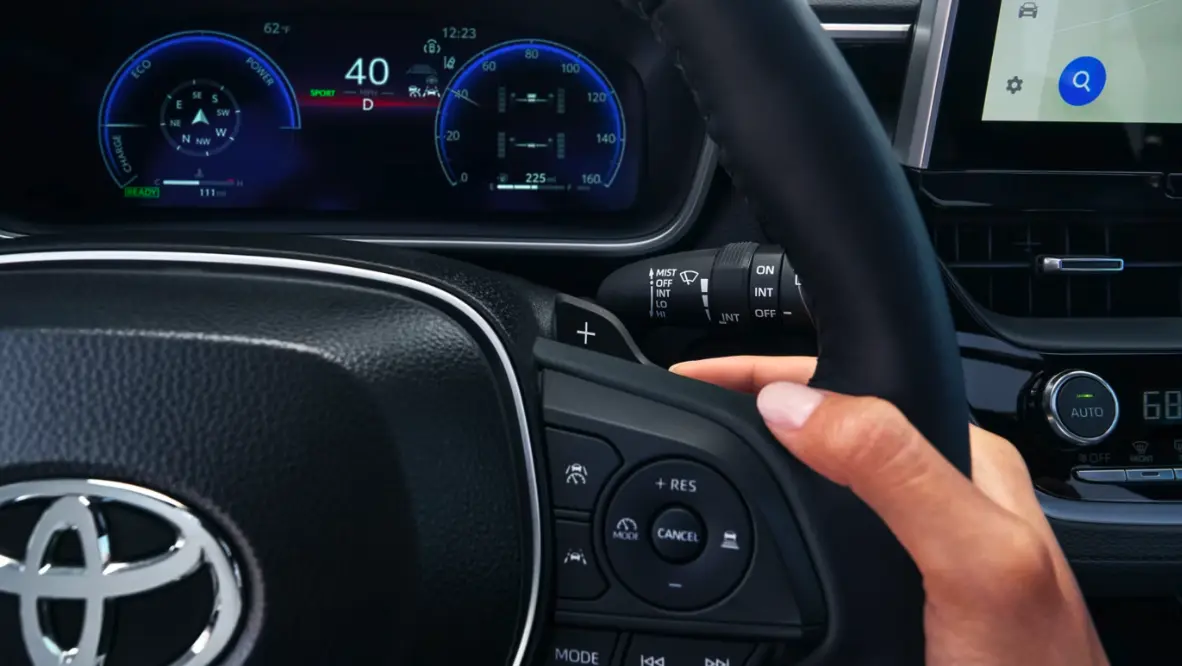
According to Toyota’s official guidance, a dashboard light indicating a transmission control system malfunction should prompt an inspection at a Toyota dealer as soon as possible, since the vehicle’s onboard sensors are designed to catch abnormal shift patterns or gear ratios before a driver would necessarily feel them. Fluid leaks are another visual cue, most often noticed as reddish or brownish spots left on a driveway or parking spot.
If you want to confirm exactly which warning light your specific Toyota model uses for transmission or drivetrain issues, our team can walk through your owner’s manual with you or check it against your VIN, since not every model displays the same icon or message for the same underlying concern.
Confirm Your Model’s Drivetrain Type
Gas Transmission vs Hybrid Drivetrain Symptoms
Comparing How Symptoms Show Up
We put this comparison together because owners switching between a gas Toyota and a hybrid Toyota often assume the same warning signs mean the same thing, and that is not always the case.
| Symptom | Conventional Automatic Transmission | Toyota Hybrid eCVT |
|---|---|---|
| Delayed or rough shifting | Common sign of low or degraded fluid, or worn internal components | Less common, since there is no traditional gear shift; may point to the power-split device instead |
| Whining noise | Often linked to fluid or torque converter issues | Some motor whine is normal; a whine that grows louder over time is not |
| Burning smell | Usually tied to overheated or degraded transmission fluid | Less common; more often linked to other underlying issues that still warrant inspection |
| Jerking or hesitation | Can indicate slipping gears or a failing solenoid | May indicate a rough transition between electric and gas power delivery |
| Dashboard warning light | Transmission control system malfunction light | Hybrid system malfunction or check hybrid system light |
| Reduced power or sluggish acceleration | Often tied to slipping or a failing torque converter | Can relate to the hybrid battery, inverter, or drivetrain control system |
| Best For / Ideal Use Case | Gas Toyota owners should focus on fluid, shift feel, and noise; hybrid Toyota owners should pay closer attention to dashboard hybrid system alerts and changes in power delivery between electric and gas modes. | |
Based on Toyota official website.
This distinction matters most when you are trying to describe a symptom to us over the phone, since knowing whether your Toyota is gas-powered or a hybrid helps our service team ask the right follow-up questions before you even arrive.
Based on our experience at Toyota of Bristol, the clearest way to tell the two apart is the dashboard light itself. A conventional automatic will typically flag a transmission-specific warning, while a hybrid Toyota is more likely to show a hybrid system malfunction message, even when the underlying concern involves how power reaches the wheels rather than a traditional gear problem. Owners who have driven both a gas Toyota and a hybrid Toyota sometimes assume the hybrid is malfunctioning simply because it behaves differently, when in fact smoother, quieter operation is often just how the eCVT is designed to feel.
Which Symptoms Apply to Your Toyota
For a Kingsport driver whose RAV4 Hybrid has developed a whining noise that gets louder during acceleration, we recommend having it checked rather than assuming it is normal motor noise, since a whine that changes over time is different from the mild sound that is typical in most Toyota hybrids. For a Johnson City family whose Highlander Hybrid jerks noticeably when switching between electric and gas power, we recommend scheduling an inspection because that kind of rough transition is not considered normal hybrid behavior. For a Bristol driver in a gas-powered Camry who notices the check engine light along with hesitation shifting into gear, we recommend treating that combination as a priority rather than a routine oil-change-cycle item. Two symptoms appearing together almost always deserve faster attention than either one showing up alone.
- If your Toyota is gas-powered and you notice fluid on the ground, then check the color and schedule service promptly.
- If your Toyota is a hybrid and you see a hybrid system warning, then treat it the same way you would treat a transmission warning light on a gas vehicle.
- If you are not sure which drivetrain your Toyota uses, then our team can confirm it by VIN before you try to diagnose the symptom yourself.
We invite you to bring your Toyota to our service center at 3045 W State St in Bristol so our technicians can look at the specific symptom you are noticing rather than guessing from a general list. We ask a few quick questions when you arrive, including when the symptom started, whether it happens at a certain speed, and whether any dashboard lights have appeared, since those details help our team narrow down the cause faster. If you are not sure whether what you are feeling is normal for your specific Toyota model, we would rather you ask than assume. You can request an appointment through toyotaofbristol.com or call our service department directly. We treat drivetrain symptoms as a priority, not a routine wait-your-turn item, because we know how disruptive it is to lose confidence in your vehicle. Whatever you are noticing, we will give you a straight answer about what it means.
Scheduling a Transmission Check in Bristol and the Tri-Cities
Local Driving Conditions That Add Stress
Here in the Tri-Cities, we see certain driving patterns accelerate an existing transmission concern rather than cause it outright. Steady climbs on mountain routes near Abingdon put extra load on a transmission that is already slipping. Stop-and-go traffic through Bristol and Kingsport during commute hours means more frequent shifting, which can make a delayed-engagement symptom more noticeable. Towing or hauling on I-81 adds heat and mechanical stress that a struggling transmission handles poorly.
| Local Condition | Added Stress | Driver Profile |
|---|---|---|
| Mountain grades near Abingdon, VA | Extra load during sustained climbs | Commuter crossing into Southwest Virginia |
| Bristol and Kingsport stop-and-go traffic | More frequent shifting exposes hesitation symptoms | Daily city commuter |
| I-81 towing or hauling | Increased heat and mechanical load | Truck or SUV owner carrying cargo |
| Elizabethton and Blountville rural routes | Longer trips between service opportunities | Rural commuter with less frequent inspections |
For a driver in Johnson City who notices a burning smell specifically after climbing hills on I-81, we recommend having the fluid level and condition checked as soon as possible, since heat under load is one of the more common reasons early transmission symptoms become noticeable in our region. For a driver near Abingdon who has a slow fluid leak but has not noticed a change in how the vehicle drives yet, we still recommend an inspection rather than waiting, since leaks rarely resolve on their own and mountain driving tends to expose the problem sooner rather than later. A small leak today is often the easiest and least expensive point to catch a developing issue.
Our service team has diagnosed transmission and drivetrain concerns for drivers across Bristol, Kingsport, Johnson City, Abingdon, Blountville, and Elizabethton for years, and that regional experience means we know which symptoms tend to show up first on local roads. If you are enrolled in our Toyota of Bristol Advantage Plan, mention it when you schedule, since your service history helps our technicians spot changes faster. We recommend describing exactly when the symptom happens, whether that is during a hill climb, a cold start, or while towing, so we can start the inspection with useful context instead of starting from zero. You can reach us through toyotaofbristol.com or by calling our service department directly. We would rather you call with a question that turns out to be nothing than wait on something that turns out to matter. Either way, we will take the time to explain what we find in plain language.
When to Stop Driving and Schedule Service
| What You Notice | Recommended Action |
|---|---|
| Occasional mild hesitation, no other symptoms | Schedule a normal service appointment within the next week or two |
| Slipping gears with the engine revving unusually | Limit driving to essential trips and schedule service promptly |
| Grinding or clunking noise that is new and getting worse | Schedule service within a few days, avoid towing or hauling until then |
| Burning smell from the engine bay | Pull over safely, stop driving, and arrange a tow or inspection |
| Flashing dashboard warning light or sudden loss of power | Pull over safely as soon as possible and stop driving until inspected |
Based on Toyota official website.
For an Elizabethton driver on a mountain route whose dashboard shows a hybrid system malfunction light along with a sudden drop in power, we recommend pulling over safely as soon as the road allows and stopping the vehicle rather than trying to finish the trip, since continuing to drive under those conditions risks turning a repairable issue into a more serious one. If you are ever unsure whether your specific situation counts as an emergency, treat it as one and call us before continuing. It costs nothing to call and describe what you are feeling, and that quick conversation can save you from a much more expensive repair down the road.
See Your Toyota’s ToyotaCare CoverageWhat Happens During a Toyota Transmission Inspection
We do not start with guesswork. Owners sometimes expect us to jump straight to a repair estimate, but a rushed diagnosis on a drivetrain concern usually costs more time and money than a proper inspection up front. Here is generally what our technicians walk through during a transmission or drivetrain inspection:
- A conversation with you about when the symptom started and what triggers it.
- A visual check of transmission fluid level, color, and smell.
- A diagnostic scan to check for stored codes related to shifting, drivetrain, or hybrid system performance.
- A road test, when appropriate, to feel the symptom firsthand rather than relying only on your description.
- A clear explanation of what we found before any repair work begins.
For a Bristol owner of a used Camry who has never had a transmission concern looked at before, we recommend coming in with as much detail as possible, including when the symptom happens and how often, since that context often shortens the inspection and gets you a clearer answer the same day.
See What Our Service Center CoversKey Takeaways
- Delayed shifting, slipping, unusual noises, burning smells, fluid leaks, and warning lights are the main signs to watch for.
- Hybrid Toyota models show drivetrain trouble differently than gas models, often through a hybrid system warning rather than a traditional transmission light.
- Mountain grades near Abingdon and towing on I-81 can make an existing symptom worse faster.
- A burning smell, flashing warning light, or sudden power loss means stop driving and get the vehicle inspected right away.
- Our inspection process starts with a conversation and a diagnostic scan, not an assumption about what is wrong.
Toyota Transmission Questions Bristol Drivers Ask
Is it safe to keep driving with a slipping transmission?
Driving with a slipping transmission is not something we recommend, even for short trips, because slipping puts extra stress on internal components and can turn a manageable repair into a more serious one. If you notice the engine revving without a matching increase in speed, we recommend limiting driving to what is essential and scheduling an inspection as soon as possible rather than waiting to see if the symptom improves on its own.
Do Toyota hybrids have transmission problems the same way gas cars do?
Toyota hybrids use an eCVT, which relies on a planetary gearset and electric motor-generators rather than a traditional torque converter and gear sets. Because of that difference, hybrid drivetrain trouble more often shows up as a hybrid system warning light or a change in how power is delivered rather than the shifting-specific symptoms typical of a conventional automatic transmission. Both systems benefit from the same basic approach: do not ignore a dashboard warning or a new noise, and do not assume a symptom will resolve itself simply because the vehicle still drives.
What should I do if my Toyota’s dashboard shows a transmission or hybrid system warning light?
This is one of the more common questions we hear from first-time owners who are not sure whether a warning light means an emergency or a routine reminder. According to Toyota’s official guidance, a transmission control system malfunction light calls for inspection at a Toyota dealer as soon as possible. If the light is flashing or paired with reduced power, we recommend pulling over safely and stopping rather than continuing to your destination.
How much does a transmission inspection typically involve?
A transmission inspection generally includes a fluid check, a diagnostic scan for stored codes, and often a road test, followed by a clear explanation of what our technicians found before any repair work begins. Bringing details about when the symptom occurs helps our team move through this process more efficiently.
Book Toyota Service in Bristol, TN
We are here to help you get a straight answer about what your Toyota is telling you, whether that turns out to be a minor item or something that needs immediate attention. Stop by our service center at 3045 W State St in Bristol, TN, or request an appointment through toyotaofbristol.com so our technicians can take a look. If you are enrolled in our Toyota of Bristol Advantage Plan or follow your ToyotaCare schedule, mention that when you book, since your service history helps us diagnose faster. We proudly serve drivers across Bristol, Kingsport, Johnson City, Abingdon, Blountville, and Elizabethton with the same direct approach, a real inspection instead of guesswork. If something feels off with how your Toyota shifts, sounds, or drives right now, call us or stop in today. We would rather check it and tell you everything looks fine than have you drive around wondering. That peace of mind is worth far more than the few minutes it takes to schedule a visit.
Book Toyota Service in Bristol, TNRelated Articles
Keep reading more Toyota service guides, ownership tips, and maintenance advice from Toyota of Bristol.
Maintenance Guide
How Often Should You Change Your Toyota Oil?
See how oil intervals connect to tire rotation, fluid checks, and other factory-scheduled maintenance.
Ownership Guide
Is ToyotaCare Worth It in Bristol?
See what ToyotaCare covers and how it can help catch issues like drivetrain concerns early.
Technology Guide
How to Set Up the Toyota App
See how Service Connect alerts can help you track maintenance needs, including drivetrain-related codes.
Tire Care Guide
How Often Should You Rotate Toyota Tires in Bristol, TN?
See rotation intervals and how Tri-Cities driving conditions affect tire and drivetrain wear together.
Connect with us


