


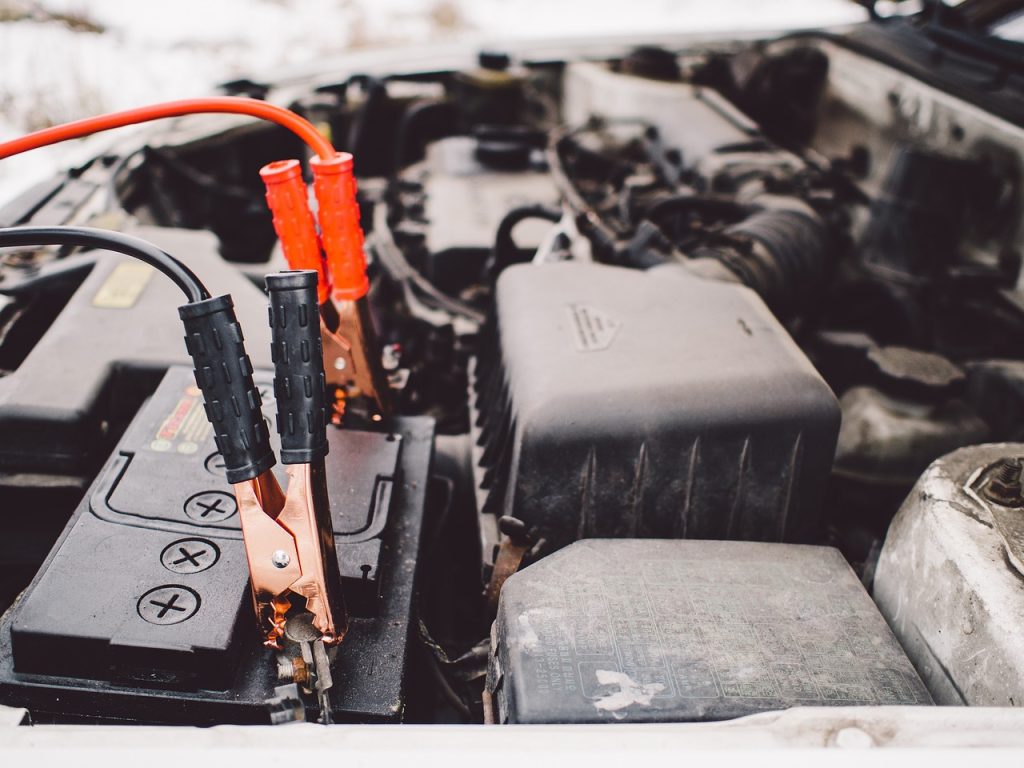
Toyota of Bristol can answer the emergency question clearly: most gas Toyota vehicles can be jump-started with properly connected jumper cables or a correctly rated jump pack, while Toyota hybrid models must be handled through the 12-volt system and the model-specific jump terminal or battery location described in the owner’s manual. The safe starting point is always the same: inspect the battery area first, connect positive to positive, connect the final negative clamp to a safe ground point, and stop if you see leaking fluid, heavy corrosion, smoke, damaged cables, or warning signs that do not make sense.
For a Bristol commuter with a dead battery before work, a jumpstart may get the vehicle moving, but it does not explain why the battery died. For a Kingsport family after a long evening event, the cause may be as simple as an interior light left on. For a Johnson City hybrid owner whose Toyota will not show READY mode, the issue may be a discharged 12-volt battery even though the high-voltage hybrid battery is a different system.
This guide explains safe jumpstart steps, Toyota hybrid rules, local battery-drain scenarios, and when our service team recommends a battery test instead of another roadside attempt.
Definition: A Toyota jumpstart is a temporary restart procedure that uses an external 12-volt power source to restore enough electrical power for the vehicle to start or enter READY mode. It is an emergency step, not a replacement for battery diagnosis.
Table of Contents
- How to Jumpstart a Toyota Safely, Step by Step
- Before You Connect Anything: Safety Checks and Tools
- Jumper Cable Order for Most Gas Toyota Vehicles
- What to Do After the Toyota Starts
- Toyota Hybrid Jumpstart Rules: 12V Battery, READY Mode, and What Not to Touch
- Gas Toyota vs Toyota Hybrid Jumpstart Comparison
- Hybrid Use Cases: Prius, Camry Hybrid, RAV4 Hybrid, Sienna Hybrid, and Corolla Hybrid
- Battery Trouble Around Bristol, Kingsport, Johnson City, and Abingdon
- Local Weather, Short Trips, Events, Road Trips, and Battery Drain
- Technical Deep Dive: Why the 12V Battery Matters So Much in Toyota Hybrids
- Ownership Cost Analysis: When a Jumpstart Means You Need Battery Service
- Key Takeaways
- Toyota Jumpstart FAQ for Bristol Drivers
- Can you jumpstart a Toyota hybrid?
- Where do I connect jumper cables on a Toyota hybrid?
- What if my Toyota does not start after a jump?
- Is it safe to use a portable jump starter on a Toyota?
- Schedule Toyota Battery Service in Bristol, TN
How to Jumpstart a Toyota Safely, Step by Step
Before You Connect Anything: Safety Checks and Tools
The safest jumpstart is the one you do not rush. Before connecting cables, we recommend checking the battery area, cable condition, terminal condition, and vehicle surroundings. A normal dead battery is one thing. A swollen battery case, leaking fluid, burning smell, damaged cable, or heavy corrosion is different. In those situations, do not continue the jumpstart attempt. Call roadside assistance or schedule service.
For a Bristol commuter on a cold morning, the pressure to get moving is real. Still, our service team advises taking one full minute to check the basics. Make sure the vehicles are in Park, the parking brakes are set, accessories are off, cables are not tangled near belts or fans, and the booster source is appropriate for a 12-volt automotive battery.
- Use jumper cables in good condition or a properly rated portable jump starter.
- Keep clamps away from moving belts, fans, and hot components.
- Turn off headlights, climate control, audio, and accessories before connecting.
- Do not jumpstart a battery that is leaking, smoking, frozen, cracked, or badly swollen.
- Check the owner’s manual before jumpstarting a hybrid Toyota.
| Situation | Safe to Proceed? | Recommended Action | Best For |
|---|---|---|---|
| Battery appears normal but vehicle is dead | Usually yes | Follow correct jumpstart steps | Bristol commuter with a one-time no-start |
| Light corrosion on terminals | Pause first | Inspect connections and consider service | Older Toyota owner with slow starts |
| Battery case is swollen or leaking | No | Do not jumpstart; call service support | Summer heat battery failure |
| Hybrid Toyota will not enter READY mode | Manual required | Use model-specific 12V jump guidance | Johnson City Prius or RAV4 Hybrid owner |
| Jumpstart works but battery dies again | Temporary only | Schedule battery and charging-system test | Elizabethton driver needing repeated jumps |
| Ideal Use Case | Proceed only when safe | Jump once, then confirm battery health | Any Toyota driver with a no-start |
Based on Toyota official website and Toyota owner manual guidance.
Jumper Cable Order for Most Gas Toyota Vehicles
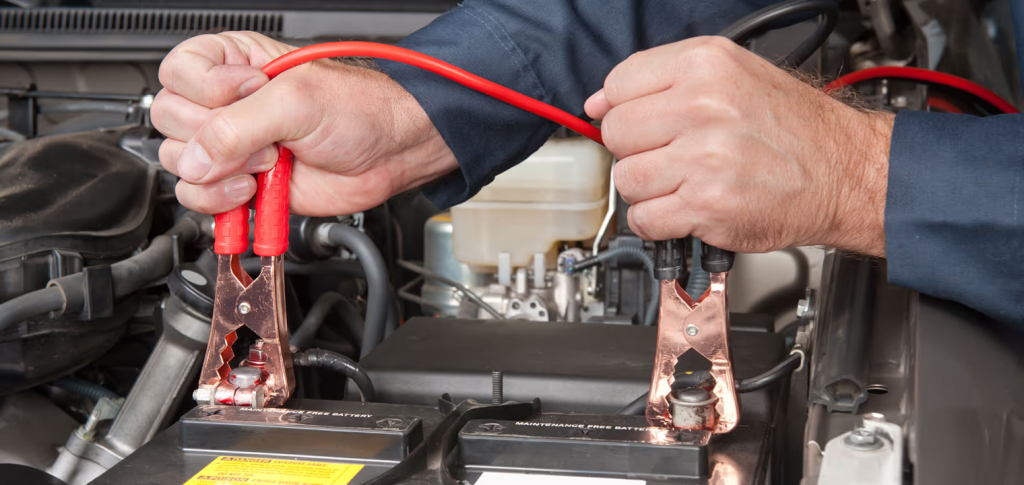
For most gas Toyota vehicles with accessible 12-volt battery terminals, the standard cable order is positive first, then ground. Connect one red clamp to the positive terminal on the dead Toyota battery. Connect the other red clamp to the positive terminal on the good battery or approved booster source. Connect one black clamp to the negative terminal on the good battery. Connect the final black clamp to an unpainted metal ground point away from the dead battery.
Our service team recommends this order because the final connection should be away from the battery whenever possible. After the clamps are secure, start the assisting vehicle if using another vehicle, let it run briefly, then try to start the Toyota. If the Toyota starts, remove the cables in reverse order and keep the clamps from touching each other.
We recommend the following Toyota jumpstart cable order for most gas models: red to the dead battery positive terminal, red to the booster positive terminal, black to the booster negative terminal, and black to a safe metal ground point on the Toyota. If your Toyota has a special jump terminal or the manual gives a different model-specific procedure, follow the manual instead.
What to Do After the Toyota Starts
A successful jumpstart is not the end of the battery story. Once the Toyota starts, let the vehicle run long enough to stabilize, remove the cables carefully, and avoid shutting it off immediately unless you are safely parked where help is available. If the vehicle struggles, warning lights stay on, the battery light appears, or the engine dies again, we recommend service instead of repeated jumps.
For a Kingsport family after an event, a jump may be enough if an interior light drained the battery one time. For an Elizabethton older Toyota owner who needs three jumps in one month, the jumpstart is a symptom, not a fix. Our technicians would check battery health, terminal condition, charging performance, and parasitic draw possibilities.
If the Toyota starts, drive carefully and schedule a battery check if the cause is unclear. Repeated jumpstarts can mask a weak battery, charging-system concern, accessory drain, or connection issue.
Toyota Hybrid Jumpstart Rules: 12V Battery, READY Mode, and What Not to Touch
Gas Toyota vs Toyota Hybrid Jumpstart Comparison
A Toyota hybrid jumpstart is different because the goal is usually to restore enough 12-volt power for the vehicle’s computers, electronic key system, and hybrid startup logic to wake up. The high-voltage hybrid battery is not the battery drivers jump with cables. Toyota hybrid manuals commonly direct owners to use a model-specific 12-volt jump terminal or battery connection point, then look for the READY indicator after the system restarts.
| Jumpstart Topic | Gas Toyota | Toyota Hybrid | Why It Matters |
|---|---|---|---|
| Battery involved | 12-volt starting battery | 12-volt auxiliary battery or designated jump terminal | The hybrid high-voltage battery is not the jump point |
| Primary goal | Crank and start the engine | Power electronics and enter READY mode | READY mode confirms the hybrid system is active |
| Connection location | Usually battery terminals and ground point | Model-specific terminal, fuse box terminal, or battery location | Owner’s manual matters more on hybrids |
| What not to touch | Damaged battery or unsafe wiring | High-voltage hybrid components | Hybrid systems require extra caution |
| After success | Let vehicle run and test battery | Confirm READY, then test 12V battery | A weak 12V battery may return as a no-start |
| Ideal Use Case | Gas Toyota with one-time dead battery | Hybrid Toyota with discharged 12V battery | Correct procedure prevents damage and confusion |
Based on Toyota official website.
The key difference between a gas Toyota jumpstart and a Toyota hybrid jumpstart is what the 12-volt battery does. In a gas Toyota, the battery helps crank the engine. In a Toyota hybrid, the 12-volt battery helps power the control systems that allow the hybrid system to enter READY mode. We recommend checking the owner’s manual before connecting anything on a hybrid.
Hybrid Use Cases: Prius, Camry Hybrid, RAV4 Hybrid, Sienna Hybrid, and Corolla Hybrid
For a Johnson City Prius or Corolla Hybrid owner whose vehicle will not enter READY mode, we recommend treating the 12V battery as the first practical check. If the electronic key is present, the vehicle is in Park, and the display is dark or weak, a discharged 12-volt battery may be the reason the hybrid system cannot wake up. The correct next step is model-specific jump guidance, not touching orange high-voltage cables.
For a Bristol RAV4 Hybrid owner, a Camry Hybrid commuter, or a Sienna Hybrid family, the safest rule is to open the owner’s manual and locate the proper jump terminal or 12V battery access point before using cables. Toyota manuals may direct owners to open the hood, remove a fuse box cover, open the exclusive jump-starting terminal cover, and connect the positive clamp to that designated terminal.
- If your hybrid will not show READY, we recommend checking 12V battery guidance first.
- If the manual shows an under-hood jump terminal, use that terminal exactly as directed.
- If warning messages remain after the jump, we recommend service inspection.
- If the 12V battery dies again soon, we recommend battery testing and replacement evaluation.
- If you are unsure which terminal is correct, stop and call our service team.
Our service center can help Toyota owners separate a simple 12V battery issue from a larger electrical concern. We can test the battery, inspect terminals, review warning messages, and help determine whether the battery needs charging, replacement, or additional diagnosis. Start with our online service scheduler at https://www.toyotaofbristol.com/schedule-service.html, or call 423-764-3155 if your Toyota needed a jump and you do not trust the battery yet. We especially recommend inspection after repeated no-starts, a hybrid READY issue, or a jumpstart that only worked briefly. We would rather check the battery early than have you stranded again in Bristol, Kingsport, Johnson City, Abingdon, Blountville, or Elizabethton.
Battery Trouble Around Bristol, Kingsport, Johnson City, and Abingdon
Local Weather, Short Trips, Events, Road Trips, and Battery Drain
Battery problems are local in a very real way. A driver in Abingdon may notice weak starts during colder mornings. A Bristol commuter may have battery strain after short trips that never give the system much time to recover. A Kingsport family may come back from an event to find an interior light or accessory drained the battery. A Blountville road-trip driver may discover a weak battery the day before leaving.
For Toyota drivers around Bristol and the Tri-Cities, we recommend a battery test after any unexplained jumpstart because local driving patterns can hide battery weakness until the worst moment. Cold mornings, summer heat, short trips, and long parking periods can all expose a 12-volt battery that was already near the end of its service life.
| Local Scenario | Battery Risk | Driver Profile | Recommended Action |
|---|---|---|---|
| Bristol cold morning before work | Weak battery shows up as a no-start | Daily commuter | Jump safely, then schedule battery test |
| Kingsport event parking | Interior light or accessory drain | Family driver | Jump once and confirm battery health |
| Johnson City hybrid owner | Discharged 12V prevents READY mode | Hybrid driver | Follow manual and inspect 12V battery |
| Abingdon winter short trips | Battery never fully recovers | Mountain-road commuter | Battery health and charging check |
| Blountville road-trip prep | Weak battery discovered before travel | Weekend traveler | Test battery before leaving |
| Elizabethton repeated no-starts | Battery, alternator, or drain concern | Older Toyota owner | Schedule diagnostic service |
We invite Toyota drivers from Bristol, Kingsport, Johnson City, Abingdon, Blountville, and Elizabethton to bring battery concerns to us before the next no-start. We can test the battery, inspect terminals, check for corrosion, review charging performance, and help with Toyota Genuine battery replacement when needed. Our Toyota of Bristol Advantage Plan and ToyotaCare support reflect the same goal: help ownership feel less stressful after the sale. Visit us at 3045 W State St, Bristol, TN 37620, start at https://www.toyotaofbristol.com/, or call 423-764-3155 for service help. Tell us what happened before the battery died, and we can help decide whether it was a one-time drain or a warning sign.
Technical Deep Dive: Why the 12V Battery Matters So Much in Toyota Hybrids
The most common hybrid misunderstanding is thinking the high-voltage hybrid battery is the battery being jumped. It is not. The driver-accessible emergency jump procedure is about the 12-volt system. That system supports computers, relays, locks, displays, and the startup sequence that lets the hybrid system become active.
That is why a Prius, RAV4 Hybrid, Camry Hybrid, Corolla Hybrid, Highlander Hybrid, or Sienna Hybrid can appear dead even when the hybrid battery itself is not the issue. A weak 12V battery can create confusing symptoms such as dim lights, no READY indicator, key detection trouble, or warning messages. We recommend taking those symptoms seriously instead of repeatedly jumping the vehicle and hoping they disappear.
For a Blountville road-trip driver carrying a portable jump pack, the safest approach is preparation. Keep the jump pack charged, store it according to the manufacturer’s instructions, and confirm the correct Toyota jump terminal before the trip. If you cannot identify the correct 12V connection point, call service support rather than experimenting.
Ownership Cost Analysis: When a Jumpstart Means You Need Battery Service
A jumpstart should be treated as temporary help. If the battery died because a light stayed on once, the fix may be simple. If the Toyota needs repeated jumps, starts slowly, shows warning lights, or loses power again shortly after running, we recommend testing instead of guessing. Battery age, terminal corrosion, loose connections, charging-system concerns, and accessory drain can all create no-start patterns.
| Warning Sign | Possible Cause | Recommended Service Step | Ideal Use Case |
|---|---|---|---|
| One-time dead battery | Accessory or light left on | Battery test if cause is unclear | Kingsport family after event parking |
| Slow cranking | Weak 12V battery | Battery health test | Bristol commuter |
| Repeated jumpstarts | Failing battery or charging concern | Battery and charging-system inspection | Elizabethton older Toyota owner |
| Corrosion at terminals | Poor connection or battery aging | Terminal inspection and battery review | Abingdon short-trip driver |
| Hybrid no READY after jump | 12V battery or system concern | Diagnostic inspection | Johnson City hybrid owner |
| Ideal Use Case | Prevent repeat no-starts | Test before replacing parts blindly | Any Toyota driver after a jumpstart |
For long-term ownership, we recommend documenting when the battery died, how old the battery is, whether accessories were left on, and whether the Toyota started normally afterward. ToyotaCare includes a no-cost maintenance plan for new Toyota vehicles for 2 years or 25,000 miles, whichever comes first, and 24-hour roadside assistance for 2 years with unlimited miles. Our service team can help with battery testing, Toyota Genuine replacement batteries, and multi-point inspections.
Key Takeaways
- Most Toyota jumpstarts use 12-volt power, correct cable order, and a safe ground point.
- Toyota hybrids rely on the 12V battery to wake up electronics and enter READY mode.
- Never jump a Toyota hybrid using high-voltage hybrid components.
- Repeated jumpstarts, slow cranking, corrosion, or warning lights mean service is needed.
- Bristol-area weather, short trips, and event parking can expose weak Toyota batteries.
Toyota Jumpstart FAQ for Bristol Drivers
Can you jumpstart a Toyota hybrid?
A Toyota hybrid can often be restarted when the 12-volt battery is discharged, but it must be done through the model-specific 12V jump procedure. We recommend using the owner’s manual before connecting cables because many hybrids use an under-hood jump terminal or specific battery access point. The goal is to get the Toyota into READY mode, not to jump the high-voltage hybrid battery.
Where do I connect jumper cables on a Toyota hybrid?
The correct connection point depends on the model. Some Toyota hybrids use an exclusive under-hood jump-starting terminal inside the fuse box area, while others may have different access instructions. We recommend opening the owner’s manual and following the exact terminal and ground-point directions for your vehicle. If the correct point is unclear, call our service team before connecting cables.
What if my Toyota does not start after a jump?
If your Toyota does not start after a jump, stop repeated attempts and check for loose clamps, poor ground connection, corrosion, battery damage, or warning messages. A gas Toyota may have a weak battery, starter concern, or charging issue. A hybrid Toyota may have a 12V battery or system concern that prevents READY mode. We recommend service inspection before the next attempt causes more trouble.
Is it safe to use a portable jump starter on a Toyota?
A portable jump starter can be safe when it is properly rated, charged, connected correctly, and used according to both the jump pack instructions and the Toyota owner’s manual. We recommend keeping the jump pack away from heat, checking clamp polarity carefully, and stopping if the battery appears damaged. Hybrid owners should confirm the correct 12V terminal before using any booster pack.
Schedule Toyota Battery Service in Bristol, TN
We are here to help when your Toyota needs a jump, starts slowly, will not enter READY mode, or keeps losing 12-volt power. Visit us at 3045 W State St, Bristol, TN 37620, or call 423-764-3155 so our service team can test the battery, inspect connections, and check related systems. We serve drivers from Bristol, Kingsport, Johnson City, Abingdon, Blountville, Elizabethton, and nearby Tri-Cities communities. Our Toyota of Bristol Advantage Plan and ToyotaCare support help make ownership easier after the sale. If your Toyota needed a jump and the cause is not obvious, schedule service before the next no-start.


