


Toyota Hybrid Ownership Guide
How Long Does a Toyota Hybrid Battery Last?
A Toyota hybrid battery often lasts much longer than many drivers expect. For 2020 and newer Toyota hybrid vehicles, Toyota hybrid battery warranty coverage is 10 years or 150,000 miles, whichever comes first. Real-world battery life depends on use, maintenance, heat, airflow, storage habits, and overall vehicle condition.
Quick Answer
Many Toyota hybrid batteries can provide reliable performance for 10 years or more, and some continue working well beyond 100,000 miles with proper care. Battery health is not determined by mileage alone. Regular driving, clean cooling airflow, timely service, and warning-message diagnosis are all important factors for Bristol drivers.
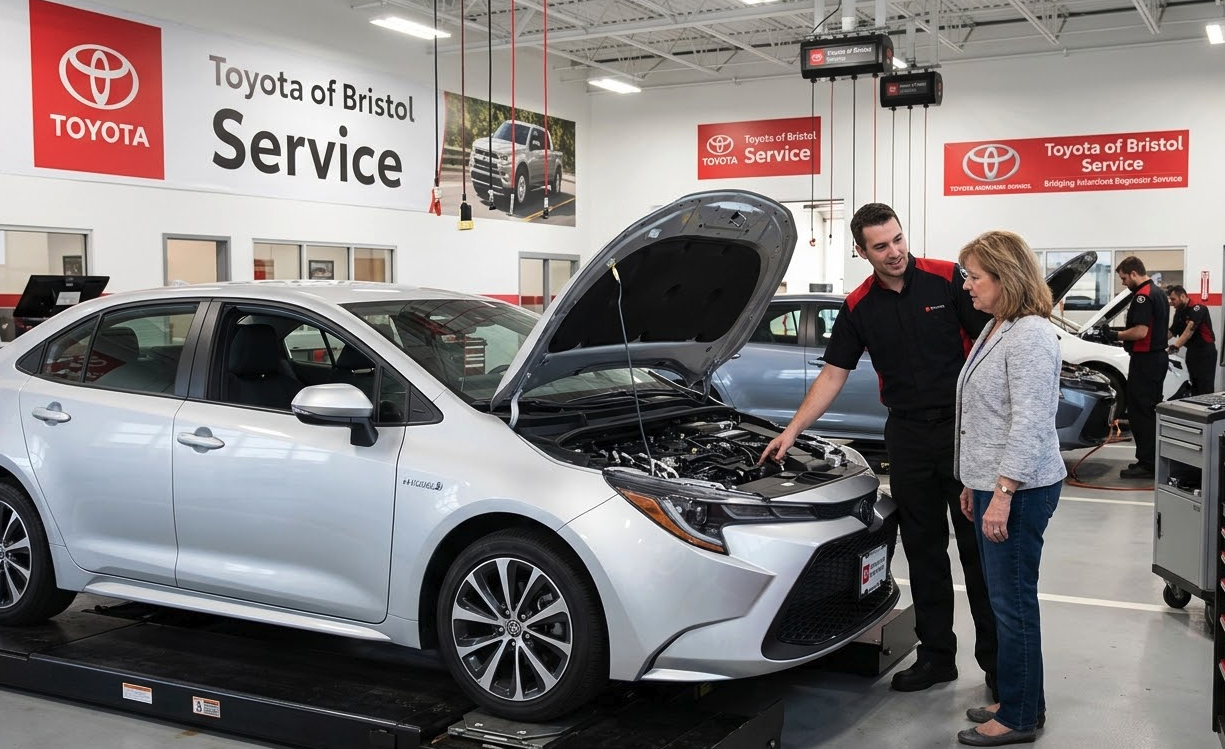
Key Takeaways for Toyota Hybrid Drivers
Warranty Is Strong
2020 and newer Toyota hybrid batteries are covered for 10 years or 150,000 miles, whichever comes first.
Cooling Matters
Blocked battery cooling vents, heat, pet hair, lint, and cargo can create avoidable battery stress.
Mileage Is Not Everything
A well-maintained high-mileage hybrid may be healthier than a low-mileage hybrid that sat unused.
Table of Contents
- Average Toyota Hybrid Battery Lifespan
- What Affects Toyota Hybrid Battery Life?
- How Toyota Hybrid Batteries Charge and Wear
- Toyota Hybrid Battery Warranty vs Replacement Reality
- Battery Life Across Toyota Hybrid Models
- What Battery Life Means for Bristol Drivers
- Why Battery Cooling Matters
- Buying a Used Toyota Hybrid
- Toyota Hybrid Battery FAQ
Average Toyota Hybrid Battery Lifespan
The question we hear most is simple: how long does a Toyota hybrid battery last? A practical answer is that many Toyota hybrid batteries can deliver solid performance for 8 to 15 years, and many stay healthy past 100,000 miles. Toyota’s warranty coverage gives useful context, especially for shoppers comparing new, used, and Toyota Certified hybrid vehicles.
Starting with the 2020 model year, Toyota hybrid battery coverage is 10 years from the date of first use or 150,000 miles, whichever comes first. For older Toyota hybrid vehicles, hybrid-related battery coverage is generally 8 years or 100,000 miles. That does not mean the battery expires at those numbers. It means Toyota stands behind the hybrid battery system for that coverage period.
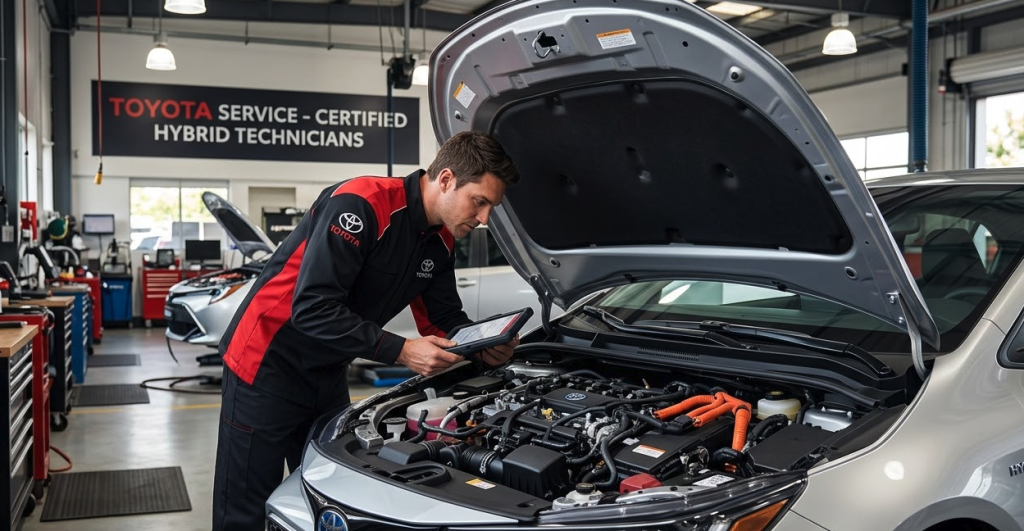
| Battery Life Factor | What It Usually Means | Why It Matters |
|---|---|---|
| 2020 and newer Toyota hybrid | Hybrid battery warranty up to 10 years or 150,000 miles. | Gives shoppers a long factory-backed ownership window. |
| Pre-2020 Toyota hybrid | Hybrid battery coverage is generally 8 years or 100,000 miles. | Still useful for evaluating used hybrid value and history. |
| Regular driving | Supports consistent charge cycling. | Often healthier than long periods of sitting. |
| Long inactivity | Can contribute to battery discharge and condition decline. | Storage history matters when buying used. |
| Clean cooling airflow | Helps manage battery temperature. | Heat control supports long-term performance. |
What Affects Toyota Hybrid Battery Life?
A Toyota hybrid battery is not a routine wear item like tires, brake pads, or windshield wipers. It is part of a managed hybrid system that recaptures energy through regenerative braking, balances gasoline and electric power, and uses cooling strategies to help protect long-term performance.
For Bristol drivers, battery life is influenced by how the vehicle is used and maintained. Local stop-and-go driving, I-81 commuting, elevation changes around the Tri-Cities, and summer cabin heat can all shape how the system works. However, those conditions do not mean your battery is on a short countdown. In many cases, regular driving and proper service are better for a hybrid battery than long periods of sitting.
Most Important Toyota Hybrid Battery Life Factors
- Regular driving and consistent use.
- Clean hybrid battery cooling intake areas.
- Timely service when warning messages appear.
- Service history and previous ownership habits.
- Heat exposure and airflow restrictions.
- Long-term storage or inactivity.
- Driving conditions, including hills and stop-and-go traffic.
- Overall vehicle condition.
How Toyota Hybrid Batteries Charge and Wear Over Time
A Toyota hybrid battery does not behave like a phone battery that is fully charged at night and drained during the day. The system is designed to operate within a managed state of charge. The vehicle constantly balances gasoline power, electric motor assistance, regenerative braking, and battery temperature management.
Under braking and deceleration, the hybrid system recaptures energy and sends it back to the battery. Under acceleration, the electric motor can assist the gas engine, helping with smooth response and fuel efficiency. Because the battery is not normally pushed to full charge or full discharge in everyday driving, it avoids some of the stress that shortens batteries in other applications.
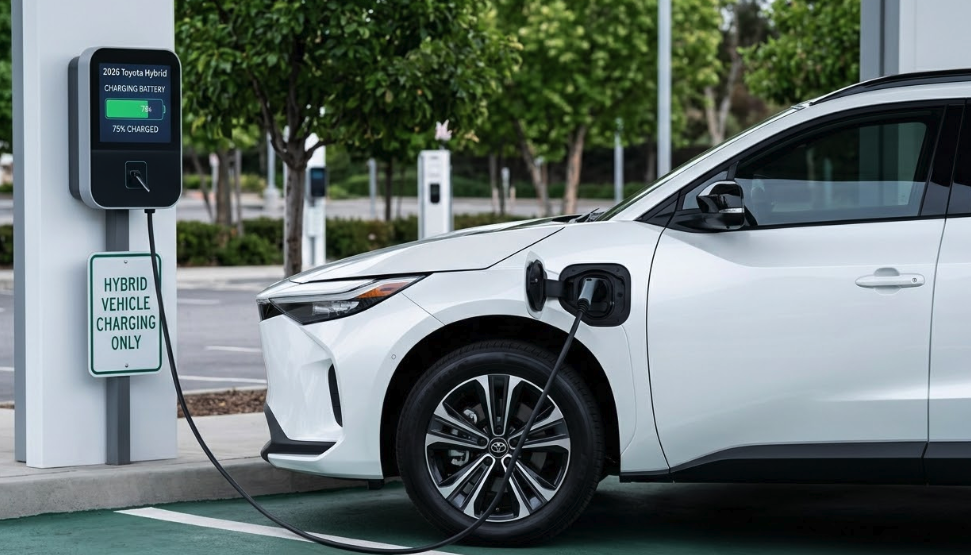
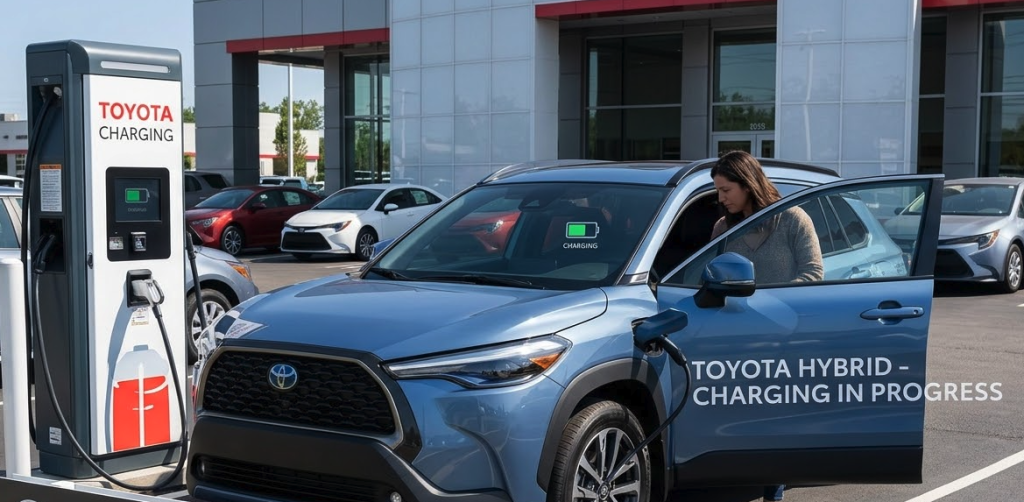
Ownership note: Toyota hybrid systems are built to manage battery charge automatically. Drivers do not need to plug in a traditional Toyota hybrid, and the vehicle manages normal charge and discharge activity during everyday driving.
Real battery aging is usually shaped by heat, storage, airflow, maintenance, and system condition. Stop-and-go driving is not automatically bad for a hybrid. Toyota hybrids are built to benefit from regenerative braking and low-speed electric assist. Mountain grades and heavy loads can raise demand on the system, but normal Tennessee driving is well within what Toyota hybrids are designed to handle.
Toyota Hybrid Battery Warranty vs Replacement Reality
For most buyers, the first value question is not only how long the battery lasts. It is whether the battery risk is reasonable compared with the fuel savings, reliability, and daily drivability you get back. Toyota’s 10-year, 150,000-mile warranty coverage for 2020 and newer hybrid batteries is a strong confidence signal for long-term ownership.
Replacement reality is also more nuanced than broad online estimates make it sound. Toyota hybrid battery replacement cost can vary by model, battery type, labor time, parts availability, and what a proper diagnostic process finds. That is why Toyota of Bristol recommends diagnosis before assuming replacement is needed.
| Concern | What It Means | Best Next Step |
|---|---|---|
| Battery warning message | The vehicle may need hybrid system inspection. | Schedule service and avoid guessing. |
| Fuel economy drop | Could relate to battery condition, tires, driving habits, weather, or maintenance. | Review service history and inspect the vehicle. |
| Used hybrid purchase | Vehicle history matters as much as mileage. | Compare records, warning history, and current condition. |
| Replacement concern | Battery replacement is not the first assumption. | Start with a proper diagnostic appointment. |
Battery Life Across Toyota Hybrid Models
A smart way to evaluate Toyota hybrid value is by model use case. The Prius remains the efficiency benchmark, with the 2026 Toyota Prius listed at up to 57 combined EPA-estimated MPG. The 2026 Toyota Camry uses an all-hybrid powertrain and offers up to 51 combined EPA-estimated MPG. The 2026 Toyota RAV4 is hybrid-only, which shows how central electrification has become in Toyota’s mainstream SUV lineup.
| Toyota Hybrid Model | What Owners Usually Value | Best Fit |
|---|---|---|
| Prius | Maximum MPG and long hybrid track record. | Frequent commuters and efficiency-focused drivers. |
| Camry Hybrid | Sedan comfort with standard hybrid efficiency. | Drivers who want a comfortable daily car with fewer fuel stops. |
| RAV4 Hybrid | SUV utility with hybrid-only 2026 lineup positioning. | Families and commuters who want cargo room, ride height, and efficiency. |
| Highlander Hybrid | Three-row practicality with hybrid efficiency. | Families who need more space without stepping away from hybrid value. |
If you drive across Bristol, Johnson City, and Kingsport every week, Prius and Camry Hybrid may deliver the most immediate fuel-payback feeling. If your routine includes groceries, sports gear, strollers, pets, or mountain-weekend luggage, RAV4 Hybrid and Highlander Hybrid may make more sense.
What Toyota Hybrid Battery Life Means for Bristol Drivers
Driving in and around Bristol is a good match for Toyota hybrid ownership. Daily traffic on State Street and Volunteer Parkway gives the hybrid system plenty of opportunities to use regenerative braking. Regular interstate travel on I-81 adds steady-speed miles that help a hybrid settle into efficient operation. Weekend drives toward South Holston Lake, Abingdon, or mountain roads around the Tri-Cities bring elevation changes, but those climbs and descents do not automatically shorten battery life.
The bigger local issue is cabin heat and airflow during warm-weather months. If rear-seat storage, pet hair, lint, or debris blocks a hybrid battery cooling intake, that can create unnecessary heat stress. That is one of the most overlooked ownership habits we discuss with hybrid drivers.
| Bristol-Area Driving Habit | What It Means for Your Hybrid | Ownership Tip |
|---|---|---|
| Stop-and-go local traffic | Creates opportunities for regenerative braking. | Normal use for Toyota hybrid systems. |
| I-81 commuting | Offers steady-speed driving for many owners. | Monitor fuel economy trends over time. |
| Warm summer parking | Can increase cabin and battery-area heat. | Keep cooling intake areas clear. |
| Weekend hill and grade driving | Normal use for a Toyota hybrid. | Respond quickly to warning lights or unusual behavior. |
Why Battery Cooling Matters More Than Most Drivers Realize
A lot of hybrid battery talk focuses on years and miles, but cooling is often the more practical technical detail. Heat speeds up chemical aging inside high-voltage batteries. A Toyota hybrid system can manage charge and discharge very well, but if cabin debris, pet hair, luggage, or seat covers restrict airflow, the system has a harder time moving heat away from the battery area.
Drivers can support battery health with simple habits:
- Keep visible battery air intake areas clear.
- Avoid placing cargo, blankets, or seat covers over airflow paths.
- Vacuum lint and pet hair before buildup becomes heavy.
- Have hybrid warning messages checked early.
- Use the vehicle regularly instead of letting it sit for long periods.
- Schedule service if fuel economy changes without a clear reason.
In practical terms, drivers who protect airflow and respond quickly to warnings usually give the battery a better chance at a long service life. That is especially helpful for families using hybrids for school drop-offs, commutes, road trips, and daily errands across the Tri-Cities.
High Mileage Alone Does Not Decide When a Toyota Hybrid Battery Fails
High mileage by itself does not prove a Toyota hybrid battery is close to failure, and low mileage by itself does not guarantee the battery is healthier. A lightly driven hybrid that sat for long periods may have different risks than a higher-mileage hybrid that was driven regularly, serviced on time, and kept properly cooled.

Used Toyota Hybrid Shopping Checklist
- Review service records.
- Ask whether warning lights have appeared.
- Check remaining hybrid battery warranty if applicable.
- Look for consistent driving and maintenance history.
- Compare Toyota Certified options.
- Schedule a diagnostic check if battery condition is uncertain.
When evaluating a used hybrid, ask better questions than “How many miles are on it?” Ask how the vehicle was used, whether service history is consistent, whether the battery system has been inspected, and whether the vehicle currently shows any warning messages. The better measure is condition, history, and how the system behaves now.
Get Toyota Hybrid Battery Guidance in Bristol, TN
If you are shopping for a Toyota hybrid, comparing used hybrid options, or seeing a battery warning message, Toyota of Bristol can help. Our team serves drivers from Bristol, Kingsport, Johnson City, Abingdon, Blountville, and nearby Tri-Cities communities with clear guidance and practical next steps.
FAQ About Toyota Hybrid Battery Life
How long does a Toyota hybrid battery usually last?
Many Toyota hybrid batteries can provide reliable performance for 8 to 15 years, and many last 10 years or more with proper care. Actual lifespan depends on use, storage habits, heat, airflow, maintenance, and vehicle condition.
What is Toyota hybrid battery warranty coverage?
For 2020 and newer Toyota hybrid vehicles, Toyota hybrid battery coverage is 10 years from the date of first use or 150,000 miles, whichever comes first. Older Toyota hybrid vehicles generally carry 8 years or 100,000 miles of hybrid-related battery coverage.
Can a Toyota hybrid battery last more than 10 years?
Yes. Many Toyota hybrid batteries can last more than 10 years. Warranty coverage should not be treated as an expiration date. Real-world battery life depends on usage, maintenance, climate, airflow, and system condition.
What are signs of a failing Toyota hybrid battery?
Warning signs can include hybrid system warning messages, unusual battery state-of-charge swings, noticeable fuel economy drops, reduced performance, or traction battery inspection messages. These signs do not automatically mean replacement is needed, but they should be diagnosed.
Does high mileage mean a Toyota hybrid battery is failing?
No. High mileage alone does not prove the battery is failing. A regularly driven, well-maintained hybrid can be a strong long-term vehicle. Service history, warning history, cooling airflow, and current system behavior matter more than mileage alone.
Should I buy a used Toyota hybrid with over 100,000 miles?
A used Toyota hybrid with over 100,000 miles can still be a smart buy if the vehicle has strong service records, no unresolved warning messages, and good overall condition. A diagnostic inspection can provide extra confidence before purchase.
Where can I schedule Toyota hybrid service near Bristol?
You can schedule Toyota hybrid service with Toyota of Bristol at 3045 W State St in Bristol, TN. The service center supports drivers from Bristol, Kingsport, Johnson City, Abingdon, Blountville, and nearby Tri-Cities communities.


