

Blog / Bristol Toyota Dealer

Best 2026 Toyota SUVs for Off-Road Adventures Near Bristol, TN

2026 toyota land cruiser

Toyota of Bristol can answer the adventure question clearly: the strongest 2026 Toyota choices for off-road driving near Bristol are the 2026 4Runner TRD Pro or Trailhunter for serious trail use, the 2026 Land Cruiser for full-time 4WD adventure comfort, and the 2026 Tacoma TRD Off-Road or TRD Pro for drivers who need a truck bed with trail capability. For a Bristol outdoor driver heading toward South Holston Lake, Appalachian gravel access roads, or weekend campsites, we recommend choosing the Toyota based on terrain, gear, passengers, and how often the vehicle will also handle daily driving.

The best answer is not always the most specialized trim. A Johnson City camper may want a 4Runner Trailhunter because overlanding equipment matters. An Abingdon driver may prefer Land Cruiser because full-time 4WD and road-trip comfort fit mountain-weather driving. A Blountville homeowner who hauls bikes, tools, mulch, and muddy gear may be better served by Tacoma because the truck bed is the point.

This guide compares 4Runner, Land Cruiser, and Tacoma for Bristol, Kingsport, Johnson City, Abingdon, Blountville, and Elizabethton drivers who want real capability without buying more off-road hardware than they need.

Definition: Off-road Toyota SUVs are adventure-oriented Toyota vehicles built with traction systems, ground clearance, trail-control features, and rough-road hardware for loose surfaces, uneven roads, and outdoor travel. For Bristol-area drivers, they help support camping, gravel access roads, mountain weather, and weekend recreation.

2026 4Runner, Land Cruiser, and Tacoma Off-Road Capability Compared
Key Takeaway: The 2026 4Runner is the most flexible Toyota SUV for trail-focused shoppers, Land Cruiser is the best comfort-focused full-time 4WD choice, and Tacoma is the better fit when outdoor gear needs a truck bed.
2026 4Runner TRD Pro and Trailhunter

2026 4Runner TRD Pro and Trailhunter: Built for Appalachian Trails

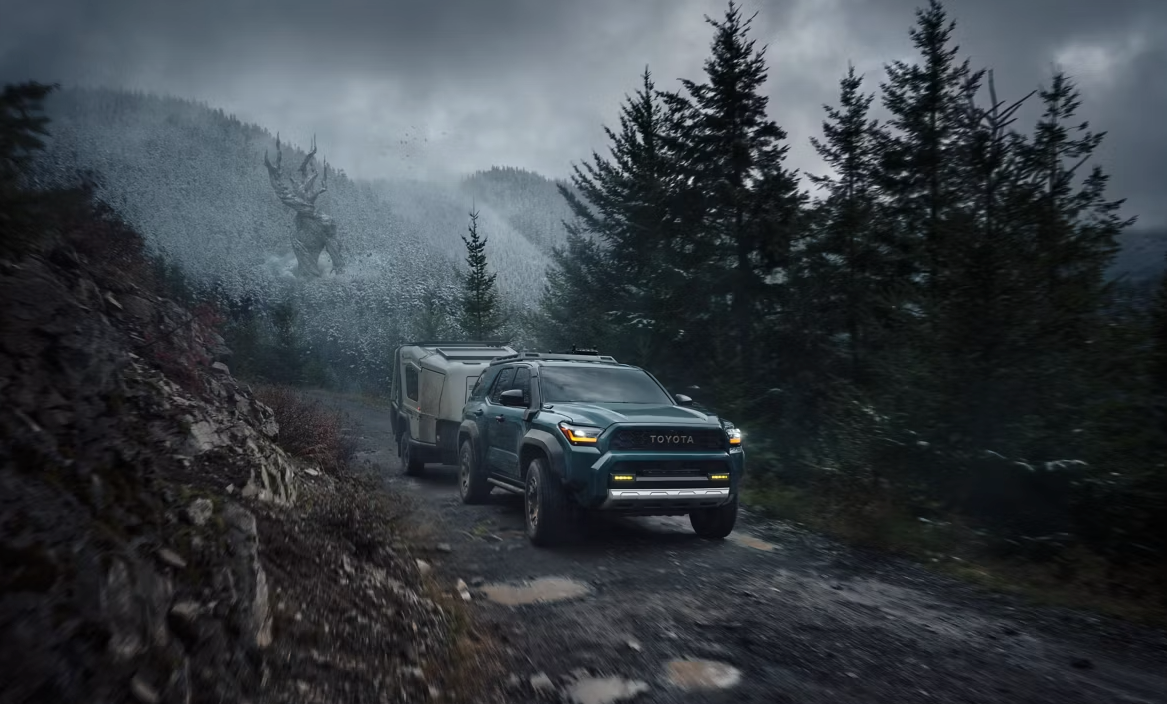
The 2026 4Runner is the Toyota SUV we recommend first for shoppers who want a dedicated off-road SUV with multiple ways to configure capability. Toyota lists 4Runner ground clearance at up to 10.1 inches, and the lineup includes trail-focused grades such as TRD Off-Road, TRD Pro, and Trailhunter. The i-FORCE MAX hybrid powertrain is standard on TRD Pro, Trailhunter, and Platinum, giving those versions strong torque delivery for technical driving and loaded weekend trips.

For a Johnson City camper who wants cargo space, roof-rack flexibility, and serious trail hardware, we recommend 4Runner Trailhunter or TRD Pro because those trims are built around outdoor use rather than appearance alone. For a Bristol outdoor driver heading to South Holston Lake or gravel access roads, we may recommend TRD Off-Road or TRD Off-Road Premium if the goal is confidence on rough roads without paying for the most specialized equipment.

  • Choose 4Runner TRD Off-Road for strong trail capability and better everyday balance.
  • Choose 4Runner TRD Pro when suspension performance and aggressive off-road hardware matter.
  • Choose 4Runner Trailhunter when overlanding equipment and self-sufficient adventure setup matter.
  • Choose 4Runner Limited or Platinum when comfort matters more than difficult trail use.
ModelPrimary Off-Road StrengthPowertrain ContextTrail Hardware FocusBest For
2026 4RunnerTrail-focused SUV flexibilityi-FORCE or available i-FORCE MAX on select trimsTRD Off-Road, TRD Pro, Trailhunter choicesDrivers who want a dedicated adventure SUV
2026 Land CruiserFull-time 4WD and comforti-FORCE MAX hybrid with 326 hpFull-time 4WD, 2-speed transfer case, trail techDrivers who want trail confidence and road-trip comfort
2026 TacomaTruck-bed utility with off-road trimsi-FORCE or available i-FORCE MAX on select trimsTRD Off-Road and TRD Pro hardwareDrivers hauling bikes, tools, muddy gear, and camping equipment
Ground Clearance Focus4Runner leads the SUV trail conversationTrim-dependentUp to 10.1 in. on 4RunnerRough trail access and uneven surfaces
Towing FocusLand Cruiser supports adventure towing326-hp i-FORCE MAX hybridUp to 6,000-lb towingSmall camper or gear trailer users
Ideal Use CaseMatch vehicle to terrain and gearHybrid torque can help in loaded useChoose hardware based on real trail difficultyBristol-area weekend adventure drivers

Based on Toyota official website.

2026 Land Cruiser: Full-Time 4WD and Hybrid Adventure Power

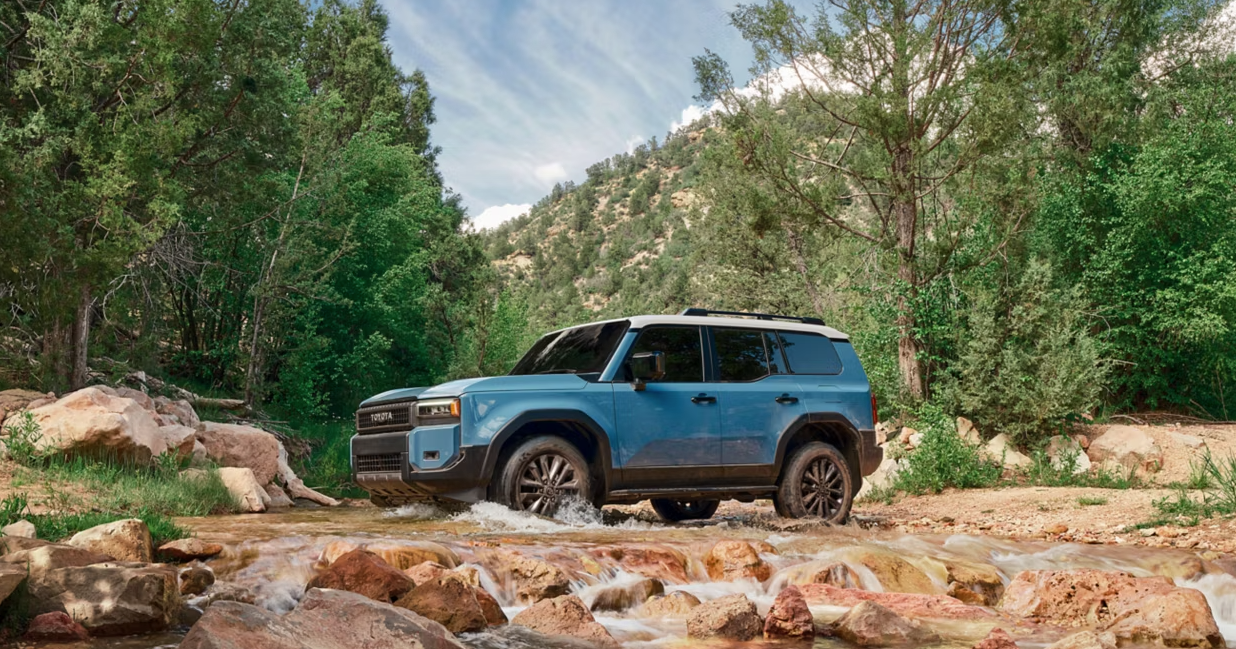
The 2026 Land Cruiser is the Toyota we recommend for drivers who want off-road credibility with a more composed road-trip personality. Toyota lists Land Cruiser with a full-time 4WD system, electronically controlled 2-speed transfer case, 326-hp i-FORCE MAX hybrid powertrain, and up to 6,000 pounds of towing capacity. That combination works well for Abingdon mountain-road drivers who want traction confidence year-round and still want a comfortable cabin for long drives.

For a Kingsport daily driver with weekend trail plans, Land Cruiser can make more sense than the most aggressive 4Runner trim. It gives rugged capability, but it does not push every buyer into the most specialized trail setup. We recommend it for drivers who split time between commuting, family travel, gravel roads, and occasional outdoor weekends.

2026 Tacoma TRD Off-Road: Trail Capability With a Truck Bed

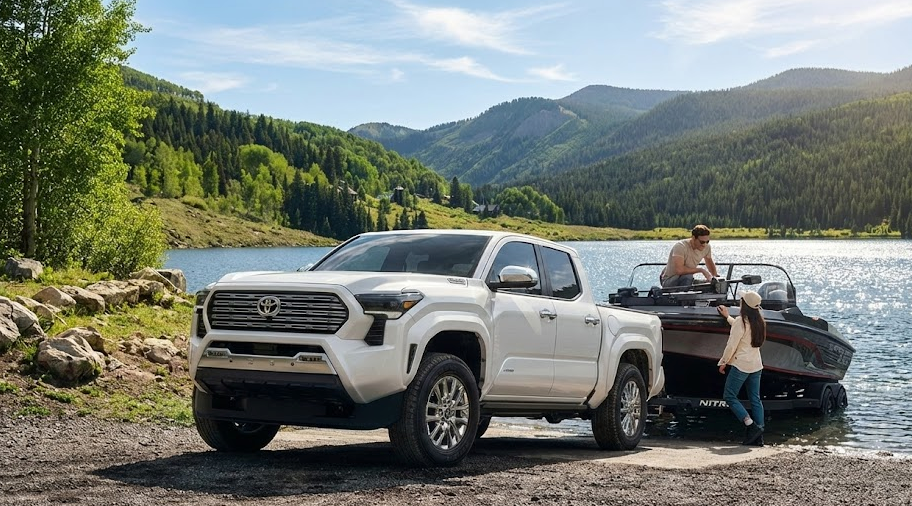
Tacoma belongs in this conversation because many outdoor drivers need a truck more than they need an SUV. A Blountville homeowner who hauls bikes, tools, mulch, wet gear, and camping equipment may be better served by Tacoma TRD Off-Road than by an enclosed SUV. The truck bed changes what the vehicle can do after the trail ride is over.

The Tacoma lineup includes trims built for off-road shoppers, including TRD Off-Road and TRD Pro, and Toyota positions Tacoma as a truck for work, play, and adventure. Available i-FORCE MAX hybrid power in Tacoma delivers 326 horsepower and 465 lb-ft of torque on equipped models, based on Toyota’s current Tacoma powertrain family. For a driver who wants to tow, haul, and keep muddy gear out of the cabin, Tacoma is often the cleanest answer.

Which 2026 Toyota Off-Road Model Should You Choose?

Key Takeaway: We recommend 4Runner for SUV-based trail use, Land Cruiser for full-time 4WD comfort, and Tacoma when cargo-bed utility matters more than enclosed SUV space.

4Runner vs Land Cruiser vs Tacoma Decision Table

Choosing between these Toyota adventure models should start with the job. If the hardest job is trail driving with passengers and enclosed cargo, 4Runner is the natural place to start. If the hardest job is balancing daily driving, traction confidence, comfort, and weekend adventure, Land Cruiser deserves a close look. If the hardest job is carrying dirty gear, tools, bikes, and outdoor equipment, Tacoma should be on the list.

Buying Question2026 4Runner2026 Land Cruiser2026 Tacoma
Best core identityTrail-ready SUVComfortable full-time 4WD adventure SUVOff-road truck with bed utility
Best for campingStrong fit, especially TrailhunterStrong fit for comfortable tripsBest if gear is dirty, bulky, or bed-friendly
Best for daily drivingGood, trim-dependentStrongest comfort balanceGood if a pickup fits your routine
Best for rougher trailsTRD Pro or TrailhunterCapable, but comfort-focusedTRD Off-Road or TRD Pro
Best for hauling gearEnclosed cargo spaceEnclosed cargo spaceOpen bed is the advantage
Ideal Use CaseJohnson City camper or Bristol trail driverAbingdon driver wanting traction and comfortBlountville homeowner and outdoor hauler

Based on Toyota official website.

The key difference between these choices is lifestyle fit. We recommend 4Runner when trail capability is the center of the purchase. We recommend Land Cruiser when the driver wants trail confidence but also values long-drive comfort, full-time 4WD, and a refined daily feel. We recommend Tacoma when the bed solves problems an SUV cannot solve.

Use-Case Recommendations for Camping, Gravel Roads, Towing, and Daily Driving

For a Bristol outdoor driver who spends summer weekends near South Holston Lake and drives gravel access roads, we recommend 4Runner TRD Off-Road or TRD Off-Road Premium because it gives useful trail capability without forcing the highest trim price. For a Johnson City camper who wants a vehicle built around gear, sleeping setups, and extended weekends, we recommend 4Runner Trailhunter because the overlanding focus has a real purpose.

For a Kingsport daily driver who wants one Toyota for commuting and weekend trails, we recommend Land Cruiser if comfort, full-time 4WD, and road manners matter most. For a Blountville homeowner who hauls bikes, mulch, tools, and muddy camping gear, we recommend Tacoma TRD Off-Road because the bed is more useful than folding SUV seats.

  • If you camp often, we recommend 4Runner Trailhunter because overlanding hardware can support longer outdoor trips.
  • If you drive gravel roads but commute daily, we recommend Land Cruiser because full-time 4WD and comfort matter together.
  • If you haul muddy gear, we recommend Tacoma TRD Off-Road because the truck bed keeps the cabin cleaner.
  • If you want the most aggressive SUV stance, we recommend 4Runner TRD Pro because its suspension focus fits serious trail use.
  • If you only drive light gravel, we recommend avoiding overbuying and choosing a balanced trim instead.

Our team can help you compare 4Runner, Land Cruiser, Tacoma, and other Toyota adventure models in person before you commit to one setup. We can talk through trails, camping gear, towing plans, daily commuting, financing, trade value, and availability. Start with our new Toyota inventory at https://www.toyotaofbristol.com/searchnew.aspx, then schedule a test drive when you want to feel the difference between an SUV and a truck. You can also call us at 423-764-3155 and tell us where you drive most often. We will help you choose capability that fits real Bristol-area weekends instead of paying for equipment you may never use.

Why These Toyota Models Fit Bristol, Kingsport, Johnson City, and Abingdon Adventures

Key Takeaway: Bristol-area adventure driving rewards traction, clearance, durable hardware, and smart cargo planning because local trips often mix interstate driving, lake access, gravel roads, and mountain weather.

Local Roads, Trailheads, Lake Trips, Mountain Weather, and Weekend Gear

Outdoor driving around Bristol is not one kind of road. A weekend can start on I-81, turn toward South Holston Lake, continue onto gravel access roads, and end with wet shoes, camping gear, bikes, coolers, and dogs. That is why the right Toyota is not only about a badge. It is about how the vehicle handles the entire trip from driveway to destination and back.

For Appalachian roads near Bristol and Southwest Virginia, we recommend matching the Toyota to the terrain: 4Runner for tighter trail-focused SUV use, Land Cruiser for full-time 4WD comfort over mixed surfaces, and Tacoma for drivers who need a bed for dirty or bulky gear. The best choice is the one that fits the road and the gear, not simply the one with the most aggressive trim name.

Local Adventure ScenarioMain ChallengeRecommended ToyotaWhy It Fits
South Holston Lake weekendGear, passengers, mixed pavement and gravel4Runner or Tacoma4Runner fits enclosed gear, Tacoma fits dirty or bulky cargo
Kingsport weekday plus weekend trailsDaily comfort and light adventureLand CruiserFull-time 4WD and comfort balance both needs
Johnson City camping tripsGear organization and rougher access roads4Runner TrailhunterOverlanding focus fits extended outdoor use
Abingdon mountain weatherChanging traction and elevationLand Cruiser or 4Runner4WD systems and clearance support confidence
Blountville home and trail useTools, yard supplies, bikes, and muddy gearTacoma TRD Off-RoadTruck bed handles cargo that should stay outside
Elizabethton family adventuresWeekday errands plus light outdoor weekends4Runner TRD Off-Road Premium or Land CruiserBalances family use with outdoor confidence
2026 Land Cruiser: Full-Time 4WD and Hybrid Adventure Power

We invite drivers from Bristol, Kingsport, Johnson City, Abingdon, Blountville, and Elizabethton to visit us at 3045 W State St, Bristol, TN 37620 with real trip details. Tell us if you tow, camp, bike, fish, hunt, travel with kids, or need a daily commuter during the week. We can compare 4Runner, Land Cruiser, Tacoma, Sequoia, and Tundra based on the way you actually use a vehicle. We can also discuss the Toyota of Bristol Advantage Plan and our service support for tires, brakes, alignment, accessories, and maintenance. Visit https://www.toyotaofbristol.com/ or call 423-764-3155, and we will help you find the Toyota that fits your local adventure life.

Technical Deep Dive: When TRD Pro or Trailhunter Is Actually Worth It

Key Takeaway: TRD Pro and Trailhunter are worth it when the driver will use the suspension, protection, traction hardware, and trail-focused equipment often enough to justify the upgrade.

We like the specialized trims, but we do not recommend them automatically. TRD Pro is the better fit when suspension performance, high-speed rough-road control, and aggressive trail hardware matter. Trailhunter is the better fit when camping, overlanding, power needs, and longer self-sufficient trips are part of the plan. A driver who mostly visits gravel lots, boat ramps, and maintained forest roads may not need either one.

Trim TypePrimary PurposeWorth It WhenNot Necessary WhenBest For
TRD Off-RoadTrail capability with daily balanceYou want real 4WD features without maximum hardwareYou only need paved-road confidenceLight to moderate trail users
TRD ProPerformance-focused off-road hardwareYou drive rough trails often enough to use the suspensionYou mostly commute and like the lookSerious off-road SUV or truck drivers
TrailhunterOverlanding and extended adventure setupYou camp, carry gear, and travel farther off pavementYou take short gravel-road trips onlyCampers and overlanding shoppers
Land CruiserFull-time 4WD adventure comfortYou want traction confidence plus daily comfortYou need a truck bedMixed-use adventure families
Tacoma TRD Off-RoadTrail truck utilityYou need cargo-bed function with off-road capabilityYou need enclosed third-row passenger spaceOutdoor haulers and homeowners
Ideal Use CaseRight-size capabilityYou match hardware to real trail difficultyYou buy only for stylingDrivers who want value and capability together

Based on Toyota official website.

For an Elizabethton family adventurer who mainly handles school, errands, weekend gravel roads, and occasional camping, we may recommend 4Runner TRD Off-Road Premium or Land Cruiser before jumping to TRD Pro. The smartest off-road build is the one that matches how often the hardware gets used.

Ownership Cost Analysis: Off-Road Toyota Maintenance After Weekend Adventures

Key Takeaway: Off-road ownership does not end when the trail ends, because tires, brakes, alignment, underbody components, and fluids should be checked after rough or muddy use.

Our service team advises adventure drivers to treat off-road use as a maintenance factor. Even light trail driving can add dirt, mud, gravel impacts, brake wear, tire damage, and alignment changes. That does not mean every weekend trip requires major service, but it does mean drivers should build a smarter inspection routine.

  • After rocky or rutted roads, we recommend checking tire sidewalls and tread.
  • After muddy trips, we recommend underbody cleaning and visual inspection.
  • After repeated gravel-road driving, we recommend watching alignment and steering feel.
  • After towing or long mountain trips, we recommend paying attention to brakes and fluids.
  • Before summer travel, we recommend a multi-point inspection through our service center.

For a Bristol driver who uses 4Runner, Land Cruiser, Tacoma, or Tundra for weekend adventure, scheduled service is part of keeping the vehicle ready for the next trip. ToyotaCare can help with early scheduled maintenance, and our certified technicians can help with tires, brakes, alignments, accessories, and genuine Toyota parts.

Key Takeaways

  • 4Runner is the strongest Toyota SUV choice for trail-focused adventure driving.
  • Land Cruiser is the best Toyota choice for full-time 4WD comfort and mixed-use outdoor travel.
  • Tacoma is the better answer when the driver needs a truck bed for dirty or bulky gear.
  • TRD Pro and Trailhunter are worth it when the hardware will be used often.
  • Off-road Toyota ownership should include tire, brake, alignment, underbody, and fluid checks.

2026 Toyota Off-Road SUV FAQ for Bristol Adventure Drivers

What is the best 2026 Toyota SUV for off-road adventures?

For most serious off-road SUV shoppers, we recommend the 2026 4Runner TRD Pro or Trailhunter because those trims are built around trail capability, ground clearance, and specialized hardware. Land Cruiser is the better fit when full-time 4WD comfort and daily drivability matter more than maximum trail specialization. For Bristol-area adventure drivers, the best choice depends on terrain, passengers, gear, and daily use.

Is the 2026 4Runner better than the Land Cruiser off-road?

The 2026 4Runner is usually the better choice for shoppers who want a more trail-focused SUV, especially in TRD Pro or Trailhunter form. Land Cruiser is still highly capable, but we recommend it more for drivers who want full-time 4WD, hybrid power, comfort, and mixed-use adventure confidence. A Johnson City camper may prefer 4Runner, while an Abingdon mountain-road commuter may prefer Land Cruiser.

Should I choose Tacoma instead of an SUV for camping?

We recommend Tacoma instead of an SUV when your camping setup includes muddy gear, bikes, tools, firewood, coolers, or equipment that is easier to carry in a truck bed. Tacoma TRD Off-Road is especially useful for Blountville homeowners and outdoor drivers who need both daily utility and trail capability. Choose 4Runner or Land Cruiser when enclosed cargo and passenger comfort matter more.

Do I need TRD Pro for gravel roads near Bristol?

Most drivers do not need TRD Pro for maintained gravel roads near Bristol. We recommend TRD Pro when you regularly drive rougher trails, want upgraded suspension hardware, and will actually use the extra capability. For light gravel, lake access, and daily driving, a balanced 4Runner, Land Cruiser, or Tacoma TRD Off-Road may be the smarter buy.

Find Your Off-Road Toyota at Toyota of Bristol

We are here to help you choose the right Toyota for Appalachian roads, lake trips, camping weekends, towing, gear hauling, and daily driving. Visit us at 3045 W State St, Bristol, TN 37620, or call Sales at 423-764-3155 so we can compare 4Runner, Land Cruiser, Tacoma, Tundra, Sequoia, and other Toyota models with your actual trips in mind. We serve drivers from Bristol, Kingsport, Johnson City, Abingdon, Blountville, Elizabethton, and the wider Tri-Cities area. Our Toyota of Bristol Advantage Plan and service center support help keep your vehicle ready after the weekend ends. Tell us where you drive, what you carry, and how much capability you need, and we will help you choose the right setup.
Posted in:

Related Posts

Fall Foliage Drives from Bristol: Best Toyota SUVs for Blue Ridge and Cherokee National Forest Getaways

Fall Foliage Drives from Bristol: Best Toyota SUVs for Blue Ridge and Cherokee National Forest Getaways

Best Toyota SUVs for the Drive: Comparing RAV4 AWD, 4Runner 4WD, and Grand Highlander The best Toyota SUVs for fall foliage drives from Bristol are the RAV4 Hybrid or RAV4 Plug-in Hybrid for scenic paved routes, the 4Runner for rougher forest-service roads that demand higher ground clearance and four-wheel drive, and the Grand Highlander for larger groups who want three-row seating and extra cargo room for gear. Toyota of Bristol sees this decision come up every autumn as drivers plan weekend trips into the Blue Ridge Mountains and Cherokee National Forest, and the right choice mostly comes down to which roads you plan to drive and how many people and how much gear you are bringing. If you are mapping a day trip to Roan Mountain, a weekend around Watauga Lake, or a longer drive along the Blue Ridge Parkway toward Blowing Rock, this guide walks through which current Toyota SUV fits each kind of trip, what to expect from fall weather and road conditions in our part of Appalachia, and how all-wheel and four-wheel drive actually help once the leaves start turning. Families, weekend hikers, and anyone chasing peak color will find a clear starting point here for choosing between our current SUV lineup. Definition: A fall foliage drive from Bristol into the Blue Ridge Mountains or Cherokee National Forest typically combines curving two-lane roads, real elevation change, and early-season weather that can shift quickly. The right SUV for this kind of trip generally offers all-wheel or four-wheel drive, enough cargo space for hiking or camping gear, and confident handling on mountain roads. For drivers in the Bristol, TN and Tri-Cities area, choosing a capable SUV can make peak-color weekend trips more comfortable and less dependent on ideal weather. Table of Contents Planning a Tri-Cities Fall Foliage Drive Which Toyota SUV Fits Your Fall Trip Local Authority: Fall Driving Around Bristol and the Tri-Cities Local Driving Insight: Why Elevation Matters More Than the Calendar Family & Lifestyle Fit: Packing for Day Trips vs. Overnight Getaways Key Takeaways Frequently Asked Questions About Fall Foliage Drives from Bristol Planning a Tri-Cities Fall Foliage Drive Key Takeaway: Roan Mountain and the surrounding Cherokee National Forest typically see peak color first in our region, usually in early-to-mid October at higher elevations, while lower-elevation routes toward the Blue Ridge Parkway often peak a week or two later. Where and When to Chase Peak Color Elevation drives almost everything about fall color timing in our region. Roan Mountain, one of the highest points in the Cherokee National Forest at over 6,000 feet, typically turns first, often in the first half of October, while valley routes around Watauga Lake and the lower stretches of the Blue Ridge Parkway usually peak a week or two behind it. Watching elevation rather than a single calendar date is the more reliable way to plan a trip, since a drive that looks past its peak in Bristol can still be near peak an hour away at higher elevation. Cherokee National Forest is the closer option for a half-day or full-day trip, with Watauga Lake and the Appalachian Trail crossings near Hampton and Roan Mountain State Park offering pull-offs, overlooks, and short hikes without a long drive from Bristol. The Blue Ridge Parkway, reached through the Boone and Blowing Rock area of North Carolina, is a longer drive but adds the Parkway's continuous overlooks and, for those willing to go further, Grandfather Mountain. Route choice matters as much as timing. A loop that climbs from Elizabethton up toward Roan Mountain gains elevation quickly, which means you can pass through several stages of color change in a single morning drive rather than committing to one fixed point. The Blue Ridge Parkway works differently, since its elevation stays relatively consistent for long stretches, so color along the Parkway tends to change more uniformly across a wider area at once rather than in the same quick elevation bands you would find climbing Roan Mountain. Destination Approx. Drive Time from Bristol Typical Peak Color Window Road Character Roan Mountain / Cherokee National Forest 45 minutes to 1 hour Early to mid-October (high elevation) Curving two-lane roads, some unpaved forest access roads Watauga Lake area 45 minutes to 1 hour Mid-to-late October Paved lake-loop roads, some steeper grades Blue Ridge Parkway near Blowing Rock, NC 1.5 to 2 hours Mid-to-late October Continuous paved overlooks, higher traffic on weekends Table 1. Popular fall foliage destinations within reach of Bristol, TN. Weekday vs. Weekend Trips and What to Expect Weekday trips generally mean lighter traffic and easier parking at popular overlooks, while weekend trips during peak weeks can mean crowded pull-offs, especially along the Blue Ridge Parkway. Morning departures also help on the Parkway, since fog is common at elevation until mid-morning, and that same fog can linger longer on shaded, north-facing sections of Cherokee National Forest roads. Holiday weekends in October tend to be the busiest of the year for both destinations, so an early start or a weekday visit is the more reliable way to actually get a parking spot at the more popular overlooks. None of these destinations require a highly specialized vehicle to enjoy from paved roads, which is part of why the SUV choice below comes down more to comfort, cargo space, and how far off the pavement you plan to go than raw off-road capability alone. Which Toyota SUV Fits Your Fall Trip Key Takeaway: For paved scenic routes like the Blue Ridge Parkway and Watauga Lake loop, we recommend the RAV4 Hybrid or RAV4 Plug-in Hybrid; for forest-service roads and higher-clearance trails in Cherokee National Forest, the 4Runner is the stronger fit; and for larger groups with more gear, the Grand Highlander's three-row seating and cargo space make the most sense. RAV4 vs. 4Runner vs. Grand Highlander Toyota's current RAV4 lineup is electrified-only, available as a Hybrid Electric Vehicle (HEV) across LE, XLE Premium, Limited, SE, XSE, and Woodland grades, or as a Plug-in Hybrid Electric Vehicle (PHEV) on separate grades, with front- or all-wheel drive depending on grade. The 4Runner offers nine grades for 2026, including off-road-focused TRD Off-Road, TRD Pro, and Trailhunter trims built around Toyota's four-wheel-drive systems and higher ground clearance, alongside more comfort-oriented grades like SR5 and Limited. The Grand Highlander is confirmed with a 2.4L turbo gas engine, a 2.5L hybrid rated at a manufacturer-estimated 34 mpg combined, and a Hybrid MAX powertrain producing 362 horsepower, with seating for up to seven and as much as 97.5 cubic feet of cargo space with the rear seats folded. Category RAV4 (HEV/PHEV) 4Runner Grand Highlander Powertrain Electrified-only: HEV or PHEV (confirmed) Gas-based lineup with off-road-focused grades; contact Toyota of Bristol for complete, current 2026 powertrain specifications 2.4L turbo gas, 2.5L hybrid (34 mpg combined, mfr.-estimated), or Hybrid MAX (362 hp) Drivetrain FWD or AWD, depending on grade 4WD systems on TRD Off-Road, TRD Pro, and Trailhunter grades FWD or AWD Seating 5 passengers 5 passengers Up to 7 passengers Cargo space Contact Toyota of Bristol for complete, current cargo figures Contact Toyota of Bristol for complete, current cargo figures Up to 97.5 cu ft with rear seats folded (confirmed) Best fit for fall foliage trips Paved scenic routes like the Blue Ridge Parkway or Watauga Lake loop Forest-service roads and higher-clearance trails in Cherokee National Forest Larger groups needing three-row seating and extra cargo room Table 2. Comparing the current RAV4, 4Runner, and Grand Highlander for fall foliage trips. For a paved scenic drive along the Blue Ridge Parkway or around Watauga Lake, we recommend the RAV4 Hybrid or RAV4 Plug-in Hybrid, since both are confirmed as electrified-only with front- or all-wheel drive depending on grade and do not require the higher clearance a forest-service road demands. If your trip includes unpaved sections in Cherokee National Forest or you want more ground clearance for peace of mind, the 4Runner's TRD Off-Road, TRD Pro, or Trailhunter grades are the stronger fit, and the Grand Highlander is the better choice once your group grows past five people or your gear list grows past what a compact SUV can hold. Matching Group Size and Gear to the Right SUV A group of two or three adults doing a day trip with light gear, cameras, and a picnic will find the RAV4 comfortable and efficient for a Blue Ridge Parkway round trip from Bristol. A family or group planning to explore an actual forest-service road in Cherokee National Forest, rather than staying on paved overlooks, benefits from the 4Runner's four-wheel-drive systems and higher ground clearance, particularly after rain when unpaved sections can get soft. A larger family or two-family trip to Watauga Lake with kayaks, coolers, and overnight bags is where the Grand Highlander's third row and 97.5 cubic feet of confirmed cargo space with the seats folded earns its keep. Two to three adults, paved routes, day trip: RAV4 Hybrid or RAV4 Plug-in Hybrid Forest-service roads, higher clearance wanted: 4Runner TRD Off-Road, TRD Pro, or Trailhunter Larger groups, overnight gear, kayaks or coolers: Grand Highlander Uncertain which fits your trip: our team can walk through your specific route and group size Ready to Pick Your Fall Road-Trip SUV? Our sales team can show you the current RAV4, 4Runner, and Grand Highlander on our lot and help you match a grade to the specific fall trip you have in mind, whether that is a paved Blue Ridge Parkway day trip or a rougher forest-service road in Cherokee National Forest. We know these decisions come down to real details like cargo space, drivetrain, and ground clearance, and our knowledgeable, no-pressure sales staff would rather ask about your actual trip, your typical group size, and how far off pavement you plan to go than guess at what you need. If you are torn between two SUVs, a side-by-side test drive on the same afternoon often makes the decision easier than reading specs alone. To check our current new Toyota selection or schedule a test drive before your next fall getaway, visit toyotaofbristol.com/searchnew.aspx or toyotaofbristol.com/testdrive.aspx, or call us at 423-764-3155. We also offer the Bristol Advantage Plan on qualifying new Toyota purchases, and our team can confirm current benefits and financing options for whichever SUV fits your travel plans. Stop by our showroom at 3045 W State Street in Bristol before your next weekend in the mountains. Local Authority: Fall Driving Around Bristol and the Tri-Cities Key Takeaway: Bristol sits within an hour of Cherokee National Forest and Watauga Lake and roughly two hours of the Blue Ridge Parkway, and our central location and Saturday service hours make it easy to get your SUV road-trip ready before peak color arrives. Regional Access and Pre-Trip Readiness Bristol's location gives Tri-Cities drivers unusually quick access to serious fall-foliage terrain. Kingsport and Johnson City residents share that same short drive into Cherokee National Forest, while Abingdon, Virginia sits close to its own stretch of mountain scenery along Route 58 toward the Virginia Creeper Trail. Wherever you are starting from in our service area, a fall mountain drive usually means real elevation change, sudden weather shifts, and roads that reward a well-maintained vehicle with good tires and working brakes. Fall in the mountains also means temperature swings that catch drivers off guard. A morning departure from Bristol at 50 degrees can mean near-freezing temperatures and frost on shaded curves by the time you reach Roan Mountain's higher elevations, even on a day that warms up comfortably back in town. That kind of swing is exactly why we bring up tire condition and braking performance before a fall mountain trip rather than only ahead of winter, since the first cold mornings of the season often arrive at elevation weeks before they reach Bristol itself. We recommend a quick pre-trip check before any longer mountain drive: tire tread and pressure, brake condition, and washer fluid for the road grime a rainy fall day can kick up. Our Express Maintenance service handles a lot of this without an appointment, and our Saturday service hours mean a Friday afternoon decision to chase peak color the next morning does not have to mean skipping a basic safety check. Get Road-Trip Ready at Our Service Center Whether you are heading out from Bristol, Kingsport, Johnson City, or Abingdon, our service center can get your current Toyota ready for mountain driving with a quick multi-point inspection before your next fall trip. We have been proudly serving the Tri-Cities region from our West State Street location in Bristol, and our Tri-Us You'll Like Us reputation is built on treating every visit, whether it is a same-day oil change or a new SUV purchase, the same way. If you want to check tire condition, brakes, or fluids before a mountain drive, visit toyotaofbristol.com/schedule-service.html or call us at 423-764-3155 to set up a visit. Our Express Maintenance option also covers quick oil changes and tire checks without an appointment if your trip comes together last minute. We use only genuine OEM Toyota parts for every repair, and we bring that same standard of care to drivers across Bristol, Kingsport, Johnson City, and Abingdon. Local Driving Insight: Why Elevation Matters More Than the Calendar Key Takeaway: Elevation, not the calendar, is the most reliable way to plan a Tri-Cities fall foliage trip, since Roan Mountain and other high-elevation stops in Cherokee National Forest typically peak one to two weeks ahead of lower-elevation routes near Watauga Lake or the Blue Ridge Parkway foothills. Most visitors plan a fall color trip around a single date on a calendar, but elevation is the more reliable guide in our part of Appalachia. A route that looks past peak in Bristol's lower elevation can still be near peak an hour away at 4,000 or 5,000 feet, which is why Roan Mountain and other high points in Cherokee National Forest typically turn first while valley routes lag behind by a week or two. This matters for vehicle choice too. Higher-elevation routes are more likely to include unpaved forest-service roads, tighter switchbacks, and occasional early-morning frost even while lower elevations stay mild, which is exactly the kind of trip where the 4Runner's four-wheel-drive systems and additional ground clearance add real margin. A lower-elevation loop around Watauga Lake or a Parkway day trip near Blowing Rock stays on paved roads the entire way, which is where the RAV4's efficiency and easier daily driving character make more sense. A practical way to use this insight is to plan a single day around two elevation bands rather than one destination. Starting at a lower-elevation stop like Watauga Lake in the morning and finishing the afternoon higher up toward Roan Mountain often means seeing color at two different stages of the season in the same outing, which stretches the value of a single tank of gas or a single charge and gives everyone in the car a better shot at seeing peak color somewhere along the route even if the calendar date does not line up perfectly with any one spot. Family & Lifestyle Fit: Packing for Day Trips vs. Overnight Getaways Key Takeaway: Packing for a fall foliage day trip is different from packing for an overnight camping trip in Cherokee National Forest, and matching your Toyota SUV's cargo space to that difference avoids a cramped drive home with muddy boots and gear. A day trip built around overlooks and short hikes generally needs space for a cooler, daypacks, and layers for temperature swings between a sunny overlook and a shaded trailhead, which any current RAV4 handles easily. An overnight or multi-family trip to Watauga Lake with kayaks, camp chairs, and coolers is a different packing problem, and that is where the Grand Highlander's confirmed 97.5 cubic feet of cargo space with the rear seats folded becomes the more comfortable choice, especially with kids and their gear also along for the ride. Day trip, overlooks and short hikes: cooler, daypacks, and layered clothing fit easily in a RAV4 Half-day forest-service road exploration: muddy boots and trail gear are easier to manage with the 4Runner's more rugged cargo area Overnight or multi-family lake trip: kayaks, camp chairs, and coolers fit the Grand Highlander's larger cargo space with seats folded Photography trips with tripods and camera bags: any of the three works, but easy rear-seat access matters more than raw cargo volume Key Takeaways The RAV4 Hybrid or RAV4 Plug-in Hybrid fits paved scenic routes like the Blue Ridge Parkway or Watauga Lake loop best. The 4Runner's TRD Off-Road, TRD Pro, and Trailhunter grades fit forest-service roads and higher-clearance trips in Cherokee National Forest. The Grand Highlander offers confirmed seating for up to seven and up to 97.5 cubic feet of cargo space with the rear seats folded, making it the stronger choice for larger groups. Elevation, more than the calendar date, drives fall color timing in our region, with Roan Mountain typically peaking one to two weeks ahead of lower-elevation routes. Cherokee National Forest and Watauga Lake sit within about an hour of Bristol, while the Blue Ridge Parkway near Blowing Rock is roughly a two-hour drive. Our service center can complete a quick pre-trip inspection, including tires and brakes, without an appointment through Express Maintenance. Frequently Asked Questions About Fall Foliage Drives from Bristol Do I need all-wheel drive for a Blue Ridge Parkway fall foliage trip? All-wheel drive is not required for the Parkway itself, since the route is fully paved, but it does add confidence on wet or frosty mornings at elevation, which are common in October. Our current RAV4 lineup offers all-wheel drive depending on grade, and it is a reasonable option if you plan multiple mountain trips through the fall and winter. If you are staying entirely on paved roads for a single day trip, a front-wheel-drive RAV4 handles the Parkway comfortably as well. Which Toyota SUV handles unpaved forest-service roads best? The 4Runner is our strongest recommendation for unpaved forest-service roads in Cherokee National Forest, particularly the TRD Off-Road, TRD Pro, and Trailhunter grades, which are built around four-wheel-drive systems and additional ground clearance. We recommend confirming current road conditions before heading onto an unpaved forest-service road, since fall rain can soften sections that are firm in drier months, and some forest roads close seasonally regardless of which vehicle you drive. Our team can walk you through which 4Runner grade fits the specific trails you have in mind. When is peak fall color near Bristol, Kingsport, and Johnson City? Peak color timing varies by elevation more than by a single calendar date. High-elevation spots like Roan Mountain in Cherokee National Forest typically peak in early-to-mid October, while lower-elevation routes around Watauga Lake and the Blue Ridge Parkway foothills often peak a week or two later. Watching elevation, rather than committing to one weekend, gives you a better chance of catching near-peak color somewhere within an hour or two of Bristol, and checking closer to your planned trip date is more reliable than planning months in advance. Can I fit a family of five and their gear in a RAV4 for a Watauga Lake trip? A RAV4 comfortably seats five and handles daypacks, a cooler, and light gear for a day trip without difficulty. For an overnight stay with kayaks, camp chairs, and larger coolers, most families find the Grand Highlander's additional cargo space more comfortable, since it is confirmed at up to 97.5 cubic feet with the rear seats folded. Our team can help you decide based on exactly what you are planning to bring along. Fall in the Tri-Cities means quick access to some of the best foliage driving in Appalachia, and we want you heading into Cherokee National Forest or up the Blue Ridge Parkway in a Toyota SUV that actually fits your trip. Whether that means a RAV4 for a paved day trip, a 4Runner for forest-service roads, or a Grand Highlander for a larger group with gear, we also offer the Bristol Advantage Plan on qualifying new Toyota purchases and a service center ready to check your tires and brakes before you go. We would rather help you plan around elevation and group size now than have you find out halfway up Roan Mountain that you brought the wrong vehicle for the trip. Stop by our showroom at 3045 W State Street in Bristol, call us at 423-764-3155, or schedule a quick pre-trip inspection online, and let us help make sure Bristol, Kingsport, and Johnson City drivers are ready for peak color this season.

Toyota Plug-In Hybrid Charging Guide for Bristol, TN Drivers

Toyota Plug-In Hybrid Charging Guide for Bristol, TN Drivers

Maximizing EV Mode Range for Your Tri-Cities Commute Toyota plug-in hybrids can be charged at home or compatible public charging stations, then driven on electric power for shorter trips while keeping a gas engine for longer drives. Toyota of Bristol helps local shoppers compare plug-in hybrid charging needs for daily commutes, weekend travel, and long-term ownership. For a Bristol commuter who wants electric driving for weekday errands but gas flexibility for I-81 or Southwest Virginia trips, a Toyota plug-in hybrid can be a practical bridge between a standard hybrid and a fully electric vehicle. This guide is not a Prius Plug-In Hybrid model spotlight or a RAV4 Plug-In Hybrid model page. Instead, it explains how charging fits real life. We will cover Level 1 charging, Level 2 charging, public charging, electric driving range, hybrid mode, home setup questions, apartment considerations, and how to choose between Toyota plug-in hybrid options by lifestyle. We will also keep the focus local. A driver in Bristol, Kingsport, Johnson City, Abingdon, Blountville, or Elizabethton may have different charging needs depending on parking access, commute distance, work charging, road trips, and whether SUV space matters more than maximum efficiency. Definition: A Toyota plug-in hybrid is a vehicle with a gas engine, hybrid system, and larger battery that can be charged externally. It can drive on electric power when charged, then continue operating like a hybrid when battery charge is lower. For many drivers, that means electric-first commuting with gas flexibility. Plug-In Hybrid Shopping Compare Toyota Plug-In Hybrid Options If you want electric driving for daily trips and gas flexibility for longer routes, our team can help compare Toyota plug-in hybrid availability and charging fit. View New Toyota Inventory Table of Contents How Toyota Plug-In Hybrid Charging Works Should You Charge at Home, Work, or Public Stations? Local Charging and Driving Fit Around Bristol and the Tri-Cities What to Know Before Installing or Using a Home Charger Plug-In Hybrid vs Hybrid: When Charging Is Worth It Toyota Plug-In Hybrid Charging FAQ How Toyota Plug-In Hybrid Charging Works Key Takeaway: Toyota plug-in hybrid charging is built around flexibility. Charge when it is convenient, use electric power for shorter trips, and rely on hybrid gas-electric operation when the battery charge is lower or the drive is longer. Level 1, Level 2, and Public Charging Basics Toyota plug-in hybrid charging starts with a simple question: where will you park long enough to charge? A plug-in hybrid can usually fit drivers who charge at home overnight, charge at work during the day, or use compatible public chargers when convenient. The best setup depends on your parking access, daily mileage, schedule, and how often you want to begin the day with electric range available. Level 1 charging usually refers to using a standard household outlet with the correct charging equipment. It is the most familiar option for many homeowners because it does not require the same setup as a dedicated Level 2 charger. Level 2 charging usually uses a 240-volt setup or compatible charging station, which can make charging faster and more convenient for drivers who charge regularly. Public charging can help when a compatible station is available near work, errands, or travel stops. Level 1 charging can fit drivers who park overnight and have outlet access. Level 2 charging can fit drivers who want a more regular home charging routine. Public charging can help when a compatible station is located near work, shopping, or travel. Work charging can be helpful if your vehicle sits for several hours during the day. Apartment charging needs more planning because outlet or charger access may be limited. Charging Option How It Usually Works Why It Matters Best For Level 1 home charging Uses a standard outlet with proper equipment Simple entry point for overnight charging Bristol homeowner with garage or driveway access Level 2 home charging Uses a compatible 240-volt charging setup Supports a more regular charging routine Blountville homeowner who wants daily charging confidence Work charging Charges while parked during the workday Can help drivers without easy evening charging Johnson City commuter parked for several hours Public charging Uses compatible public charging stations Adds flexibility during errands or travel Driver with charging near shopping or work No regular charging access Driver relies mostly on hybrid operation May reduce the value of choosing a PHEV Apartment driver still comparing options Ideal Use Case Charge when convenient Use electric range when available Toyota shopper with predictable parking access Based on Toyota official website. Electric Range, Hybrid Mode, and Gas Flexibility The main benefit of a Toyota plug-in hybrid is that it can give you electric driving for shorter trips and gas-electric hybrid flexibility for longer ones. When the battery has enough charge, the vehicle can prioritize electric driving for many daily errands. When the battery charge is lower, the gas engine and hybrid system continue to support the drive. That flexibility is what makes a plug-in hybrid different from a full EV and different from a standard hybrid. Prius Plug-In Hybrid is the choice many drivers consider when efficiency and a lower-slung hatchback shape matter most. Toyota lists up to 44 miles of EPA-estimated all-electric driving range for the 2026 Prius Plug-In Hybrid with a fully charged battery, with exact range depending on trim. RAV4 Plug-In Hybrid is the choice many drivers consider when SUV space, ride height, and all-wheel-drive confidence matter more. Toyota Pressroom information for the 2026 RAV4 Plug-In Hybrid notes up to a manufacturer-estimated 52-mile all-electric driving range in the new generation. Prius Plug-In Hybrid vs RAV4 Plug-In Hybrid Charging Lifestyle The charging routine can be similar, but the lifestyle fit is different. Prius Plug-In Hybrid makes sense for a driver who wants a highly efficient plug-in hybrid for commuting, errands, and solo or two-person travel. RAV4 Plug-In Hybrid makes sense for a driver who wants plug-in hybrid capability with SUV cargo room, available adventure flexibility, and more family-friendly space. For a Kingsport family driver, RAV4 Plug-In Hybrid may be easier to recommend because school bags, groceries, sports gear, and weekend trips often favor SUV space. For a Bristol commuter who spends most weekdays driving solo, Prius Plug-In Hybrid may be the smarter charging lifestyle because it focuses on electric-first efficiency and daily usability. Toyota Plug-In Hybrid Models Compare Prius Plug-In Hybrid and RAV4 Plug-In Hybrid Our team can help you compare plug-in hybrid hatchback efficiency against plug-in hybrid SUV space, charging routine, and daily driving fit. Ask About Plug-In Hybrid Availability Should You Charge at Home, Work, or Public Stations? Key Takeaway: The best Toyota plug-in hybrid charging setup is the one you will actually use. Home charging is easiest for many drivers, work charging can support long parking hours, and public charging works best as a helpful bonus. Plug-In Hybrid Charging Decision Table Before choosing a Toyota plug-in hybrid, we recommend looking at your charging pattern honestly. A PHEV is strongest when the driver has a repeatable way to charge several days per week. That does not mean every driver needs a dedicated home charger right away, but it does mean charging access should fit normal life rather than become a chore. Charging Situation PHEV Fit What to Consider Best For Garage or driveway outlet Strong fit Check outlet access, parking distance, and charging schedule Blountville homeowner Dedicated Level 2 charger Very strong fit Use a qualified electrician and confirm vehicle compatibility Driver who wants routine charging Work charging Good fit if reliable Confirm charger availability, cost, and parking policy Johnson City commuter Apartment without charger Depends on nearby options Public charging alone may not be convenient enough Abingdon apartment driver comparing options Mostly road trips Still useful, but charging matters less Gas flexibility may matter more than electric miles Elizabethton road-tripper Ideal Use Case Regular charging access Match routine before choosing Toyota shopper who can charge predictably Based on Toyota official website. The decision is not simply home charging versus public charging. It is really about convenience. If you can plug in at home most nights, a Toyota plug-in hybrid can fit naturally into your routine. If you can charge at work, the vehicle may spend parked hours building electric range for the drive home. If you only plan to use public charging occasionally, a plug-in hybrid can still make sense, but you should choose it for the full package, not only for electric driving. Test Drive Planning Schedule a Plug-In Hybrid Test Drive A test drive can help you compare seating position, cargo space, driving feel, and whether Prius Plug-In Hybrid or RAV4 Plug-In Hybrid better fits your daily charging routine. Schedule a Test Drive Use-Case Recommendations for Commuters, Apartment Drivers, Families, and Road-Trippers For a Bristol daily commuter with home charging, we recommend a Toyota plug-in hybrid because weekday errands may fit within electric-first driving. For a Johnson City highway commuter, we recommend comparing Prius Plug-In Hybrid and RAV4 Plug-In Hybrid by route, space, and charging access because longer drives may use both electric and hybrid operation. For a Kingsport family driver, we recommend RAV4 Plug-In Hybrid because SUV space can matter more than maximum efficiency. If you park in a garage or driveway every night, a plug-in hybrid can fit your routine well. If you live in an apartment without a charger, check work or public charging before choosing a PHEV. If you run short errands most days, electric-first driving may be the strongest benefit. If you carry kids, gear, or weekend luggage, RAV4 Plug-In Hybrid may fit better. If you mostly drive solo and want efficiency, Prius Plug-In Hybrid deserves a close look. We can help you compare Toyota plug-in hybrid availability, charging equipment questions, trim differences, and test-drive fit in one conversation. Our team can also help you think through where you park, how far you drive daily, whether home charging is realistic, and which model better fits your passengers and cargo. Start with current inventory at https://www.toyotaofbristol.com/searchnew.aspx or call us at 423-764-3155 if you want to ask about Prius Plug-In Hybrid or RAV4 Plug-In Hybrid availability. We recommend discussing charging before the test drive so we can focus the visit on your real routine, not just the model specs. Plug-In Hybrid Availability Ask Our Team About PHEV Inventory If you are deciding between Prius Plug-In Hybrid and RAV4 Plug-In Hybrid, we can review availability, charging needs, and daily-driving fit. Contact Toyota of Bristol Local Charging and Driving Fit Around Bristol and the Tri-Cities Key Takeaway: A Toyota plug-in hybrid can fit Bristol and Tri-Cities drivers especially well when short local errands, predictable parking, and occasional longer trips are part of the same routine. Bristol Errands, I-81, I-26, Johnson City, Kingsport, Abingdon, and Weekend Trips Local driving is exactly where many plug-in hybrid benefits can show up. A driver may use electric power for Bristol errands, school drop-off, grocery runs, or a short work commute, then rely on hybrid operation for I-81, I-26, or regional travel. That blend is why many shoppers compare PHEVs when they are not ready for a full EV but want more electric driving than a standard hybrid offers. For an Elizabethton road-tripper, a Toyota plug-in hybrid can make sense because daily drives may use charging while longer trips still have gas flexibility. For an Abingdon apartment driver, we recommend checking public, work, or shared charging access first because charging convenience can determine whether a PHEV feels easy or frustrating. Local Driving Scenario Charging Need PHEV Advantage Best For Bristol errands Home charging helps most Electric-first short trips Daily commuter with driveway access Johnson City commute Home or work charging Electric range plus hybrid flexibility Longer-route commuter Kingsport family errands Regular home charging SUV space with electric driving potential RAV4 Plug-In Hybrid shopper Abingdon apartment parking Public or work charging may be needed Can still work if charging is predictable Driver who can verify charging access Weekend Southwest Virginia trips Charging before departure helps Gas engine supports longer travel Road-tripper wanting flexibility Ideal Use Case Predictable charging several days per week Electric driving plus gas backup Tri-Cities driver with mixed routes Based on Toyota official website. We invite drivers from Bristol, Kingsport, Johnson City, Abingdon, Blountville, and Elizabethton to visit us at 3045 W State St, Bristol, TN 37620, or call 423-764-3155 to compare plug-in hybrid options. Our team can help explain charging routines, ToyotaCare support, service planning, and Toyota of Bristol Advantage Plan benefits as part of the shopping conversation. We also support long-term Toyota ownership through our service center at https://www.toyotaofbristol.com/service-center.html. If you are unsure whether a plug-in hybrid fits your home, work, or travel routine, we can help you compare the daily realities before you choose a vehicle. Toyota Ownership Support Plan Plug-In Hybrid Service Support Our service center can support ToyotaCare visits, maintenance questions, tire care, inspections, and long-term Toyota ownership needs. Visit Our Service Center Ownership Planning: What to Know Before Installing or Using a Home Charger Key Takeaway: Before choosing a Toyota plug-in hybrid, confirm where you will park, how often you can charge, whether your outlet or charger setup is appropriate, and whether a qualified electrician should review your home charging plan. Home charging planning starts with the parking space, not the vehicle. Ask where the Toyota will sit most nights, whether the charging cable can reach safely, whether the outlet or charger is appropriate, and whether other household needs share the same electrical area. We recommend using a qualified electrician for Level 2 charger questions or any home electrical changes. If you rent, live in a condo, or park in a shared lot, confirm landlord, HOA, or property rules before assuming home charging will be simple. For an Abingdon apartment driver, a plug-in hybrid can still work if work charging or public charging is reliable, but we recommend testing that routine before choosing a PHEV as your daily driver. Check where you park overnight. Confirm whether outlet or charger access is realistic. Think through how many days per week you will charge. Ask a qualified electrician about Level 2 charger installation. Confirm apartment, landlord, or HOA rules before relying on home charging. Plug-In Hybrid vs Hybrid: When Charging Is Worth It Key Takeaway: A Toyota plug-in hybrid is worth considering when you can charge regularly and want electric-first driving for short trips. A standard Toyota hybrid may be simpler when you do not have predictable charging access. A standard Toyota hybrid does not require external charging, which makes it simple for drivers who want fuel efficiency without changing any routine. A Toyota plug-in hybrid adds charging, which can be valuable when short trips, home parking, and regular charging access line up. The extra planning is worth it when you will actually use the electric range. For a Bristol commuter with home charging and short weekday drives, a plug-in hybrid can be a strong fit. For a driver who parks on the street, takes mostly long trips, or does not want to think about charging, a standard Toyota hybrid may be the cleaner choice. We recommend comparing both paths with your actual parking and mileage instead of choosing only by the badge. Choose a plug-in hybrid if you can charge often and want electric-first trips. Choose a standard hybrid if you want efficiency without plugging in. Choose RAV4 Plug-In Hybrid if SUV space and plug-in capability both matter. Choose Prius Plug-In Hybrid if efficiency and daily electric driving are top priorities. Compare exact inventory, trim, and range information before deciding. Hybrid Budget Planning Compare Financing Options If you are comparing a standard Toyota hybrid with a plug-in hybrid, pre-qualification can help you review options with your budget in mind. Get Pre-Qualified Key Takeaways Toyota plug-in hybrids can charge externally, drive on electric power, and keep gas flexibility for longer trips. Home charging is the easiest routine for many Bristol-area drivers. Prius Plug-In Hybrid favors efficiency, while RAV4 Plug-In Hybrid favors SUV space and flexibility. Apartment drivers should confirm work or public charging before choosing a PHEV. A standard Toyota hybrid may be simpler if regular charging is not realistic. Toyota Plug-In Hybrid Charging FAQ for Bristol Drivers Can I charge a Toyota plug-in hybrid at home? Yes, many Toyota plug-in hybrid drivers charge at home when they have a safe, appropriate outlet or compatible home charging setup. Level 1 charging may fit drivers who park overnight and have outlet access, while Level 2 charging may fit drivers who want a more regular charging routine. We recommend confirming your parking setup and asking a qualified electrician about Level 2 installation questions. Do Toyota plug-in hybrids still use gas? Yes, Toyota plug-in hybrids still use gas. They combine a gas engine, hybrid system, and a larger battery that can be charged externally. When enough battery charge is available, the vehicle can use electric power for shorter drives. When battery charge is lower or the drive is longer, the gas engine and hybrid system support continued driving. How far can a Toyota plug-in hybrid drive on electric power? Electric driving range depends on model year, trim, battery charge, driving conditions, temperature, speed, and accessory use. Toyota lists up to 44 miles of EPA-estimated all-electric driving range for the 2026 Prius Plug-In Hybrid with a fully charged battery. Toyota Pressroom information for the 2026 RAV4 Plug-In Hybrid notes up to a manufacturer-estimated 52-mile all-electric driving range in the new generation. We recommend confirming the exact estimate for the vehicle you are considering. Should I choose Prius Plug-In Hybrid or RAV4 Plug-In Hybrid? Choose Prius Plug-In Hybrid if your priority is efficient commuting, electric-first errands, and a smaller vehicle footprint. Choose RAV4 Plug-In Hybrid if you want SUV space, cargo flexibility, ride height, and family-friendly practicality with plug-in hybrid capability. For a Bristol commuter driving mostly solo, Prius Plug-In Hybrid may fit well. For a Kingsport family driver, RAV4 Plug-In Hybrid may be the stronger daily match. Compare Toyota Plug-In Hybrids at Toyota of Bristol We are here to help you decide whether Toyota plug-in hybrid charging fits your commute, home parking, family needs, and long-term plans. Visit us at 3045 W State St, Bristol, TN 37620, or call 423-764-3155 so we can compare Prius Plug-In Hybrid, RAV4 Plug-In Hybrid, standard Toyota hybrids, and charging routines with your real life in mind. We serve Bristol, Kingsport, Johnson City, Abingdon, Blountville, Elizabethton, and nearby Tri-Cities communities. Our Toyota of Bristol Advantage Plan and ToyotaCare support help us keep ownership simple after the sale. Start with inventory, request availability, or schedule a test drive today. Related Toyota Insights & Updates Keep reading more Toyota hybrid guides, model comparisons, and ownership updates from Toyota of Bristol. Hybrid Sedan Comparison 2026 Toyota Corolla Hybrid vs Camry Hybrid: Which Sedan Fits Your Commute? Compare two Toyota hybrid sedans by MPG, comfort, space, power, and Bristol-area commute fit. Read More Hybrid SUV Comparison 2026 Toyota RAV4 vs Corolla Cross: Which Toyota SUV Fits Bristol Drivers? Compare two Toyota SUV choices by size, efficiency, cargo space, family fit, and everyday driving needs. Read More Toyota Technology Toyota Safety Sense 3.0 Explained: Features, Benefits, and Model Availability See what Toyota Safety Sense 3.0 may include and how Bristol shoppers can compare safety tech by exact model. Read More ToyotaCare Is ToyotaCare Worth It in Bristol? See how ToyotaCare, routine maintenance, service records, and ownership support fit everyday Toyota care in Bristol. Read More

rotate_tire_toyota_

How Often Should You Rotate Toyota Tires in Bristol, TN?

Most Toyota owners should check the owner’s manual for the exact tire rotation interval and rotation pattern, but Toyota maintenance guidance commonly places tire rotation around every 5,000 to 7,500 miles depending on model, tire type, driving habits, and road conditions. Toyota of Bristol helps local drivers match that guidance to real Bristol driving, including I-81 commuting, I-26 travel, mountain roads, rain, and mixed city traffic. For a Bristol commuter who drives I-81 several days a week, we recommend tracking mileage and scheduling tire rotation before uneven wear becomes visible. Tire rotation matters because tires do not all wear at the same rate. Front tires, rear tires, all-wheel-drive tires, truck tires, and tires on vehicles carrying regular cargo can all wear differently. Our service team looks at tread depth, tire pressure, tire age, alignment symptoms, vibration, and driving pattern before recommending the next step. This guide explains general Toyota tire rotation timing, warning signs, local Tri-Cities driving conditions, and how our tire center can help you schedule rotation, tire inspection, alignment support, or tire replacement guidance when needed. Definition: Tire rotation is the process of moving tires to different wheel positions to help even out tread wear. It is designed to support tire life, handling, traction, and ride comfort for drivers in Bristol, Kingsport, Johnson City, Abingdon, and nearby Tri-Cities communities. Schedule Tire Rotation Table of Contents General Toyota Tire Rotation Guidance The 5,000 to 7,500-Mile Rotation Range and Owner’s Manual Guidance Why Driving Habits and Tire Type Matter FWD, AWD, Trucks, SUVs, and Hybrids: Why Rotation Patterns Can Vary Signs Your Toyota Tires Need Attention Rotation vs Inspection vs Replacement Decision Table Use-Case Recommendations for Commuters, Families, AWD Drivers, and Road-Trippers Why Tire Rotation Matters in the Tri-Cities I-81, I-26, Mountain Roads, Rain, Potholes, and Local Driving Conditions Local Driving Insight: How Bristol Roads Can Change Tire Wear Ownership Cost Analysis: Why Tire Rotation Is Cheaper Than Ignoring Tire Wear Key Takeaways Toyota Tire Rotation FAQ for Bristol Drivers How often should Toyota tires be rotated? Do AWD Toyota vehicles need tire rotation? What signs mean my Toyota tires need attention? Can Toyota of Bristol rotate and inspect my tires? Schedule Tire Service at Toyota of Bristol General Toyota Tire Rotation Guidance Key Takeaway: Toyota tire rotation timing should start with the owner’s manual, but many Toyota maintenance schedules place rotation in the 5,000 to 7,500-mile range depending on tire type, drivetrain, and driving conditions. Visit Our Toyota Tire Center The 5,000 to 7,500-Mile Rotation Range and Owner’s Manual Guidance The safest tire rotation answer starts with the owner’s manual because Toyota models, tire types, wheel sizes, and drivetrain layouts can vary. As a general service guide, Toyota maintenance material commonly places tire rotation around every 5,000 to 7,500 miles. We recommend treating that range as a planning window, then confirming the exact interval and pattern for your Toyota. For a Bristol daily commuter who drives I-81 regularly, the 5,000 to 7,500-mile range is a practical reminder because highway miles, lane changes, braking, and road-surface changes can create uneven wear over time. Our service team advises checking tire pressure and tread condition during the same visit because rotation works best when the tires are also properly inflated and inspected. Based on our experience at Toyota of Bristol, tire rotation should not be treated as a random add-on. We recommend rotating Toyota tires according to the owner’s manual, watching the 5,000 to 7,500-mile service window, and scheduling sooner if you see uneven wear, vibration, pulling, or pressure loss. Check your owner’s manual for your Toyota model’s rotation interval and pattern. Use 5,000 to 7,500 miles as a common planning range unless your Toyota specifies otherwise. Schedule sooner if tread wear looks uneven or the vehicle vibrates. Check tire pressure during every rotation visit. Ask about alignment if the Toyota pulls, drifts, or wears one side faster. Rotation Planning Factor Typical Guidance Why It Matters Ideal Use Case Owner’s manual Primary source for interval and pattern Different Toyota models and tire setups can vary Any Toyota owner checking exact guidance General mileage range Often around 5,000 to 7,500 miles Helps drivers plan routine service Bristol commuter tracking mileage Severe or frequent use May require earlier inspection Loads, hills, traffic, and rough roads can change wear Blountville truck owner carrying tools AWD models Pattern should follow Toyota guidance Even tire wear helps support drivetrain consistency Abingdon AWD SUV driver Warning signs Inspect before waiting for mileage Uneven wear, vibration, or pulling should not wait Kingsport family driver noticing tire wear Best For Plan by mileage, confirm by inspection Combines schedule with real tire condition Tri-Cities Toyota service customer Based on Toyota official website. Book Tire Service Online Why Driving Habits and Tire Type Matter Two Toyota drivers can own similar vehicles and still wear tires differently. A commuter who spends most of the week on I-81 may see a different wear pattern than a Johnson City family running short errands, school pickup, and weekend travel. A driver who parks on rough surfaces, turns tightly, brakes hard, or carries cargo regularly can also change the wear pattern. Tire type matters too. All-season tires, performance-oriented tires, truck tires, SUV tires, and tires with different speed ratings or tread designs should be rotated according to the tire and vehicle guidance. Our tire center can help confirm what is installed on your Toyota before recommending the correct rotation path. For a Johnson City road-tripper preparing for I-26 and I-81 summer travel, we recommend tire rotation, tire pressure check, tread-depth review, and a multi-point inspection before leaving. That service combination helps confirm that the tires are wearing evenly before the vehicle is loaded with passengers and luggage. FWD, AWD, Trucks, SUVs, and Hybrids: Why Rotation Patterns Can Vary Rotation pattern is not one-size-fits-all. Front-wheel-drive Toyota cars, AWD SUVs, trucks, hybrids, and models with directional tires can call for different handling. That is why we recommend following the owner’s manual instead of copying a generic pattern from another vehicle. For an Abingdon AWD SUV driver who deals with hills, rain, and changing road surfaces, even tire wear is especially important. AWD vehicles can be sensitive to tire condition because the tires work together across the drivetrain. Our technicians can inspect tread depth across all four tires and confirm if rotation, alignment, or replacement guidance is the right next step. We also see different needs between models like Camry, Corolla, RAV4, Highlander, Tacoma, Tundra, and Sienna. A commuter sedan, family SUV, and truck that carries regular weekend cargo should not be treated exactly the same. The vehicle, tires, and driver routine all matter. Signs Your Toyota Tires Need Attention Key Takeaway: Uneven tread wear, vibration, pulling, pressure loss, visible damage, or road noise means your Toyota tires should be inspected even if the mileage interval has not arrived yet. Rotation vs Inspection vs Replacement Decision Table Mileage is only one part of tire care. A Toyota can need tire attention before the regular rotation interval if the driver notices vibration, uneven tread, sidewall damage, or repeated pressure warnings. We recommend using the symptom to decide whether the next step is rotation, inspection, alignment review, or tire replacement guidance. Tire Concern Likely Next Step Why It Matters Best For No visible issue, mileage is due Tire rotation Helps even out tread wear Bristol commuter tracking service intervals Uneven front tire wear Rotation plus tread-depth inspection Wear pattern may show alignment or pressure concerns Kingsport family driver Vehicle pulls or steering wheel is off-center Tire inspection and alignment review Rotation alone may not solve pulling I-81 commuter Vibration at speed Tire and wheel inspection Could involve balance, tire damage, or wear Johnson City road-tripper Sidewall bulge, crack, or puncture Prompt tire inspection Visible damage should not wait for mileage Any Toyota owner after road impact Best For Match service to tire condition Prevents guessing and supports safer driving Tri-Cities Toyota owner Based on Toyota official website. The key difference between rotation and inspection is the question being answered. Rotation helps even out tire wear. Inspection tells us whether the tires, alignment, pressure, tread depth, or visible condition needs more attention. We recommend rotation when mileage is due and the tires look healthy, but we recommend inspection first when the Toyota vibrates, pulls, loses pressure, or shows unusual wear. Use-Case Recommendations for Commuters, Families, AWD Drivers, and Road-Trippers For a Bristol commuter who drives I-81 often, we recommend staying close to the regular rotation interval because steady mileage can build quickly. For a Kingsport family driver who notices uneven front tire wear during school and errand routines, we recommend tire rotation plus tread-depth inspection because the pattern may reveal more than normal use. For a Johnson City road-tripper preparing for summer travel, we recommend tire rotation, pressure check, and multi-point inspection before loading the vehicle. If you commute on I-81, we recommend tracking mileage closely because highway driving can add service miles faster than expected. If your Toyota is AWD, we recommend following the owner’s manual pattern because even tire wear matters across the drivetrain. If you carry tools, mulch, or weekend gear, we recommend inspection with rotation because extra load can influence wear. If you notice vibration, we recommend inspection before assuming rotation alone will fix it. If you are planning a road trip, we recommend tire rotation and pressure check before travel day. Our service team can rotate your Toyota tires, inspect tread depth, check tire pressure, review wear patterns, and help decide if alignment or tire replacement guidance is needed. We recommend starting with our online service scheduler if your mileage interval is due or if you notice uneven wear. You can also call us at 423-764-3155 and describe what you are feeling, such as vibration, pulling, pressure loss, or road noise. Our tire center supports Toyota owners with tire service, replacement tire guidance, and service history documentation. We can also pair tire service with oil changes, brake checks, battery testing, or seasonal inspections when your Toyota is already in the service bay. Check Tire Service Options Why Tire Rotation Matters in the Tri-Cities Key Takeaway: Bristol-area tire wear can be shaped by I-81 commuting, I-26 travel, mountain roads, rain, potholes, and short-trip driving across the Tri-Cities. I-81, I-26, Mountain Roads, Rain, Potholes, and Local Driving Conditions Local roads give tires a real workout. Bristol commuters may add mileage quickly on I-81. Johnson City drivers may split time between I-26, city streets, and family errands. Abingdon drivers may deal with hills, changing weather, and darker rural roads. Blountville truck owners may carry tools, mulch, outdoor gear, or weekend supplies. All of those patterns can affect tire wear. For drivers in Bristol, Kingsport, Johnson City, Abingdon, and nearby Tri-Cities communities, we recommend treating tire rotation as local road preparation, not just a mileage task. Rain, potholes, mountain grades, highway speeds, and short-trip braking can all influence how quickly tires show uneven wear. A quick rotation and inspection can help catch problems before a long commute or family trip. Local Condition Tire-Wear Concern Driver Profile Recommended Service Step Bristol I-81 commuting Mileage builds quickly Daily commuter Track mileage and rotate on schedule Kingsport school and errand driving Frequent braking and turning Family driver Rotate and inspect front tire wear Johnson City I-26 travel Highway speed plus trip loads Road-tripper Rotation, pressure check, and multi-point inspection Abingdon hills and rain Traction and wear pattern changes AWD SUV driver Follow Toyota rotation pattern and inspect tread depth Blountville cargo use Load-related tire wear Truck or SUV owner Inspect tread and pressure during rotation Best For Local service planning Tri-Cities Toyota owner Match tire service to real driving conditions Based on Toyota official website. Plan Tri-Cities Tire Service We invite drivers from Bristol, Kingsport, Johnson City, Abingdon, Blountville, and Elizabethton to use our tire center when rotation timing, tire pressure, tread wear, or road-trip preparation is on your mind. We can rotate tires, inspect wear patterns, check pressure, review alignment symptoms, and help you compare tire replacement options when needed. We also support ownership through the Toyota of Bristol Advantage Plan, and eligible ToyotaCare service can help keep routine maintenance organized. Visit us at 3045 W State St, Bristol, TN 37620, start with our Toyota Tire Center, or call 423-764-3155 with your tire concern. We will help you choose the right tire service step for your Toyota and your local driving routine. Schedule Tire Inspection Local Driving Insight: How Bristol Roads Can Change Tire Wear Key Takeaway: Tire wear can change faster when Bristol drivers combine highway miles, hills, rain, curb impacts, short trips, and loaded weekend driving. Tire wear is not only about mileage. It is also about how the Toyota is used. A RAV4 that spends the week on highway commutes may wear differently than a Tacoma carrying weekend supplies. A Camry used for daily errands may show different front-tire wear than a Highlander used for family trips across Southwest Virginia. Our technicians look at those patterns during tire service. For a Blountville truck owner who carries tools, mulch, or outdoor gear, we recommend tire inspection with rotation because added load can change wear. For an Abingdon AWD SUV driver, we recommend monitoring tread depth across all four tires because traction confidence depends on consistent tire condition. For an Elizabethton owner trying to make tires last longer, we recommend regular rotation, pressure checks, and alignment awareness. The most useful tire appointment starts with information. Tell us your mileage, where you drive most, whether you hear road noise, whether the Toyota pulls, and whether the tire-pressure warning has appeared. Those details help our service team connect the wear pattern to your driving routine. Ownership Cost Analysis: Why Tire Rotation Is Cheaper Than Ignoring Tire Wear Key Takeaway: Regular tire rotation is a low-disruption maintenance habit that can help reduce uneven wear, support tire life, and prevent owners from replacing tires earlier than needed. We do not need to use exact pricing to make the value point clear. Ignoring tire rotation can allow uneven wear to build until the tire set loses usable life. Rotation cannot fix a damaged tire or solve a serious alignment problem by itself, but it can help spread normal wear more evenly when performed on schedule. For an Elizabethton budget-conscious owner, we recommend regular rotation because tires are a major ownership item. For a Johnson City family planning summer trips, we recommend pairing rotation with pressure checks and tread inspection. For a Bristol commuter, we recommend making tire rotation part of the same service rhythm as oil changes and multi-point inspections when timing lines up. If the tires are healthy, rotation helps even out normal wear. If wear is uneven, inspection helps identify alignment, pressure, or driving-pattern concerns. If the Toyota pulls or vibrates, diagnosis should come before assuming rotation is enough. If a road trip is coming, tire service helps confirm tread and pressure before travel. If tire replacement is needed, our tire center can help match tire options to your Toyota. We also recommend keeping tire-service records. ToyotaCare, when applicable, can help organize early factory-scheduled maintenance, and our service history can help future visits start with better information. Key Takeaways Check your Toyota owner’s manual for the exact tire rotation interval and pattern. Many Toyota maintenance references place rotation around 5,000 to 7,500 miles. Uneven wear, vibration, pulling, or pressure loss should be inspected before waiting for mileage. I-81 commuting, hills, rain, and cargo use can affect tire wear around Bristol. Regular rotation helps support tire life, handling, traction, and ride comfort. Toyota Tire Rotation FAQ for Bristol Drivers How often should Toyota tires be rotated? Most Toyota owners should check the owner’s manual for the exact tire rotation interval, but many Toyota maintenance references place tire rotation around every 5,000 to 7,500 miles. We recommend using that range as a planning reminder, then confirming the correct interval and pattern for your Toyota. For a Bristol commuter who drives I-81 frequently, tracking mileage closely helps keep tire service from slipping past the ideal window. Do AWD Toyota vehicles need tire rotation? AWD Toyota vehicles still need tire rotation, and we recommend following the owner’s manual pattern for the exact model and tire setup. Even wear matters because all four tires work together across the drivetrain. For an Abingdon driver with a RAV4 AWD, Highlander AWD, or another AWD Toyota, we recommend checking tread depth across all four tires during service rather than assuming every tire is wearing the same way. What signs mean my Toyota tires need attention? Your Toyota tires need attention if you notice uneven tread wear, vibration, pulling, road noise, repeated pressure warnings, sidewall damage, or a puncture. We recommend inspection before waiting for the next mileage interval when any of those symptoms appear. A Kingsport family driver who notices front tire wear during school and errand driving should schedule a tire inspection because the issue may involve pressure, alignment, or rotation timing. Can Toyota of Bristol rotate and inspect my tires? Our service center can rotate Toyota tires, inspect tread depth, check tire pressure, review wear patterns, and help with tire replacement guidance when needed. We recommend scheduling online or calling 423-764-3155 if your tire rotation interval is due or if you notice uneven wear, vibration, pulling, or pressure loss. We serve Bristol, Kingsport, Johnson City, Abingdon, Blountville, Elizabethton, and nearby Tri-Cities communities. Schedule Tire Service at Toyota of Bristol We are here to help your Toyota feel ready for Bristol commutes, Tri-Cities errands, mountain roads, rain, and summer travel. Visit us at 3045 W State St, Bristol, TN 37620, or call 423-764-3155 so our service team can rotate your tires, inspect tread, check pressure, and review wear patterns. We support drivers from Bristol, Kingsport, Johnson City, Abingdon, Blountville, and Elizabethton. Our Toyota of Bristol Advantage Plan and ToyotaCare support help keep ownership easier after the sale. Schedule tire service online when your mileage interval is due or when your Toyota shows tire-wear warning signs. Related Articles Keep reading more Toyota service guides, safety tips, and seasonal ownership advice from Toyota of Bristol. Battery Guide A Step-by-Step Toyota Jumpstart Guide Use this Toyota battery guide for safe jumpstart steps, hybrid 12V reminders, and service advice after a no-start. Read More Safety Guide Is a Cracked Windshield Dangerous? Here’s Why You Shouldn’t Ignore It See why windshield damage can affect visibility, vehicle structure, and Toyota safety-system confidence. Read More Seasonal Service Spring Car Cleaning and Service Tips in Bristol Freshen your Toyota with filter checks, glass cleaning, tire rotation reminders, and simple seasonal service tips. Read More