


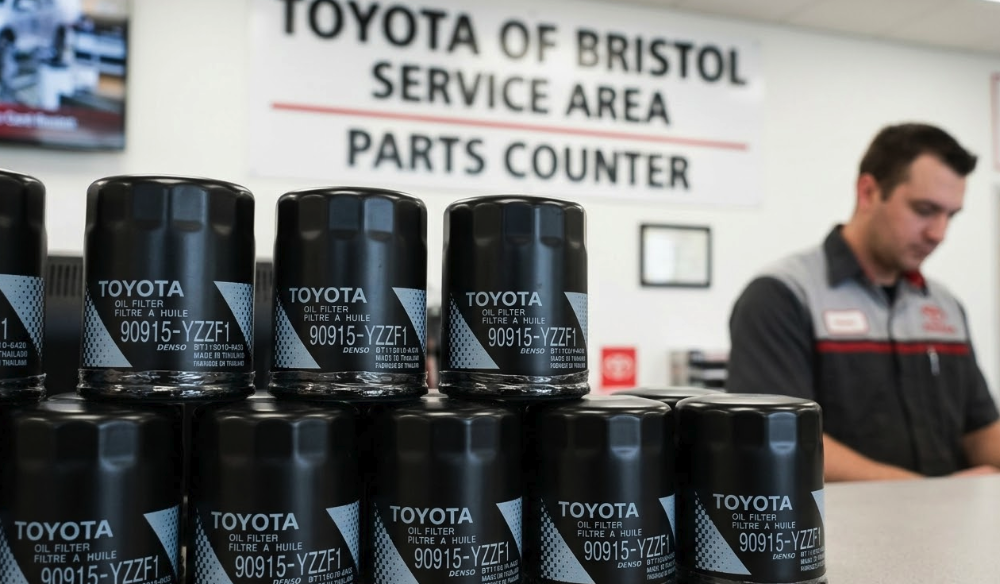
If you want the direct answer, most current Toyota drivers should not guess between 5,000 and 10,000 miles. Toyota’s own guidance says scheduled maintenance should still happen every 5,000 miles or 6 months, whichever comes first, while many Toyota vehicles now follow a 10,000-mile or 12-month oil and filter interval under normal driving. Here at Toyota of Bristol, we tell Bristol drivers to think of it this way: your Toyota may not need fresh oil at every 5,000-mile visit, but it still needs regular factory-scheduled maintenance on that rhythm.
That distinction matters around Bristol. A lot of our customers combine local short trips on Volunteer Parkway, steady interstate time on I-81, and weekend runs through the hills across the Tri-Cities. That is not the same use pattern as a flat, mild-climate commute with long, consistent highway stretches every day. It also means the longest interval listed online is not always the whole story for your exact Toyota.
Toyota’s maintenance guidance is more precise than a simple internet slogan. Some current Toyota models and engines are approved for extended oil-change intervals, and Toyota’s 2025 maintenance guides for current models like Camry, Corolla, and Tacoma still show 10,000-mile or 12-month oil and filter timing in normal use. At the same time, Toyota continues to call for maintenance visits every 5,000 miles or 6 months, and some special operating conditions can move oil service back to 5,000 miles or 6 months regardless of the oil used.
For us, that means the best answer is not “always 5,000” and not “always 10,000.” The right answer is what Toyota specifies for your engine, your oil type, and the way you drive here in Bristol. Our job is to help you match the maintenance guide to real ownership, not force every Toyota into the same schedule.
Definition: Toyota oil change intervals are the factory-recommended mileage and time ranges for replacing engine oil and the oil filter. They are commonly used to protect engine performance, maintain warranty expectations, and guide service planning. For drivers in Bristol, TN, they help prevent both overdue service and unnecessary guesswork.
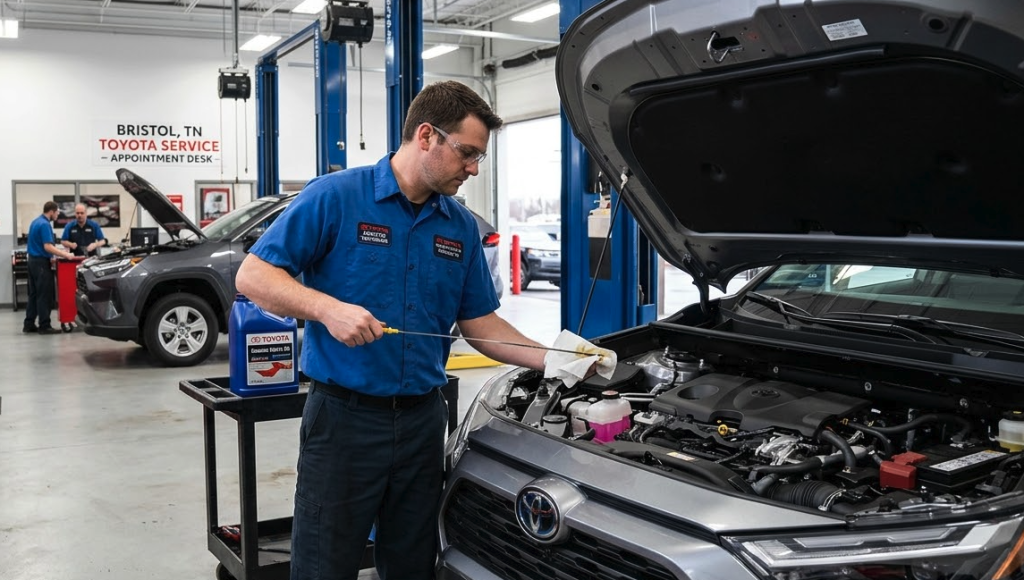
Toyota Oil Change Intervals Explained
Toyota Oil Change Value by Model, Maintenance Plan, and Driving Habits
What Toyota Oil Change Intervals Mean for Drivers in Bristol, TN
Why Toyota’s 5,000-Mile Maintenance Visits Still Matter Even When Oil Changes Stretch Longer
The Toyota Oil Weight, Filter, and Engine Exception Details Owners Miss
FAQ About Toyota Oil Change Intervals
Toyota Oil Change Intervals Explained
Key Takeaway: Toyota oil service is a schedule, not a slogan. Most drivers need to separate the 5,000-mile maintenance visit from the oil and filter interval listed for their specific engine and driving conditions.
5,000 miles vs 10,000 miles, what Toyota actually says
This is the part that causes the most confusion. Toyota says scheduled maintenance should be performed every 5,000 miles or 6 months, whichever comes first. That is your service rhythm. It does not automatically mean every one of those visits includes an oil and filter change. Toyota also says vehicles that require 0W-20 synthetic oil, with the stated 3UR-FBE exception, are approved for 10,000-mile or 12-month oil change intervals. Current 2025 Toyota maintenance guides for models like Camry, Corolla, and Tacoma also continue to show oil and filter replacement after 12 months or 10,000 miles in normal use.
So what should you remember? The 5,000-mile visit is still real. The 10,000-mile oil change is also real. They are not the same thing.
At our service center, we explain it to drivers in plain language:
- Every 5,000 miles or 6 months, your Toyota should still be seen for factory-scheduled maintenance.
- Under normal driving, many current Toyota models will not need oil and filter replacement at every 5,000-mile visit.
- Under certain operating conditions, Toyota moves oil and filter service back to 5,000 miles or 6 months.
- Low mileage does not cancel the calendar. Time still matters.
That is why blanket advice online gets people into trouble. “Toyota says 10,000” is incomplete. “You must always do 5,000” is also incomplete. The full answer is model-specific and use-specific.
Which Toyota models qualify for longer oil intervals
A better question than “Is Toyota 5,000 or 10,000?” is “What does my Toyota’s maintenance guide say for my engine?” Toyota’s current maintenance guides show that many mainstream current models still use a normal-use oil and filter interval of 10,000 miles or 12 months. That includes examples like the 2025 Camry, 2025 Corolla, and 2025 Tacoma. The point is not that every Toyota is identical. The point is that Toyota clearly uses a model-and-engine-based schedule, not one universal oil-change rule for the whole lineup.
Here is the practical snapshot we use when talking with owners:
| Toyota example | Normal factory oil and filter pattern | What drivers should remember |
|---|---|---|
| 2025 Camry | 10,000 miles or 12 months in normal use | Still follow 5,000-mile maintenance visits |
| 2025 Corolla | 10,000 miles or 12 months in normal use | Calendar matters even for lower-mileage cars |
| 2025 Tacoma | 10,000 miles or 12 months in normal use | Tough-use conditions can shorten the interval |
| Many Toyota models requiring specified synthetic oil | Often longer oil intervals under normal use | Confirm by engine and maintenance guide |
Table note: Based on Toyota official website.
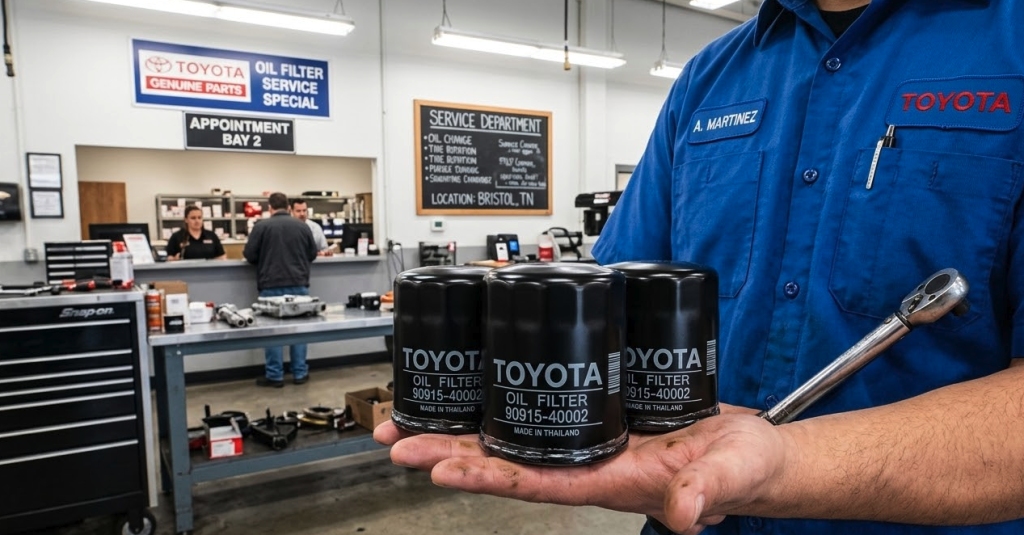
Toyota also reminds owners that the oil viscosity and grade are vehicle-specific. That matters more now than it used to because not every current Toyota uses the same oil weight. The safest move is always to follow the maintenance guide and owner’s manual for your exact engine, not rely on what a previous Toyota in your driveway used.
Why time still matters, especially for low-mileage drivers
One of the biggest mistakes we see is low-mileage drivers thinking they can wait until they finally reach a mileage number. Toyota does not tell owners to do that. Toyota says maintenance is due every 5,000 miles or 6 months, whichever comes first. That means a vehicle driven only a few thousand miles a year still needs to stay on the calendar.
Toyota’s maintenance guides also stress routine oil level checks, not just waiting for an appointment. If your Toyota sits more than it drives, or if it sees lots of short trips, the calendar matters even more because oil condition and engine use are not measured by the odometer alone.
For Bristol drivers, that is a very real issue. Some vehicles are used for short town runs, school pickups, grocery trips, and quick hops across town. Those miles add up slowly, but they are still real use. Others are second vehicles that sit through part of the season. That is why we urge owners to keep both numbers in mind:
- Mileage tells you how much the vehicle has traveled.
- Time tells you how long the oil has been in service.
- Driving pattern tells you whether the longest interval is really the right interval.
Toyota Oil Change Value by Model, Maintenance Plan, and Driving Habits
Key Takeaway: The real value in Toyota oil service is not stretching the interval as far as possible. It is matching the factory schedule to your ownership costs, ToyotaCare coverage, and the way your Toyota is actually used.
ToyotaCare vs regular ownership maintenance
ToyotaCare simplifies the early ownership years, but it does not erase the need to understand your schedule. Toyota says ToyotaCare covers normal factory scheduled maintenance for 2 years or 25,000 miles, whichever comes first. Toyota also says an oil and filter change is not automatically included every time the maintenance light comes on, because certain models follow different maintenance schedules. That is a key point for new owners.
At Toyota of Bristol, we like comparing the first two years of ownership in a simple way:
| Service topic | ToyotaCare period | After ToyotaCare | Why it matters |
|---|---|---|---|
| Factory scheduled maintenance | Included for 2 years or 25,000 miles | Owner-paid | You still want the same schedule discipline |
| Oil and filter changes | Based on your Toyota’s actual schedule | Based on your Toyota’s actual schedule | Not every reminder means an oil change |
| Tire rotation and inspections | Included when factory-scheduled | Continue as needed | These 5,000-mile visits still protect the vehicle |
| Maintenance planning | Easy to overlook because coverage exists | Easy to delay because coverage ends | Consistency matters in both periods |
Table note: Based on Toyota official website.

A lot of drivers assume ToyotaCare means “free oil every time I stop in.” That is not how Toyota words it. ToyotaCare covers normal factory-scheduled maintenance. That is better, because it keeps the service tied to the actual maintenance guide instead of a one-size-fits-all oil habit.
Here is how we usually frame the value:
- ToyotaCare helps keep early ownership simple and factory-aligned.
- It does not change the maintenance guide for your vehicle.
- It does not mean your Toyota suddenly needs oil at every 5,000-mile reminder.
- It does mean staying on time is easier while coverage is active.
Gas models, hybrids, trucks, and exceptions under tougher use
This is where service advice has to become more tailored. A Camry used for commuting is not living the same life as a Tacoma that tows, carries gear, idles on work sites, or runs dusty roads. Toyota’s current maintenance guides make that clear. On current Toyota maintenance guides, special operating conditions can move oil and filter service to 5,000 miles or 6 months. Toyota’s current RAV4 guide specifically lists conditions like towing, extensive idling and low-speed driving for long distances, repeated short trips in below-freezing temperatures, and dirt or dusty road use.
That is why we do not lump every Toyota into one oil routine.
For Bristol-area drivers, this usually breaks down like this:
- Sedans and many hybrids driven in normal mixed use often stay on the longer factory oil interval.
- Trucks and SUVs used for towing, loading, repeated idling, or rougher conditions may need earlier oil service.
- Low-speed local use can matter as much as total mileage.
- Dirt, dust, and seasonal road conditions should not be ignored.
A second thing owners miss is that switching oils does not automatically give you permission to extend the interval. Toyota support is clear that if a vehicle is designed around a shorter schedule, moving to synthetic alone does not change the required oil-change timing.
| Driving pattern | Better question to ask |
|---|---|
| Mostly highway commuting | Does my guide keep me on the normal 10,000-mile pattern? |
| Short-trip city use | Should we review my time-based schedule more closely? |
| Towing or heavy loading | Do my special operating conditions move oil service earlier? |
| Dusty roads or work use | Am I still treating my Toyota like a normal-use vehicle? |
Table note: Based on Toyota official website.

Here at Toyota of Bristol, we would rather give you a clean answer than a catchy one. If you bring us your model, mileage, and real driving pattern, our team can tell you whether your Toyota is simply due for routine 5,000-mile maintenance, due for an actual oil and filter change, or due for a more conservative schedule because of tougher use. We can also help newer owners understand what ToyotaCare is covering now and what their maintenance costs are likely to look like after that coverage ends. If you drive a Tacoma, Tundra, RAV4, Camry, Corolla, or Toyota hybrid around Bristol, Johnson City, Kingsport, or Abingdon, we can line up the schedule with the way you really use it. That keeps you from paying early for service you do not need, and it also keeps you from stretching service past the point Toyota intended. Our service team works with factory schedules every day, so you are not left sorting through mixed advice online.
What Toyota Oil Change Intervals Mean for Drivers in Bristol, TN
Key Takeaway: Bristol driving conditions do not automatically force every Toyota into a 5,000-mile oil change, but local short trips, hills, idling, and seasonal use are exactly why we think interval conversations should stay practical and vehicle-specific.
Short trips, stop-and-go traffic, hills, and seasonal weather in our area
Bristol drivers tend to combine several kinds of use in one month. You may have daily local traffic, highway time on I-81, quick runs across town, and weekend trips into hill country or neighboring Virginia communities. That means your Toyota may not fit a pure “ideal normal use” pattern all year long, even if the odometer total looks modest.
In our experience, the biggest local trap is the short-trip driver who assumes low mileage equals low service needs. A vehicle that spends most of its time on short hops can still deserve closer attention to the calendar and to the maintenance guide. The second trap is the truck or SUV owner who tows, carries rooftop cargo, loads heavy gear, or sits idling longer than usual but still expects the longest interval listed online to fit perfectly.
We usually tell Bristol drivers to look at local ownership in three buckets:
- Normal mixed commuting, which often stays close to Toyota’s standard schedule.
- Tougher-use driving, which may justify the shorter oil interval listed under special operating conditions.
- Low-mileage ownership, which still needs time-based maintenance discipline.
The reason this matters is simple. A smart oil interval protects your engine, helps you keep clean service history, and keeps maintenance from becoming reactive.
If you want a Bristol-specific service answer, our team at Toyota of Bristol is ready to help. We work with drivers from across Bristol, Bluff City, Johnson City, Kingsport, and Abingdon, so we understand the mix of short trips, interstate miles, family hauling, and truck use common in this area. If your maintenance light is on, we can tell you whether it is pointing to a routine visit, an actual oil and filter change, or a larger scheduled service. If your ToyotaCare coverage is still active, we can help you use it the way Toyota intended. If you are past ToyotaCare, we can still build a service rhythm that fits your model and driving pattern instead of relying on generic advice. That is the kind of straightforward maintenance support we want every local driver to have.
Why Toyota’s 5,000-Mile Maintenance Visits Still Matter Even When Oil Changes Stretch Longer
Key Takeaway: The 5,000-mile visit still matters because Toyota built more into that maintenance rhythm than just oil.
This is the piece many drivers miss. Toyota support directly answers the question of why a vehicle with a 10,000-mile oil interval still needs service every 5,000 miles or 6 months. The answer is that Toyota recommends other services at that visit, including tire rotation, fluid level inspection, and brake inspection. In other words, the 5,000-mile stop is part of the factory maintenance system even when the oil itself is not due yet.
That makes sense in real ownership. A lot can happen between oil changes that has nothing to do with oil alone. Tire wear can change. Brake pad wear can start showing. Fluid levels can shift. Filters and visual inspections still matter. A maintenance plan that only reacts when oil is due leaves too much unchecked.
Here is how we think about it in our service lane:
- The 5,000-mile visit is an inspection and upkeep checkpoint.
- The 10,000-mile interval is often the oil-and-filter checkpoint under normal use.
- Those two checkpoints are meant to work together, not replace each other.
This is also why we do not like the phrase “I’m fine until 10,000.” For some owners, that mindset means skipped tire rotations, missed inspections, or delayed attention to conditions that Toyota wanted reviewed earlier. Staying on the 5,000-mile rhythm is not overservicing. It is following the maintenance structure Toyota actually wrote.
The Toyota Oil Weight, Filter, and Engine Exception Details Owners Miss
Key Takeaway: Small oil-spec details can change your whole service decision, so the smartest move is to match the oil, filter, and interval to your exact Toyota instead of assuming every model works the same way.
A lot of interval confusion starts because owners mix together oil type, oil weight, and oil-change timing as if they are one thing. Toyota does not treat them that way. Toyota support says the 10,000-mile or 12-month extended oil interval applies to Toyota vehicles in which 0W-20 synthetic oil is required, with the 3UR-FBE engine called out as an exception. Toyota’s maintenance guides also say to check the owner’s manual for the recommended oil grade and viscosity for your specific vehicle.
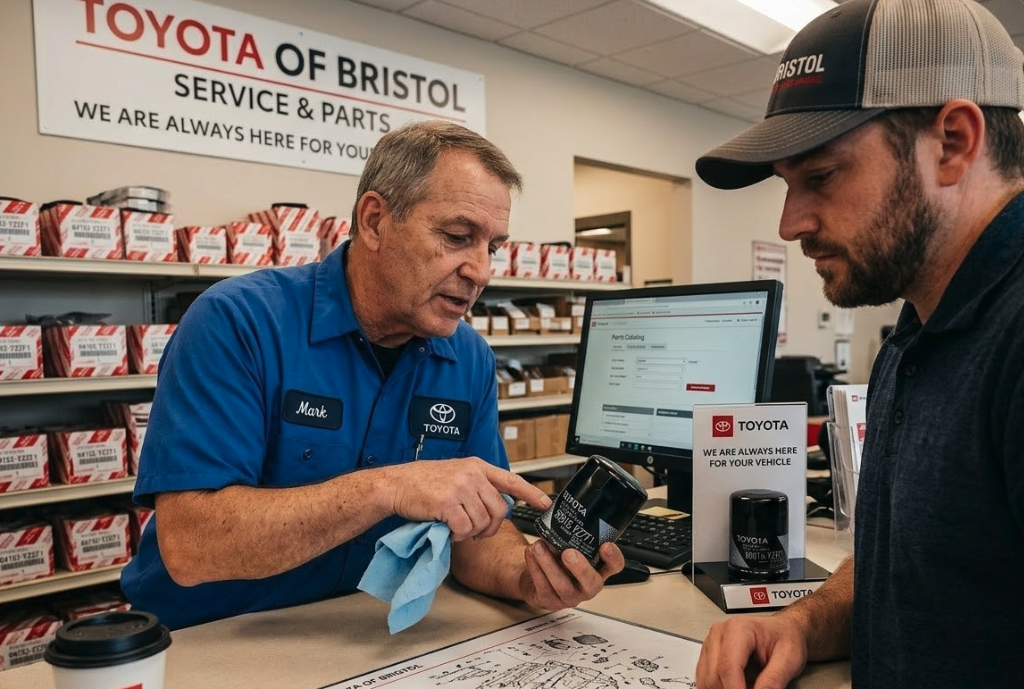
That leads to a few details owners often miss:
- One Toyota may not use the same oil weight as another Toyota in your household.
- Using synthetic does not automatically extend an interval if Toyota specifies a shorter schedule.
- The filter matters too, because Toyota’s oil-service instructions are written as engine oil and oil filter replacement together.
Toyota support also gives two helpful reminders for 0W-20 applications:
- Other 0W-20 synthetic oils may be used if they are ILSAC certified.
- If 0W-20 is temporarily unavailable, 5W-20 conventional oil may be used, but Toyota says it should be replaced with 0W-20 synthetic at the next oil change.
Our recommendation here is simple:
- Do not assume what your last Toyota used is correct for your current Toyota.
- Do not assume synthetic alone changes the required interval.
- Do not separate the oil from the filter in your thinking.
- Do not guess on engine exceptions.
If you want the most accurate answer, bring us the VIN or stop by Toyota of Bristol and we will match the factory schedule and oil specification to your exact vehicle.
Key Takeaways about Oil Change
- Toyota still wants maintenance every 5,000 miles or 6 months.
- Many current Toyota models use 10,000-mile or 12-month oil intervals in normal use.
- Tougher driving conditions can move oil service back to 5,000 miles.
- ToyotaCare follows the factory schedule, not a generic oil rule.
- Low-mileage drivers still need time-based maintenance.
FAQ About Toyota Oil Change Intervals
Does Toyota really recommend 10,000-mile oil changes?
Yes, many Toyota vehicles under normal driving do follow a 10,000-mile or 12-month oil and filter interval. The important part is that this does not cancel the 5,000-mile or 6-month maintenance visit. Here at Toyota of Bristol, we tell drivers to separate the service rhythm from the oil-change rhythm. Your model, engine, and driving conditions still decide what is correct.
Should I still change my Toyota oil every 5,000 miles?
Some drivers should, but not all drivers need to. Toyota’s maintenance guides show that certain special operating conditions can require oil and filter replacement every 5,000 miles or 6 months. That can include things like towing, long periods of idling or low-speed use, repeated freezing short trips, or dusty-road driving on some models. We recommend checking your exact maintenance guide with our team instead of guessing.
Does ToyotaCare pay for oil changes?
ToyotaCare covers normal factory scheduled maintenance for 2 years or 25,000 miles, whichever comes first. That means coverage follows the schedule Toyota wrote for your vehicle. Toyota also says an oil and filter change is not automatically included every time the maintenance light comes on, because certain models follow different service intervals. We can help you sort out what is covered at your next visit.
What happens if I drive very little each year?
Low mileage does not mean you can ignore time-based maintenance. Toyota says scheduled maintenance should be obtained every 5,000 miles or 6 months, whichever comes first. If you drive very little, the calendar becomes the more important reminder. That is why we encourage low-mileage owners in Bristol to keep up with the schedule even when the odometer barely moves.
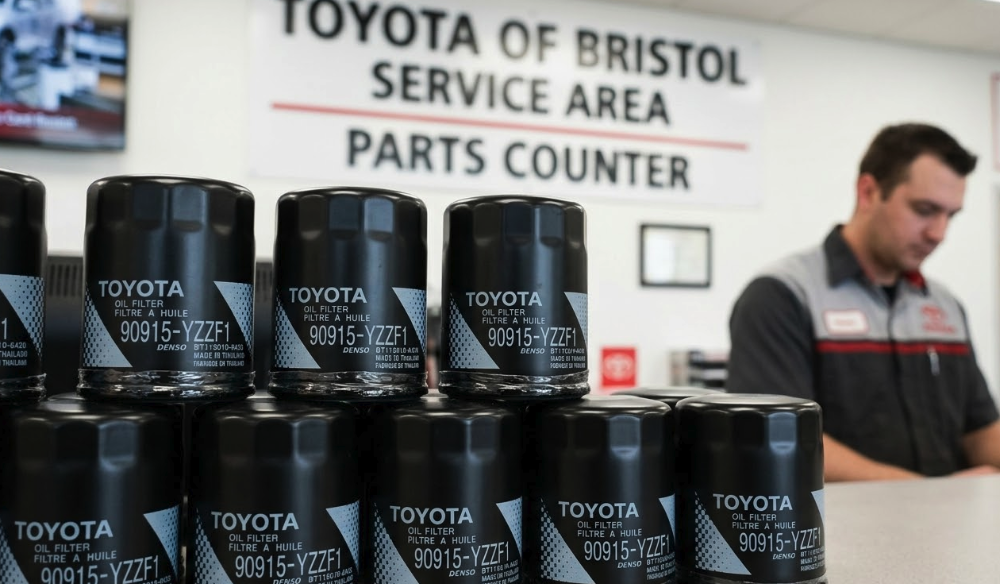
Toyota oil intervals are easier to manage once you stop treating every Toyota like it follows the exact same rule. Here at Toyota of Bristol, we help drivers in Bristol, TN line up their maintenance schedule with the right Toyota guide, the right driving pattern, and the right service timing. If your maintenance light is on, if you are unsure about 5,000 versus 10,000 miles, or if you want to know how ToyotaCare fits your next visit, our team is ready to help. Schedule service online, check our service specials, or stop by and let us look up the correct schedule for your vehicle. The right interval protects your engine, your time, and your long-term ownership costs.
Connect with us


